 General Guides
 Regional Guides
 Starter Guides

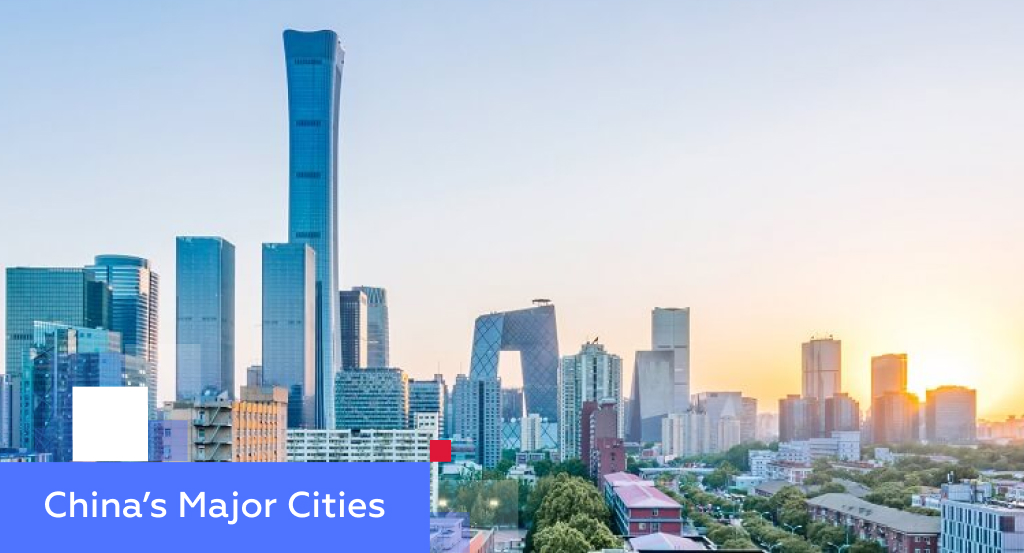
As the home of the world’s second-largest GDP, China constantly commands the attention of international investors. However, prudent planning and targeted investment in specific cities and industries are imperative in order to achieve results and capitalize on the opportunities China’s dynamic economy presents.
Despite setbacks experienced during the Covid-19 pandemic as well as new challenges that have arisen thereafter, China’s economy is still forecasted to experience growth. China’s advanced technology and infrastructure sets it up to be a leader on the world stage in terms of commerce, so it is important for businesses and investors to identify opportunities ahead of their competitors.
This article looks at some of the most popular cities for enterprise and investment, by providing an overview of the business climate in each location.
1. Shanghai
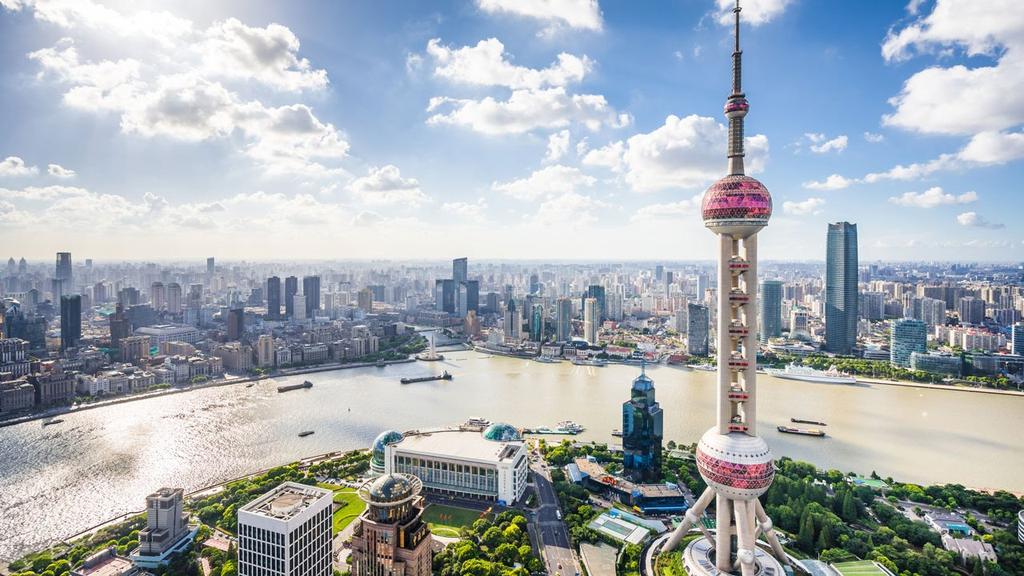
Situated on the east-central coast of China, Shanghai stands as a testament to the nation’s extensive history of foreign economic exchange, strategically located at the mouth of the Yangtze River.
“Shanghai is widely regarded as China’s commercial hub, thanks to its vast population of over 31.05 million residents in 2026. It is coined as China’s most international city.
Boasting the largest GDP of all of China’s major cities, Shanghai claims the top spot with a nominal GDP of over RMB 5 trillion (approximately USD 682 billion) as it entered a new growth phase in 2024-25.
Key Industries in Shanghai
Shanghai is home to the largest seaport in the world, The Port of Shanghai, which is known as one of the most important ports in the continent – a hub for trade.
Despite the significant commerce facilitated by its port, Shanghai is home to other major industries less reliant on physical imports and exports. The Chinese city is also a global center for finance, science, technology, and tourism.
Investment Opportunities in Shanghai
According to the Vice-Mayor of Shanghai, Xie Dong, the city is focused on green growth and digitalization. So, major investment opportunities lie in artificial intelligence, healthcare, automobiles, and biomedicine amongst others.
Shanghai shares common growth interests with London and the UK, especially focusing on technological growth and green finance.
The growing identification of investment opportunities in Shanghai is coupled with the timely reduction of corporate income tax for the tech sector, and the introduction of incentives for foreign funded R&D.
2. Beijing
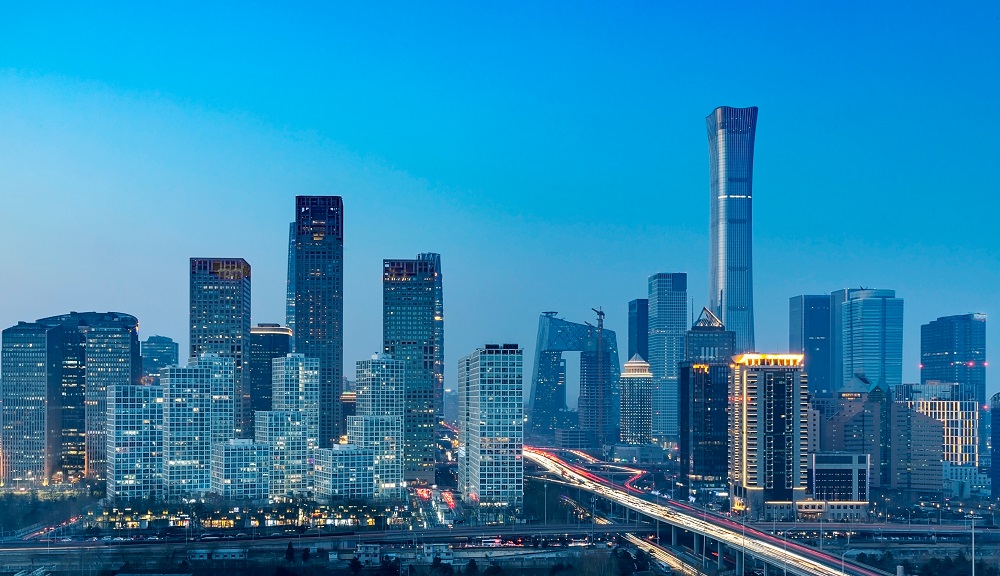
The Capital of the People’s Republic of China, Beijing, was once called Peking and is famous as the political and cultural center of China’s major cities.
With a GDP of RMB 4.98 trillion (USD 714 billion) and a population of 22.98 million, Beijing continues to offer a highly attractive economic landscape for foreign investment. Its vast population of nearly 23 million residents maintains Beijing’s status as the world’s most populous national capital city.
Key Industries in Beijing
Beijing is ranked as the number one city for having the most Fortune 500 headquarters, with over 55 companies establishing their head offices in the region. Additionally, 15% of revenue generated by the Global 500 can be attributed to companies headquartered in Beijing.
The service sector accounts for over 80% of Beijing’s GDP, encompassing a host of financial and technological services, which are considered as highly developed regarding global industry standards.
The manufacturing sector accounts for much of the rest of Beijing’s GDP, which is home to major manufacturers, such as BOE Technology Group and Sinochem Group.
Investment Opportunities in Beijing
Beijing remains one of China’s most important destinations for foreign investment, especially in high-tech and innovation-driven sectors. Nationwide, foreign-invested enterprises continue to expand their presence, with over 1.24 million foreign-funded companies established in China by the end of 2024, and 24,018 new foreign-invested enterprises set up in the first five months of 2025, including substantial flows into advanced technology and services.
Beijing’s strong innovation ecosystem, anchored by leading research hubs, government support for R&D, and a concentration of global and domestic tech players continues to attract foreign investors seeking opportunities in AI, software, life sciences, fintech, and strategic service sectors.
3. Shenzhen
Despite its relatively short history, dating back to the 1970s, Shenzhen has quickly grown to become one of the best investment opportunities across China’s major cities.
Every year, Shenzhen’s focus on investment and growth catches the eyes of investors across the globe, and everyone from migrant workers to entrepreneurs flock to the city to take advantage of the city’s futuristic approach.
Soaring past the RMB 3.68 trillion (USD 507 billion) in 2024, Shenzhen’s GDP remains China’s third largest, and the city continues to boast the highest GDP per capita among China’s major cities, reaching approximately RMB 205,000 (USD 28,000).

Doing Business in Shenzhen
Emerging as one of China’s most innovative and economically competitive cities, Shenzhen presents a…
Read more

Key Industries in Shenzhen
Shenzhen is commonly referred to as China’s Silicon Valley, and it is a vital region for the growth and development of the nation.
The vibrant city is built on the foundations of a strong technology industry, which acts as the figurehead for China’s digital economy; it is home to the biggest players – ZTE, Huawei, BYD and more.
Manufacturing also contributes to the significant growth of Shenzhen’s economy, with the new energy vehicle sector experiencing 173% annual growth in 2021.
Investment Opportunities in Shenzhen
With intentions of growing the city’s presence on the global stage, Shenzhen has a set of growth targets that pose lucrative opportunities to potential investors.
Shenzhen aims to be the leading example of capital & innovation in China by 2035, which signals the region’s desire to boost the technology, construction, and finance sectors.
Additionally, the city’s education and healthcare industries are set to grow, with world-class universities and medical institutions ready to be built to further accelerate Shenzhen’s rise to international prominence.
4. Guangzhou
Guangzhou is considered to be the southern gate of mainland China and is a part of the Greater Bay Area. Its strong political and economic history presents Guangzhou as an exceptional opportunity for investors to research China’s major cities.
Guangzhou’s GDP reached approximately RMB 3.10 trillion (about USD 435 billion) in 2024, reflecting continued economic growth driven by its diversified economy and role as a core city in the Greater Bay Area. In the first three quarters of 2025, Guangzhou’s GDP was about RMB 2.33 trillion, up around 4.1 percent year-on-year, indicating ongoing momentum in services, industry, and consumption.
The city is famous for hosting The China Import and Export Fair twice a year, which is China’s largest trade fair that attracts over 200,000 visitors from over 200 countries.
Key Industries in Guangzhou
Over 50 percent of Guangzhou’s GDP consists of the automobile, electronic, and petrochemical sectors.
Guangzhou’s recent investment in new energy vehicles has contributed to the significant growth of the city’s automobile output to RMB 538.3 billion (73bn USD).
Additionally, the city’s electronic and IT industry has led China’s development of communication networks, intelligent terminals, and more, for 29 years.
Investment Opportunities in Guangzhou
Recent government announcements have laid out Guangzhou’s plans to host 650 major construction projects to strengthen its status as a global trade and transportation hub.
Guangzhou predicts an annual expenditure of RMB 345.2 billion (47bn USD) on this project, which presents significant infrastructure investment opportunities for foreign investors.
5. Chongqing
With more than 32 million residents, Chongqing is a populous city with a large consumer market and advanced infrastructure and integral supply chains. Situated at the junction of the Yangtze and Jialing rivers, Chongqing provides easy access to major markets in China as well as Southeast Asia.
For investors looking at China’s major cities, a place that is not overlooked is the city of Chongqing which is considered crucial for connecting China’s underdeveloped west and developed east. The city also has unique administrative status as a directly controlled municipality which allows for it to implement preferential business policies.
Since 2015, China has pursued nationwide economic reforms that have significantly upgraded Chongqing’s industrial and economic structure. By 2024, Chongqing’s GDP had exceeded RMB 3 trillion, reflecting steady growth driven by advanced manufacturing, electronics, and new-energy industries. The city continues to position itself as a key growth engine in western China, supported by infrastructure investment and industrial upgrading.
Key Industries in Chongqing
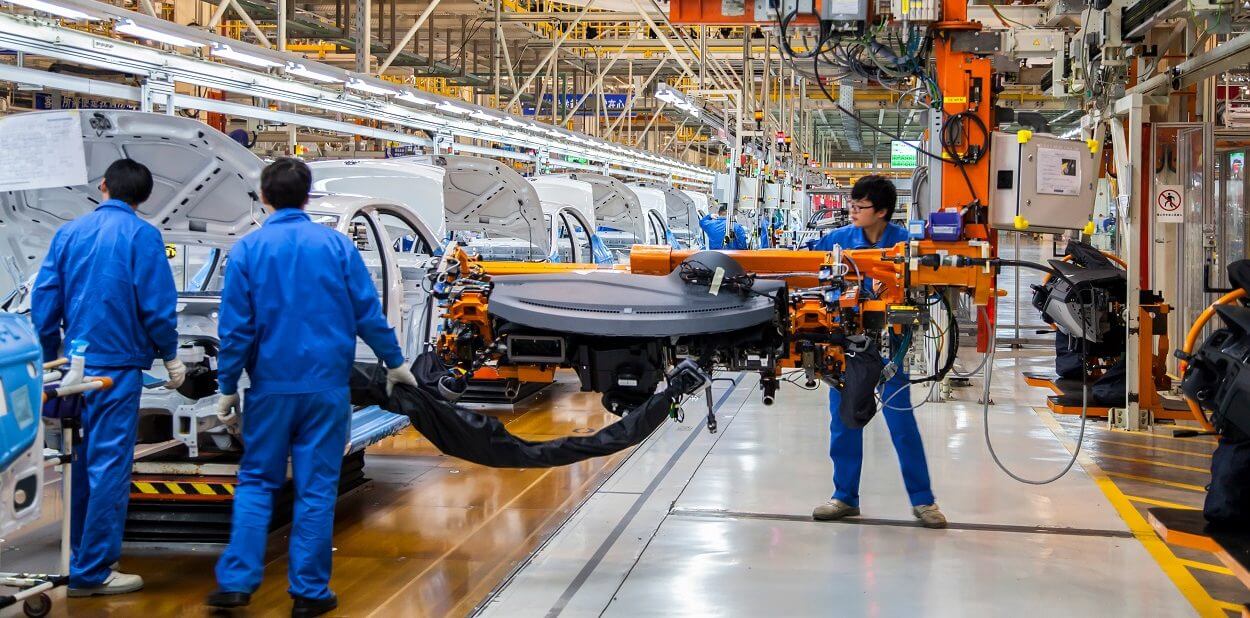
Chongqing is China’s largest automobile manufacturing base, and it is manufacturing of this type, known as heavy industry, that forms the bulk of the city’s industrial output.
Additionally, recent growth in the electronics sector has seen Chongqing emerge as a competitive manufacturer of electronics and telecommunication equipment as well as a growing chemical industry.
Investment Opportunities in Chongqing
As the global remote-working culture grows, the demand for personal electronics will only rise, and as Chongqing produces one-third of the global laptop supply, investors are quickly becoming aware of the opportunities to get involved.
Alternatively, Chongqing seeks to become a global leader in the production of new energy vehicles, with China’s top electric car manufacturer, BYD, basing production of their cutting-edge BYD Blade Battery in Chongqing.
6. Chengdu
Though it’s the last city on the list, it is certainly not the least. The economic powerhouse, Chengdu, is the logistics, commerce, and finance center connecting China’s major cities in the West.
For decades, Chengdu has been referred to as a benchmark city for investment in China – it is an engine for Chinese development and urbanization. In 2019, the Milken Institute named Chengdu as China’s best-performing city economy.
Chengdu ranks as China’s seventh wealthiest city, with a GDP of RMB 2.25 trillion (USD 309 billion) in 2025, and is home to the Chengdu Hi-Tech Industrial Development Zone (CDHT). Demonstrating its strong focus on independent innovation and advanced manufacturing, the CDHT recorded a year-on-year growth rate of over 15 percent in 2024, reflecting Chengdu’s continued rise as a major western China innovation hub.
Chengdu’s Key Industries
Chengdu is a major global technology and electronics exporter – more than one-third of the world’s iPads are assembled in the Chinese city.
However, it is not just consumer electronics that Chengdu produces – the city is a manufacturing hub of Asia. Chengdu manufactures transportation equipment, biotech, life science R&D, and more.
Investment Opportunities in Chengdu
Since receiving the award for the ‘Most Attractive City for Investment’ in 2020, Chengdu has experienced significant growth and continues to facilitate lucrative investment opportunities for investors.
Despite ambitious growth planning, Chengdu has experienced a recent shortage in talent and enterprise to grow itself to be a bigger name on the world stage of trade.
China’s Municipal Government has announced policies and financial incentives for investors and businesses that can boost Chengdu’s energy conservation, shale gas, information security, aviation gas turbines, and new energy vehicle sectors.
Why Should You Consider Investing in China?
Investing in China’s prominent cities gives companies and investors access to one of the world’s largest and fastest-growing consumer markets, as confirmed by China’s official statement on the continuous reduction of its foreign investment negative list, which has been shortened by over 80% since 2013 (Xinhua). Cities like the ones mentioned above boast populations in the tens of millions, presenting a vast customer base for a wide range of industries. This market potential is further bolstered by a rising middle class with increasing purchasing power.
Additionally, these cities serve as crucial hubs for trade and commerce, with well-established logistics and transportation networks that facilitate the movement of goods not only within China but also to neighboring Asian markets.
Moreover, China’s prominent cities are at the forefront of technological innovation and industry advancement. They are home to leading research institutions, tech parks, and innovation zones, fostering an ecosystem conducive to cutting-edge research and development. Companies that invest in these cities can tap into a rich pool of talent, benefit from collaborations with local universities, and stay at the forefront of technological trends.
Furthermore, the presence of established industry clusters in sectors like finance, manufacturing, and information technology provides opportunities for networking, partnerships, and knowledge-sharing, enabling businesses to thrive in a competitive global landscape. Overall, investing in China’s prominent cities provides a gateway to a dynamic market, a hotbed of innovation, and a platform for global business expansion.
Note, our focus here has been on China’s major cities, but important regional centers like Ningbo and Hainan can also be good expansion locations in certain industries.
| Year | Negative List (National) – number of restriction items | Notable change |
|---|---|---|
| 2017 | 93 items (approx.) | First nationwide negative list introduced |
| 2021 | 31 items | Significant reduction; pilot FTZ list down to 27 |
| 2024 | 29 items | All restrictions in manufacturing removed |
| 2025 | (Market Access) 106 items | Further liberalisation; services sectors opened |
Contact MSA today for a free initial consultation to map your target sector, explain recent policy changes, and design your entry strategy in China Message →
Each tier-one city offers distinct talent markets, regulatory advantages, and operating costs, making the choice of headquarters location a strategic decision with lasting business consequences. MSA Asia’s China company setup advisors evaluate your sector and headcount plans against city-specific factors. Get in touch to select the right city for your expansion.