 General Guides
 Regional Guides
 Starter Guides


Foreign direct investment (FDI) is the purchase or acquisition of a substantial stake in a company from an entity that is located outside its borders. China has been successful in enticing foreign entities to invest in their market by capitalizing on their large consumer base, while also providing attractive incentives, especially through the legislation of the new Foreign Investment Law (FIL).
Under the FIL, restrictions became relaxed enough to allow greater market access and fairer treatment to foreign investors. Additionally, certain limitations in the financial industry were lifted, allowing foreigners to have full direct ownership over companies in the futures, securities, fund management, and life insurance sectors. The new foreign investment policies, growing economy, and preferential tax policies continue to invite more foreign entities to venture into the Chinese local market.
This article aims to provide insight on FDI in China, the most popular sectors for foreign investors, and what future investors can expect from the Chinese market.
Send us your questions and we will answer within 24 hours Message →
Foreign Direct Investment (FDI) in China
China overtook the United States in 2020 to become the world’s largest recipient of foreign direct investment, attracting approximately USD 149 billion in FDI inflows that year. This marked a significant shift in global investment patterns, as China recorded positive FDI growth while many major economies experienced sharp declines. Since then, China has remained among the top global destinations for foreign investment, supported by its large domestic market, strong manufacturing base, and continued market-opening measures.
In the years following 2020, China continued to attract substantial levels of foreign investment despite global economic uncertainty. According to official data, China’s actual use of foreign capital reached approximately USD 155 billion in 2023, placing it consistently among the world’s leading FDI recipients. While total inflows have shown some moderation compared to earlier peaks, foreign investors have maintained a strong presence, particularly in sectors aligned with China’s long-term development priorities.
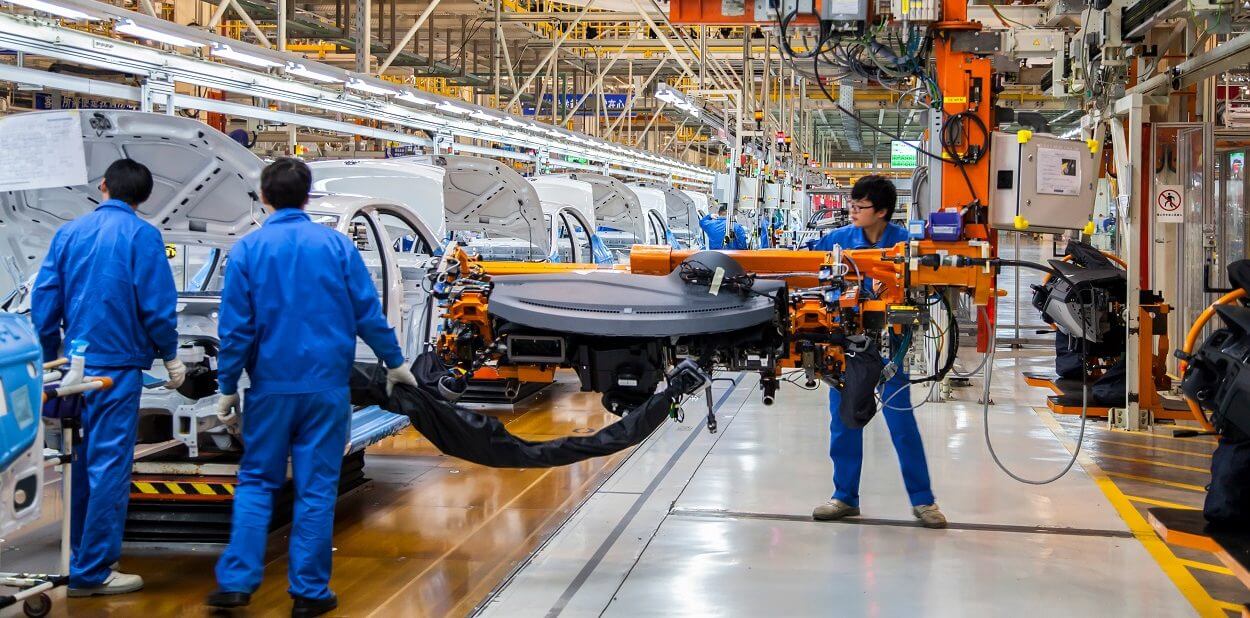
The structure of foreign investment in China has also evolved. Capital inflows have increasingly shifted toward high-tech manufacturing, new energy vehicles, renewable energy, pharmaceuticals, and modern services, while traditional manufacturing and wholesale trade remain important. This transition reflects China’s policy focus on industrial upgrading and innovation, as well as foreign investors’ growing emphasis on technology-driven and value-added sectors rather than purely cost-based production.
Most Popular Sectors for FDI in China
Based on data released by China’s statistical authorities and investment regulators, foreign direct investment in China continues to concentrate in the following sectors:
- Manufacturing
- Real estate
- Leasing and business services
- Information transmission, software, and computer services
- Scientific research, technical service, and geological prospecting
- Distribution, wholesale, and retail trade
- Financial intermediation
- Transport, storage, and post
- Production and supply of electricity, water, and gas
- Construction
Some of the largest foreign multinationals operating in China include American companies such as GM, Apple, and Nike, as well as Asian corporations like Toyota and Samsung. These enterprises typically operate in sectors listed under China’s Encouraged Catalogue, which identifies industries the government actively supports through foreign investment.
The Encouraged Catalogue outlines sectors eligible for preferential treatment, including tariff exemptions on imported equipment, improved land-use access, streamlined administrative procedures, and, in certain cases, reduced Corporate Income Tax (CIT) rates. Current policy priorities under the Catalogue focus on three key areas: high-end and advanced manufacturing, production-oriented and modern services, and investment projects located in central, western, and northeastern regions of China.
Under the Encouraged Catalogue, these are the three high priority categories encouraged for FDI:
- High-end manufacturing
- Production-oriented service
- Investment in provinces in the central, western, and northeastern parts of the country
If the nature of the investment does not fall in any of the sectors that are listed under the Negative List, then investors can enjoy the same rights and treatment given to domestic enterprises. Usually, the abovementioned sectors belong to the Encouraged Catalogue, which is the opposite of the Negative List.
Investment Restrictions – China’s Negative List
According to China’s Foreign Investment Law, foreign enterprises and individuals may directly invest in China unless their investment is prohibited or restricted under the Negative List for Market Access. The Negative List is the regulatory framework used by the Chinese government to define sectors where foreign investment is either restricted or prohibited. The list is periodically updated by the authorities to reflect policy adjustments and to further expand market access for foreign investors.
According to the Negative List, businesses falling into the following categories are prohibited from entering the Chinese market, any business that:
- Threatens national security or the country’s military facilities
- Harms public interest
- Damages the environment
- Hinders the development and protection of land resources
- Uses a unique technology considered the property of China for manufacturing purposes
Businesses in the sector of creative, energy, telecommunications, automotive, IT, and compulsory education industries face heavy restrictions. Restricted industries may still be accessible but will require investors to form a partnership with a Chinese entity in an equity or cooperative Joint Venture.
Most Popular Investment Vehicles for Foreign Companies in China
Wholly Foreign-Owned Entity (WFOE)
This is the most common and preferred investment vehicle for foreign investors to enter the market. It is equivalent to a Limited Liability Company (LLC) established exclusively using the foreign investor’s capital for the business. This structure provides foreign investors with a high degree of operational control, subject to applicable Chinese laws, licensing requirements, and regulatory compliance.
A WFOE can engage in commercial activities not specifically outlined in the Negative List. A WFOE can employ foreigners and Chinese citizens with complete control over the hiring process.
Joint Venture (JV)
A JV is also considered an LLC. Its main difference from a WFOE is that a partnership with a Chinese investor or company is required to establish the business. A JV is more complex to handle because of diverging interests between shareholders.
This type of investment vehicle is often pursued by those who want to establish a business in the sector listed in the Negative List and those who wish to reduce risk upon market entry.
Representative Office (RO)
A Representative Office is considered a branch or extension of its headquarters and is allowed to perform limited activities in the Chinese market. It can only do marketing and research activities as well as act as a liaison by coordinating business contacts for its parent company. It cannot engage in commercial activities, sign contracts, collect revenue, or issue invoices to customers.
To find out more about establishing a company and the different investment vehicles in China click here.
6 Important Things to Consider when Investing in China
Large Consumer Market
China has the largest consumer market in the world, with more than 1.4 billion potential customers to capture. To successfully tap into the Chinese market, businesses should be aware of the cultural differences and preferences among Chinese consumers and potential partners. Adapting is essential not only to ensure sales of products and services, but also to maintain business relationships.
Extensive Trade Network
China remains deeply integrated into global trade networks and continues to play a central role in international supply chains. National development strategies, including long-term economic planning frameworks, emphasise upgrading export structures, strengthening domestic and international circulation, and enhancing trade resilience.
In parallel, China’s Belt and Road Initiative continues to expand trade and investment links with Asia, Europe, the Middle East, and Africa, creating additional opportunities for foreign investors.
Rapid Urbanization
Ongoing urbanisation and regional development have reshaped China’s economic landscape. While large metropolitan areas face higher operating and labour costs, many second- and third-tier cities offer competitive cost structures, improving infrastructure, and strong local government support. For foreign investors, location selection has become increasingly strategic rather than purely cost-driven.
Legal Environment
China’s business environment is closely regulated, with the state playing an important role in economic governance. Regulatory requirements, licensing procedures, and administrative practices can vary by industry and region. While the legal framework has become more standardised over time, effective navigation of compliance, approvals, and local enforcement practices often requires professional legal, tax, and regulatory support.
Cultural Differences
Chinese culture has a strong influence on how people do business in the country, and this must be respected and observed by foreign investors. Establishing relationships and developing mutual trust are key elements for any business that wants to succeed in the Chinese market.
Sector Development
China has a highly developed and competitive industrial base, particularly in manufacturing and advanced production. While certain traditional industries face capacity pressure, significant growth has shifted toward high-value manufacturing, technology-intensive sectors, and services. This evolution has increased competition but also created opportunities for foreign investors offering innovation, technology, and specialised expertise.
Planning to invest in China? MSA supports foreign businesses with market entry strategy, entity setup, and regulatory compliance to help you enter the Chinese market with confidence. Message →
How China Promotes FDI
As part of the government’s efforts to promote foreign direct investment, China offers preferential Corporate Income Tax (CIT) and Individual Income Tax (IIT) policies, along with other incentives. Free Trade Zones and special opening initiatives have been established where foreign enterprises may benefit from favourable tax treatment, more flexible hiring policies, improved market regulations, and a more open financial system, aimed at supporting economic growth in designated areas.
Among China’s key Free Trade Zone and special opening initiatives designed to attract foreign investors are the following:
- Shanghai Pilot Free Trade Zone
- Guangdong – Hong Kong – Macau Greater Bay Area
- Hainan Free Trade Port
Businesses operating within these zones and initiatives may benefit from preferential tax policies, regulatory facilitation, and targeted incentive measures, subject to applicable qualification criteria. Such policies are continuously refined to encourage capital inflows and enhance the competitiveness of both domestic and foreign-invested enterprises.
Overall, China continues to attract foreign investment through its strong manufacturing capabilities, expanding consumer market, and ongoing market-opening measures. As a result, foreign investors remain active across both production-oriented sectors and consumer-facing industries.
Foreign direct investment into China continues despite recent headwinds, with significant opportunities in high-tech, green energy, and advanced manufacturing sectors aligned with national policy. MSA Asia’s China company setup team helps foreign investors identify sectors, manage regulations, and structure their entries. Get support for your China investment strategy.
Most foreign investors who establish a company in China choose a WFOE structure.