 General Guides
 Regional Guides
 Starter Guides


Key Takeaways
- China remains a manufacturing powerhouse, but overdependence comes with rising risks.
- The China+1 strategy helps companies reduce exposure, improve supply chain resilience, and expand globally.
- Countries like Vietnam, India, Mexico, and Poland offer viable alternatives for labor, cost, and access to new markets.
- Diversifying manufacturing is complex, but the long-term benefits of flexibility, stability, and innovation make it worthwhile.
- With the right partner, companies can navigate the challenges of relocation and seize emerging global opportunities.
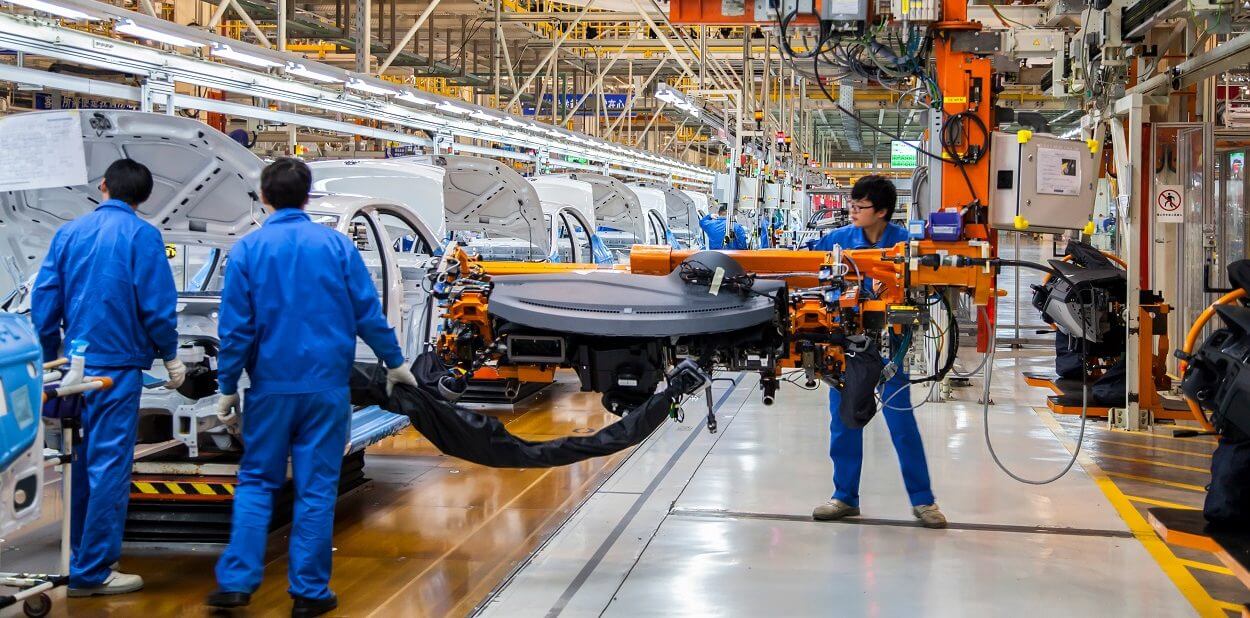
For decades, China has dominated global manufacturing. Its vast labor force, advanced infrastructure, and business-friendly policies made it the default production hub for everything from smartphones to sneakers. But the tides are shifting. A growing number of companies are embracing a new approach known as the “China+1” strategy, the deliberate decision to maintain operations in China while also expanding to additional countries.
This article explores why China became the ‘world’s factory’ in the first place, why companies are now seeking alternatives, and what the China+1 strategy means for the future of global manufacturing.
Why Did China Come to Dominate Manufacturing (the ‘Global Factory’)?
China’s rise as the world’s production center didn’t happen by accident. It was the result of calculated policy decisions, economic reforms, and a convergence of favorable factors:
- Abundant and cheap labor. Historically, China offered a massive pool of low-cost workers, making it ideal for labor-intensive manufacturing. As the Chinese workforce has become professionalized, this has started to change dramatically in the last 20 years.
- Export-oriented reforms. Beginning with Deng Xiaoping’s Open Door Policy in 1978, China introduced economic zones, streamlined business regulations, and welcomed foreign investment.
- Robust infrastructure. Modern ports, high-speed railways, and vast highway systems allowed for efficient logistics and transport.
- Skilled labor migration. Urbanization efforts moved millions from rural areas into industrial hubs, providing factories with reliable labor.
- Global integration. China joined the World Trade Organization in 2001, opening up access to global markets and fueling its manufacturing dominance.
Economies of Scale and Supply Chain Synergies
Once China hit its stride, it became more than just a low-cost option. Manufacturers began to benefit from massive economies of scale, centralized supplier networks, and specialized labor forces. It was cheaper, faster, and easier to make things in China than anywhere else. Entire cities, like Shenzhen and Guangzhou, grew around specific industries like electronics, textiles, and automotive parts, creating deep-rooted supply ecosystems that were hard to replicate elsewhere.
What Is the China+1 Strategy?
The China+1 strategy is exactly what it sounds like: a plan for companies to continue leveraging China’s strengths while simultaneously investing in at least one additional country for production.
This approach helps businesses hedge against disruption. Whether it’s a factory shutdown due to COVID-19, trade disputes between the U.S. and China, or rising wages in Chinese cities, having operations in multiple countries spreads risk and increases supply chain resilience.
Why Companies Are Diversifying Away from China
Several key factors are encouraging manufacturers to adopt the China+1 strategy.
Geopolitical and Economic Pressures
In recent years, several factors have made China a more challenging environment for foreign manufacturers:
- U.S.–China trade war. Tariffs on Chinese goods have raised costs and introduced uncertainty into long-term planning.
- Rising labor costs. Partly due to increased cost of living, wages in China have steadily increased, especially in coastal regions, narrowing the cost advantage.
- Regulatory unpredictability. Crackdowns on tech firms, foreign education providers, and other sectors have raised concerns about policy stability.
- COVID-19 lockdowns. Stringent health controls disrupted production and exports, exposing the risks of over-reliance on a single country.
- National security concerns. Countries are increasingly restricting Chinese imports in sensitive sectors such as semiconductors and telecoms.
Investor and Consumer Sentiment
Beyond financial calculus, public and investor sentiment is also shifting. Consumers are becoming more conscious of ethical sourcing and environmental impact. Investors are pressuring companies to diversify risks and show greater resilience. Political tensions have turned corporate supply chains into front-page news, and few want to be caught off guard again.
Potential Benefits of a Diversified Manufacturing Approach
Beyond hedging geopolitical risk, the China+1 strategy is about unlocking new business advantages. Some of the key benefits include:
1. Reduced Risk Exposure
Relying solely on China exposes businesses to concentrated risks: political tensions, regulatory shifts, trade wars, sudden tariffs, or pandemic lockdowns. A more distributed supply chain protects against sudden disruptions in any one location.
2. Cost Optimization
Labor costs in China have steadily risen over the past decade, especially in its major industrial hubs. By expanding to other developing nations with lower wages and favorable tax structures, companies can reduce operating costs without sacrificing quality.
3. Access to Untapped Markets
Setting up operations in alternative countries opens doors to new customers, local partnerships, and regional trade agreements. For example, manufacturers in Vietnam gain easier access to ASEAN markets, while India offers a massive domestic consumer base.
4. Supply Chain Resilience
A geographically distributed supply network is more resilient in times of global stress. It allows companies to shift production between locations, manage inventory more flexibly, and keep goods flowing even during border shutdowns or natural disasters.
5. Government Incentives and Free Trade Agreements
Many countries actively court foreign manufacturers with tax holidays, land grants, subsidies, and simplified compliance processes. These incentives can significantly lower the cost and complexity of setting up new facilities. At the same time, trade agreements between alternative countries and major consumer markets can reduce or eliminate import duties.
6. ESG and Reputation Management
Consumers and investors are increasingly scrutinizing how and where companies manufacture. By diversifying out of regions with opaque labor practices or poor environmental records, companies can better align with ESG standards, a growing priority in global capital markets.
7. Talent and Innovation Hubs
Beyond cost and risk, diversification can also spark innovation. Countries like India and Malaysia offer skilled engineering talent. Eastern Europe offers proximity to EU markets and strong technical universities. These new hubs can complement China’s capabilities rather than compete head-on.
China+1 Strategy: Benefits vs Operational Trade-offs
| Strategic Area | Key Advantage | Practical Considerations |
|---|---|---|
| Risk diversification | Reduces exposure to tariffs, geopolitical tension, and single-country disruption | Requires multi-country coordination and contingency planning |
| Cost optimisation | Access to lower labour costs and tax incentives in emerging markets | Initial setup and training costs may offset short-term savings |
| Market access | Enables entry into ASEAN, EU, and North American trade blocs | Compliance with local trade rules and origin requirements |
| Supply chain resilience | Ability to shift production during shocks (pandemics, sanctions) | Supplier ecosystems outside China may be less mature |
| ESG and reputation | Improves alignment with ESG expectations and investor scrutiny | ESG standards vary significantly by jurisdiction |
| Innovation and talent | Access to engineering and technical hubs beyond China | Talent availability and productivity levels differ by country |
Diversifying manufacturing is complex. MSA helps businesses structure and manage compliant China+1 expansions. Speak with our specialists to get started Message →
Alternative Countries to Consider
As businesses look beyond China, several countries are emerging as strong contenders for manufacturing and sourcing operations. Each offers a unique blend of cost, capability, infrastructure, and geopolitical alignment.
India
With its massive workforce, government-backed manufacturing incentives, and improving infrastructure, India is fast becoming the most popular China+1 destination. Programs like “Make in India” and Production Linked Incentive (PLI) schemes offer strong support for foreign manufacturers. While bureaucratic hurdles still exist, the long-term potential is hard to ignore.
Read more about India business expansion in our India company registration guide.
Vietnam
Vietnam has become a poster child for the China+1 strategy. The country offers a business-friendly environment, competitive wages, and strong trade agreements, including the EU-Vietnam Free Trade Agreement (EVFTA) and participation in the Comprehensive and Progressive Agreement for Trans-Pacific Partnership (CPTPP). Electronics, textiles, and furniture manufacturing have especially flourished here.
Read more about the benefits of setting up shop in Vietnam with our Vietnam subsidiary establishment guide.
Mexico
For North American companies, Mexico offers proximity, reduced shipping times, and access to the USMCA trade bloc. It’s ideal for nearshoring strategies, especially in automotive, aerospace, and medical device manufacturing.
Indonesia
Indonesia combines a growing domestic market with relatively low labor costs and abundant natural resources. Its government has launched special economic zones and incentives aimed at attracting global manufacturers.
Thailand, Malaysia, and the Philippines
These Southeast Asian nations offer decent infrastructure, skilled labor, and a track record of manufacturing success. While smaller than China, they provide stability and specialization in areas like electronics, automotive, and agribusiness.
Impact on Specific Industries
The ripple effects of the China+1 strategy are being felt across multiple industries. While the transition varies by sector, a few stand out as early movers.
1. Electronics
The electronics sector, long anchored in southern China, has aggressively diversified to Vietnam, India, and Malaysia. Companies are setting up new assembly plants to minimize tariff exposure and reduce over-reliance on Chinese suppliers.
2. Automotive
Car manufacturers are increasingly setting up satellite plants in Mexico, Thailand, and Eastern Europe. This allows better access to end markets and reduces shipping costs for large, heavy components.
3. Textiles and Apparel
Once dominant in China, the garment industry has moved much of its production to Bangladesh, Vietnam, and Ethiopia. These countries offer lower labor costs and more relaxed regulatory environments.
4. Pharmaceuticals and Medical Devices
Concerns about supply chain resilience during the pandemic pushed many life sciences firms to explore manufacturing hubs closer to home. India and Poland are emerging as attractive alternatives due to skilled talent and regulatory familiarity.
5. Consumer Goods
Brands producing everyday items like toys, furniture, and home appliances are pursuing multiple hubs to avoid customs headaches and ensure product availability.
Challenges of the China+1 Strategy
While the China+1 strategy offers compelling advantages, it comes with challenges that shouldn’t be ignored.
1. Infrastructure Gaps
Many alternative countries still lag behind China in terms of logistics, roads, ports, and digital infrastructure. Setting up a factory in India or Vietnam may require significant investment in support systems that are already mature in China.
2. Talent and Skill Shortages
Although labor may be cheaper, the availability of skilled workers and trained engineers can be a constraint in newer markets. Companies may need to invest heavily in training and local capacity building.
3. Regulatory and Bureaucratic Hurdles
Not all governments offer the speed and efficiency foreign investors expect. Inconsistent regulations, import restrictions, and red tape can delay projects and add hidden costs.
4. Supplier Ecosystems
China’s deep, interconnected supplier base is hard to replicate. Many countries don’t yet offer the same density of component suppliers, contract manufacturers, or logistics partners, making supply chain coordination more complex.
5. Political and Economic Risks
Some potential expansion countries, like Myanmar, Ethiopia, and even parts of India can present risks related to political instability, currency volatility, or shifting trade policies. Thorough due diligence is essential.
Despite these challenges, companies that plan carefully and choose the right partners can still achieve successful diversification and long-term supply chain resilience.
The Samsung Shift
Few companies embody the China+1 transition as strategically as Samsung.
In 2019, Samsung shut down its last smartphone factory in China. The decision reflected growing concerns about Chinese competition, labor costs, and operational inflexibility. Samsung redirected its production to Vietnam, India, and South Korea, where it built large-scale manufacturing hubs backed by government incentives.
Vietnam, in particular, has become a central pillar of Samsung’s global supply chain. The company now employs over 100,000 workers there, with multiple high-tech plants contributing significantly to Vietnam’s export economy.
By this shift, Samsung has maintained its global production capacity while reducing geopolitical risk and lowering costs. Its ability to swiftly implement China+1 gave it a competitive edge during global supply chain disruptions.
Grow Globally through a China +1 Strategy
China isn’t over, but it’s no longer the whole story
China will remain a dominant manufacturing force for years to come. But for companies seeking long-term resilience, cost control, and global market access, putting all operations in one country is increasingly risky.
The China+1 strategy is not about replacing China entirely – few countries can match its infrastructure, manufacturing scale, and depth of experience. It’s about complementing it. It’s about reflecting on the need for contingency planning. It’s about creating flexible, agile supply chains that can adapt to disruption and opportunity alike. Businesses that act early will be better positioned to survive uncertainty and seize growth.
The China+1 strategy—diversifying supply chains beyond China to Vietnam, India, or Mexico while maintaining a strong Chinese manufacturing or R&D base—has accelerated as companies seek tariff mitigation and geopolitical hedging without fully exiting the Chinese market. Successful China+1 implementation requires dual-jurisdiction operational expertise and integrated supply chain optimization. MSA Asia advises on China company setup and regional structuring for multi-country operations. Have a conversation with us about your expansion strategy.