Trusted by Siemens, LVMH, Bosch & 1,500+ Companies
15 Years in Asia
56 Local Experts
★★★★★ G2 Top-Rated
Back
Greater Bay Area Development: Trends and Opportunities
Dream Zhou
The Greater Bay Area, a term often associated with South China, encompasses the Pearl River Delta, including Hong Kong, Macao, Guangzhou, Shenzhen, and other cities. This region represents an ambitious initiative to merge 11 cities into an integrated economic and business hub. Focusing on innovation-driven development, the Greater Bay Area aims to play a crucial role in national development, positioning itself at the forefront of global competitiveness and influence.
The unique “One Country, Two Systems” policy is at the heart of this vision, which allows Hong Kong and Macao to maintain distinct economic and administrative systems from mainland China. The strategic positioning of these two Special Administrative Regions alongside the burgeoning cities of Guangzhou and Shenzhen creates a powerful dynamic that fosters economic synergy and sustainable growth.
The Guangdong-Hong Kong-Macao Greater Bay Area is a testament to China’s commitment to opening up its economy and driving forward with high-tech advancements (see Source). It has emerged as a powerhouse of technology and innovation, leveraging the strengths of its member cities to foster trade, finance, and cultural exchanges on a global scale.
Economic Landscape
The Greater Bay Area, an ambitious initiative by China, combines economic development and innovation across key regions. This area’s united image of financial strength, industrial diversity, and strategic urban roles within the global economy is impressive.
Gross Domestic Product
The Greater Bay Area’s GDP exceeds USD 2 trillion, placing it on par with the economies of major developed countries. Most of this economic output comes from Guangdong Province, a manufacturing and trade powerhouse. Hong Kong and Macao contribute as international financial centers, enhancing the region’s economic stature.
Key Industries
This region boasts a range of key industries, including technology, professional services, and manufacturing. As a global technology hub, it’s home to numerous Fortune 500 companies, while regions like Qianhai are designed for modern service industries and innovation. The industrial fabric is complemented by ancient craft cities like Jiangmen and Foshan, which are known for their historical manufacturing expertise.
Hong Kong is a global financial leader, while Guangdong Province includes cities like Guangzhou and Shenzhen, pivotal in manufacturing and technological innovation. Macao serves as a leisure and tourism hub, and smaller cities like Foshan and Jiangmen are integral for their industrial contributions. They have large populations and serve unique roles in the region’s economic tapestry.
Business and Trade Hubs
Hong Kong and Guangzhou operate as vital international trade centres, a cornerstone of the region’s commitment to becoming an International First-Class Bay Area. Hong Kong’s evolution includes significant economic initiatives, such as the proposed billion-dollar fund to attract investment and professional services. The Greater Bay Area actively competes with other global bay areas through its interconnected infrastructure and pro-business environment.
Infrastructure and Connectivity
The Greater Bay Area (GBA) is advancing its infrastructure and connectivity through strategic transportation networks and regional integration, which is significantly impacting the flow of people and goods.
Transportation Networks
The GBA’s focus on developing transportation systems is pivotal for its transformation. Aircraft movements at core aviation hubs have intensified, with passenger throughput in key airports like Guangzhou and Shenzhen rising substantially. The Hong Kong Section of the XRL, which connects with mainland China’s high-speed rail network, exemplifies the expansion in cross-border train services designed for speed and efficiency. Bridges and tunnels, such as the Shenzhen–Zhongshan Bridge, significantly reduce travel time across the Pearl River, strengthening ties between cities like Zhuhai and Huizhou.
Aviation: Expansion of airports complementing the aviation hub status.
Land Infrastructure: Bridges, tunnels, and rail links reduce travel times and boost accessibility.
Regional Integration
The GBA’s success in regional integration is largely attributed to policy innovation and facilitation measures. Streamlined customs arrangements and visa policies encourage a freer flow of people across borders. The integration extends beyond physical infrastructure to digital platforms, enhancing connectivity and fostering a synergistic economic landscape.
Policy Measures: Visa reforms and customs simplifications to ease cross-border movement.
Digital Connectivity: Implementing smart technologies in infrastructure contributes to a more cohesive GBA.
The outlined transportation networks and regional integration initiatives collectively underpin the Greater Bay Area’s dedication to becoming a more connected and accessible international metropolis.
Policy and Development Plans
This section focuses on the framework and strategic initiatives that underpin the growth and transformation of the Guangdong, Hong Kong, and Macao Greater Bay Area (GBA). The policies focus heavily on innovation and align with national directives to integrate the region into a dynamic and interconnected economic hub.
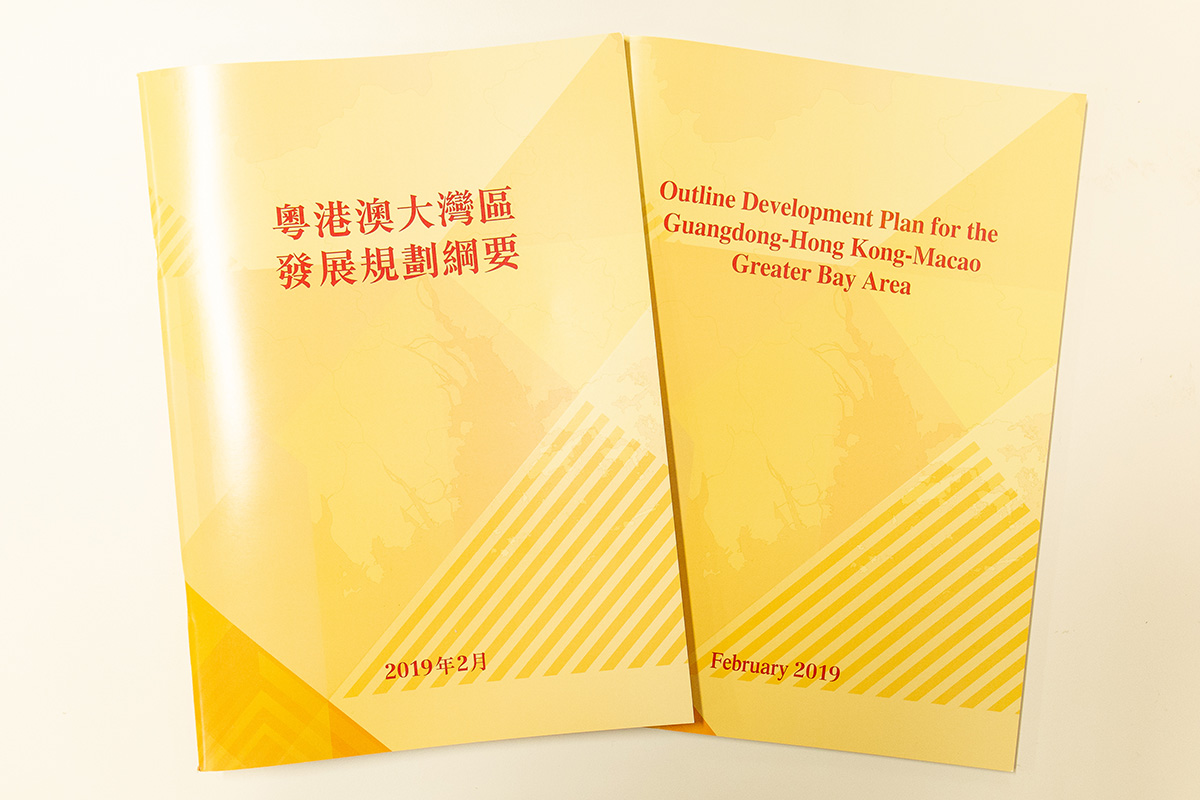
The Greater Bay Area Outline Development Plan
The Outline Development Plan is the cornerstone policy guiding the development of the GBA. It is a national strategy guiding integration within the Pearl River Delta. The plan emphasizes the “One Country, Two Systems” principle and focuses on key areas such as infrastructure connectivity, economic development, and ecological conservation. The Chinese Government and local authorities from cities like Zhongshan and Dongguan are actively working to implement this plan. Specific goals include enhancing cooperation and maintaining high-quality development, an initiative that complements the broader Belt and Road Initiative.
Outline Development Plan for the Guangdong-Hong Kong-Macao Greater Bay Area
Key components of the plan:
Innovation and Technology: Propelling sustainable economic growth
Connectivity: Building a modern infrastructure network
Ecological Conservation: Balancing development with environmental sustainability
Integration: Promoting a coordinated regional economy
Innovation and Technology Focus
Recognizing the critical role of innovation and technology, the GBA is advancing its position as a global Innovation and Technology Hub. This ambition is supported by policies fostering research, development, and the commercialization of new technologies. The Central Government encourages collaboration between businesses, research institutions, and higher education institutions to form a vibrant ecosystem for innovation. High-tech zones in cities such as Shenzhen play a central role in this vision, driving growth and attracting talent and investment worldwide (Shenzhen Municipal Government).
Strategies include:
Promoting R&D: Tax incentives and grants for research organizations
Building Tech Clusters: Supporting high-tech industries to cluster in cities like Dongguan and Zhongshan
Leveraging International Partnerships: Collaborating with global entities to receive cutting-edge knowledge and practices
The Framework Agreement signed by the Central Government lays out the structural strategies for the GBA to become an influential and innovative region that can compete on the world stage.
The Greater Bay Area initiative integrates Shenzhen, Guangzhou, and Macau with Hong Kong to create a single technology and finance hub with harmonized regulations and preferential trade terms. Companies positioned across this region unlock supply chain efficiencies and access to venture capital. China company setup spanning multiple Bay Area centers maximizes strategic advantage. MSA Asia coordinates multi-city operations and incentive claims. Contact our team about Bay Area expansion planning.
Planning to expand into the Greater Bay Area? MSA helps you navigate regulations, tax incentives, and local setup requirements so you can enter the market with confidence. Book a consultation with our experts today.
Message →

 General Guides
 Regional Guides
 Starter Guides