 General Guides
 Regional Guides
 Starter Guides

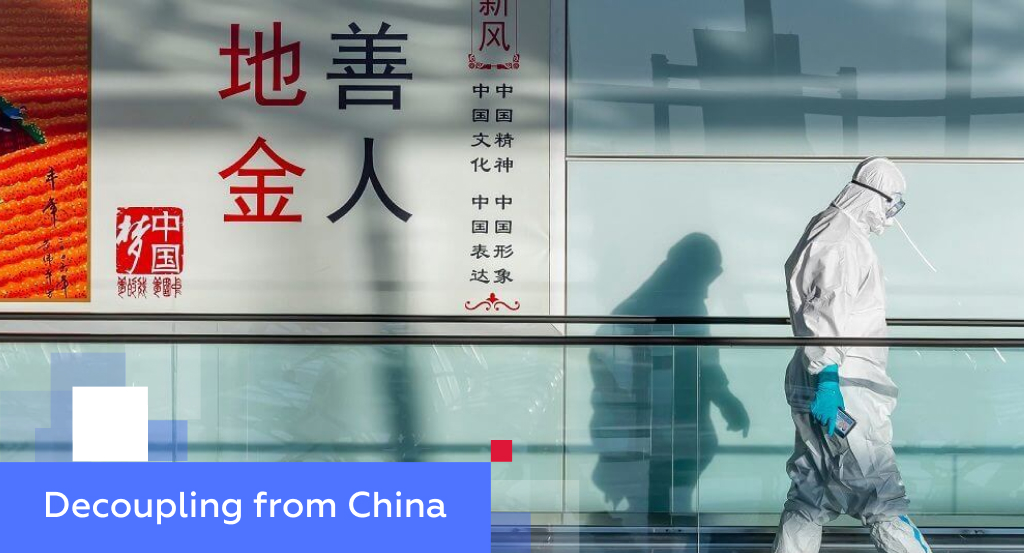
Since 2020, the global business landscape has been redefined. Weaknesses on a global level have been exposed, from failures on the governance front to frailties in supply chains and human resource practices that needed to be adjusted. It has also provided a strong contrast in examples of what constitutes great partnerships, whether it be political or economic, and while these partnerships have empowered some, it has brought the shortcomings of others to the forefront. This is true especially for those who have any businesses or commercial prospects in China. In this article we take a look at whether more foreign companies will consider decoupling from their Chinese entity and the reasons for this becoming a more prominent reality.
Doing Business in China
Your complete guide to doing business in China — from company formation and legal…
Read more

The Mounting Challenges
While it has always been seen as a tough market to operate in, over the past decade it has been an extremely lucrative one, for those who got the criteria right. However, the Chinese economic environment, which had experienced a boom right after the early stages of the pandemic, is now also appearing to be impacted, with the effects looking to remain for the short to medium term.
With a sturdy political stance, a reduced growth rate, the property bubble crisis, travel restrictions and relentless COVID-19 restriction measures, doing business in China has become an uphill battle, especially for foreign owned enterprises in the region.
Send us your questions and we will answer within 24 hours Message →
Regulatory Changes
China’s Data Security Law came into effect on 1 September 2021, which had an unsettling effect on many of the foreign companies that operate in the country. Over the past 2 years we have seen more international companies decouple from the market due to what they call an increasingly challenging operating climate.
The background of the data security law and whether data can be sent out of China or whether Chinese authorities can have access to sensitive data from foreign companies is at the forefront of large-scale foreign companies decoupling from China. High-profile examples of this can be seen in cases with Microsoft’s LinkedIn (which announced it would sunset its localized platform in October 2021 and launch the job-only ‘InJobs’ app due to stricter compliance requirements) and the Nike Running App (service ceased in Mainland China 8 July 2022, with a localised solution planned), which have both exited the Chinese market and opted to leave behind a more localized version of their products, separate from their overseas entities .
The concern from foreign businesses around the changing regulatory environment, especially regarding intellectual property rights (IPR), is not a new one and over the next year we are likely to see more businesses opting to decouple and isolate their Chinese entity.
Re-configuring Supply Chains Outside of China
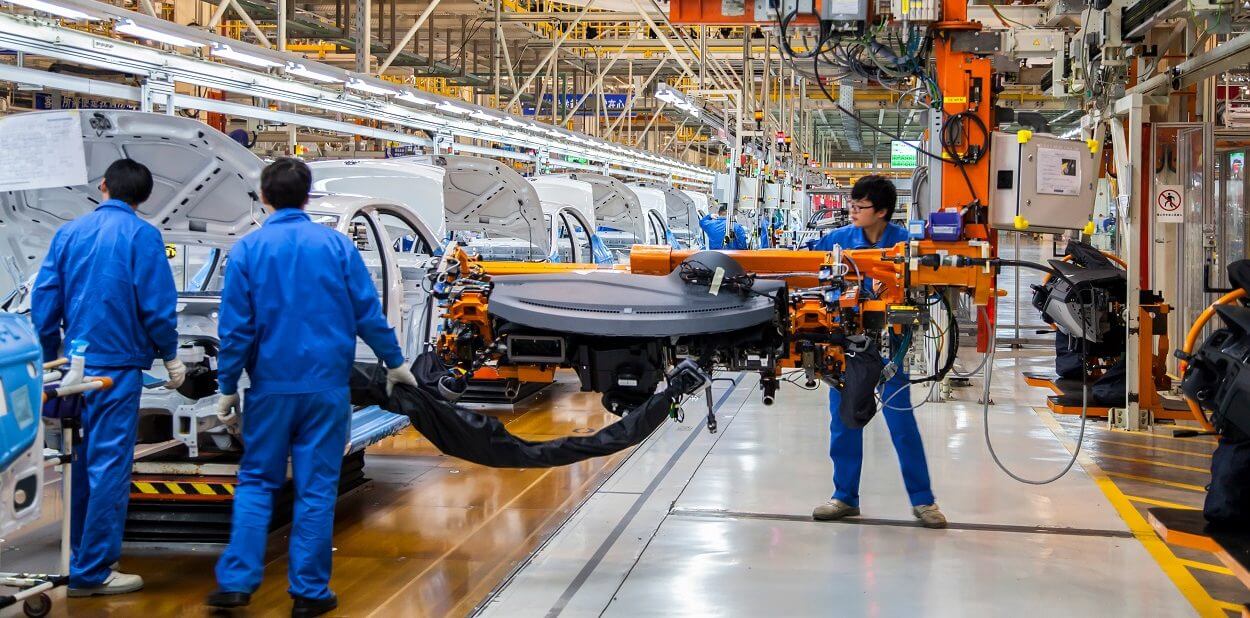
Another major reason companies are reducing their reliance on China is due to supply chains. Over the past 2 years we have seen the impact of the COVID-19 pandemic and other incidents such as the Suez Canal blockage, which have had major effects on global supply Chains. China’s reaction to the pandemic and subsequent implementation of the zero-COVID policy heavily impacted production and manufacturing, which was also accompanied by the backlog in logistics.
With travel restrictions still in effect and sporadic lockdowns still occuring across the country, companies with large parts of their supply chain based in China face the risk of their supply chain being affected.
However, while many companies may be considering moving parts of their manufacturing to other countries in the Asia-pacific region, this is not detrimental to the Chinese economy in the short term for 2 main reasons. The 1st is that even though companies are re-configuring their supply chains, it will be extremely difficult to move their entire manufacturing operations out of China, due to a lack of infrastructure in other countries and less familiar regulatory policies. The 2nd reason is that China is wants to shift from a manufacturing-based economy to a consumer-based economy, therefore a gradual shift away from manufacturing is not unexpected.
Practical Risk-to-Action Map for China Supply-Chain Decisions (2020–2022)
| Risk Driver | What Happened (Example) | Business Impact | Typical Mitigation | KPI to Track |
|---|---|---|---|---|
| COVID-19 Controls | Shanghai city-wide lockdowns (Mar–May 2022) | Factory stoppages; logistics delays; inventory build-ups | Dual-sourcing; safety stock; bonded-warehouse buffers | OTD %, lead time variance, days of inventory |
| Regulatory/Data | Data Security Law effective 1 Sept 2021; content/platform controls | Higher compliance costs; product/app localisation; exit risk | Data mapping; on-shore hosting; consent & retention controls | Audit findings closed, DPIA completion rate |
| Logistics Shocks | Port congestion; global container shortages; Suez spill-over | Transit time spikes; premium freight; stock-outs | Near-shoring (China+1); multi-port routing; VMI with 3PLs | Avg. transit days, freight cost per unit |
| Workforce Mobility | Travel restrictions and quarantines limit expat rotation | Leadership gaps; slower issue-resolution; partner visibility loss | Local leadership upskilling; delegated sign-offs; digital audits | Time-to-approve, incident MTTR |
| ESG & Governance | Investor scrutiny of supply-chain resilience & labour practices | Vendor churn; audit exposure; board-level reporting burden | Supplier scorecards; closer-to-market sourcing; traceability | % spend with “A-rated” suppliers; audit pass rate |
Stabilise your China supply chain and finance ops. From bonded-warehouse buffers to VAT/commercial invoice flow, MSA’s accounting & tax team builds an execution plan that restores lead times and cash predictability. Message →
Continual COVID Restrictions
In March of this year, we saw Shanghai and other cities across China go on city-wide lockdowns which affected the lives and businesses of all people in these cities. Shanghai launched a staged city-wide lockdown from 28 March 2022, disrupting factories and logistics. The effects extended beyond the cities and had also impacted global supply chains. Many businesses based in China have not made a full recovery, with some still feeling the effects of the on-going policies.
While more countries are learning to live alongside the Coronavirus and strive to adjust to the new conditions, China’s lockdown policy which aims to mitigate the risk of its citizens, continues to negatively impact businesses and the economy.
With the travel restrictions and quarantine periods still being enforced, travellers have been obstructed from visiting China for more than 2 years. With constant flight cancellations and less than ideal quarantine measures, companies have had trouble with a large number of executive level expatriates leaving and not being able to send willing replacements. This not only impacts on the interpersonal relationships that underpin good business partnerships but also creates an air of less visibility on the China-side of business operations.
Other Reasons Businesses are Moving Out
While the specific cases and reasoning for limiting activity in or decoupling from the Chinese economy will vary from company to company, foreign businesses across multiple sectors are reducing their reliance on China and the Chinese market.
The European Business in China Business Confidence Survey 2024 showed that over two-thirds of respondents found it increasingly difficult to do business in China, highlighting the same trend reported in 2022.
Enhanced Focus on ESG
The focus of the Environmental, Social and Governance (ESG) framework both in Europe and North America will also impact on doing business with China. The focus of ESG on themes like reliable supply chains and stable employment has helped to address critical challenges related to the COVID-19 crisis and has shown the importance of resilient investment and management approaches. Organizations are being asked to report at executive and board level with regards to outcomes with regards to ESG implementation.
The challenges around a sustainable and stable supply chain are ones that many organizations are having to grapple with, with some interesting outcomes as a result. Companies are looking to diversify suppliers, finding alternate suppliers closer to home; or looking towards localization and innovation.
Lack of Transparency
Further challenges are highlighted by The European Commission on the EU-China trade agreement including the lack of transparency along with some tariffs and industrial policies, which make it difficult for foreign owned companies to compete in China. There is also the unfair advantage that state owned entities have over their foreign competitors, such as access to certain preferential policies and a less limited business scope, which has always been difficult for foreign enterprises to navigate.
As globally there is currently a negative outlook mainly due to geopolitical tensions, it has become increasingly important to safeguard financial recovery and revaluate operational strategies.
Supply-chain decoupling decisions require analyzing per-unit cost increases, lead-time changes, and geopolitical risk hedging benefits across multiple sourcing alternatives, not just price. China company setup strategists at MSA Asia help model these trade-offs for your specific products and markets. Contact our team to evaluate your sourcing strategy.