 General Guides
 Regional Guides
 Starter Guides

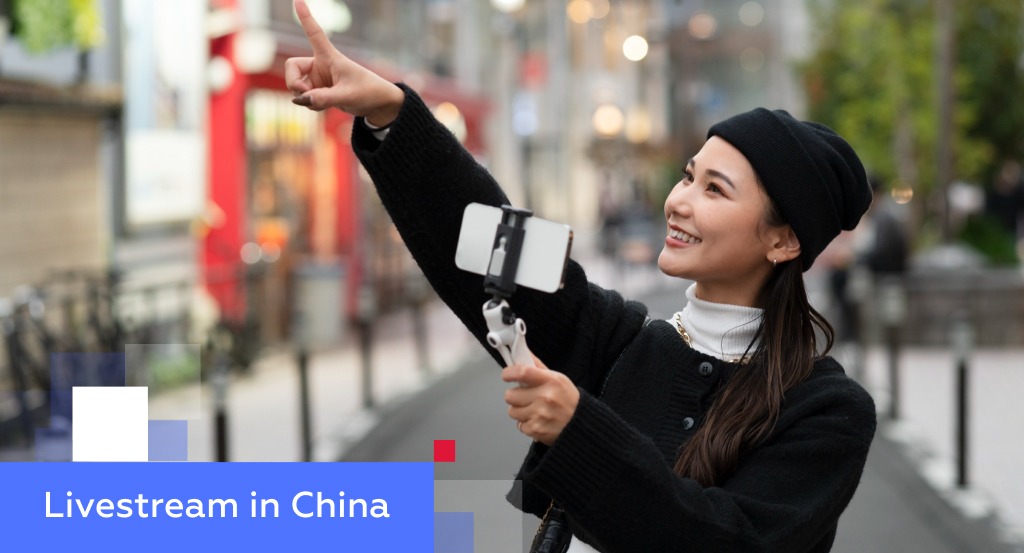
With the COVID-19 pandemic and the resulting lockdowns in China, the livestreaming industry experienced great popularity and offered a way for people to congregate safely. According to China Internet Network Information Center data, livestreaming service users in China reached 833 million as of December 2020. Over the past 5 to 7 years, the livestreaming industry has experienced explosive growth with the livestream-commerce market projected to surpass US$695 billion in China by 2023. The e-commerce livestream users reached 597 million (as of June 2024). The industry has since evolved from a niche platform for gamers and technology enthusiasts into a mainstream commercial channel.
This article will discuss in detail the importance of the livestreaming industry to the Chinese market, the main focus of the livestreaming experience in the Chinese market, different technological applications, regulatory challenges and important statistics for the industry.
Send us your questions and we will answer within 24 hours Message →
What is Livestreaming?
Livestreaming combines a live video and chat experience, enabling one or more people to create a live video that audience members can join in real time. Viewers can participate in the experience by leaving comments, questions, and feedback that live streamers can respond to immediately in real time.
The interactive nature of livestreaming distinguishes it from social media video or live chats alone, creating a more magnetic and influential experience. Instead of simply watching what their favorite gamers, stars, or influencers are doing, livestreaming allows fans to share in the experience and engage in more personal interactions.

Why is Livestreaming Important in China?
The importance of livestreaming in China has grown in 2 main ways. Firstly, it provides a vital connection to people towards their online interests, fostering online communities and social engagement. Online virtual groups and communities, enabled by livestreaming, provide a safe space for Chinese consumers, with adoption especially prevalent amongst younger audiences. Secondly, it serves as an increasingly powerful e-commerce tool, allowing influencers and brand representatives to showcase their products and connect directly with millions of people. Beyond the scale and reach that livestreaming allows for e-commerce, the opportunity to interact directly with the streamer provides a more personal and insightful consumer experience.
The Main Focus of China Livestreaming
Livestreaming in China has progressed significantly since its initial introduction, where it was primarily targeted towards a small network of gamers and entertainers, prior to 2015. With the rapid expansion of 4G coverage throughout the country, and the proliferation of online and mobile-friendly payment processors, Chinese retailers saw an opportunity to leverage livestreaming and popularize the format to reach millions of people across China.
Gaming
Gaming was one of the first sectors to embrace livestreaming, with gamers using livestreaming as a way to share their gameplay online and connect with other users who shared the same interests. Even today, gamers still remain a significant part of the global livestream userbase, leveraging platforms like Twitch and YouTube Live to engage with their fanbase.
For some gamers, building a substantial following allows for more monetization opportunities, which can include the creation of subscriber-only streams or in-game add-on items for purchases. While buying and selling may not be the primary focus of the video stream, popular content can hold a significant value for the creator and their fans.
Entertainment
The entertainment industry, similar to gaming, was an early adopter of livestreaming. It provided a more intimate and engaging way for movie stars, comedians, and various other social figures to connect with their audiences in comparison to standard video media.
For entertainers who already have a pre-existing audience or loyal follower base, livestreaming can be especially beneficial. It is often easier for them to monetize their livestreams through product reviews, creating events for subscribers, or by offering users items during the livestream.
Livestreaming and E-commerce: How Did it Emerge?
The merging of livestreaming and e-commerce commenced when Chinese retail giant Alibaba launched its own livestreaming service, on its e-commerce platform, Taobao. Alibaba recognized that livestreaming could help retailers tap into devoted audience groups, and drive sales by allowing them to showcase their products to millions of Chinese consumers directly.
Sales and promotions of goods is primarily done through influencers, or Key Opinion Leaders (KOLs), on the livestream. Key Opinion Leaders build relationships with viewers, showcase products, and answer questions in real-time. The marketing strategies used are fine tuned to align with the audience’s interests and needs, resulting in better product selection and improved conversion rates. In some cases, KOLS may be celebrities, field experts or company representatives, depending on the type of product being featured.
The high level of engagement and personal touch, combined with a carefully curated product selection increases the likelihood that audience members will make a purchase during a broadcasted stream.
Livestreaming Technology
Livestreaming has become an increasingly popular e-commerce tool in recent years, with 4 key factors that enable this trend:
- Fast, widespread Internet service and cell coverage: Prior to 2015, wireless internet was not available to many Chinese people outside of major cities. As internet availability became more easily accessible, the opportunity to enable millions of consumers to engage in e-commerce was made possible.
- Increased smartphone ownership: In addition to the proliferation of wireless internet, smartphone ownership has grown significantly to allow for more users to participate in livestreaming.
- Robust online payment systems: The rise of online payment systems has enabled smartphone users to make purchases easily and efficiently on livestream platforms.
- Logistics and fulfillment network: The existence of a well-developed logistics and fulfillment network is key to accommodating e-commerce livestreaming and the direct-to-consumer business model, so that companies can quickly deliver goods to its customers.
China’s strength in of all 4 of these areas, in addition to the widespread adoption of new technologies and willingness to try new things, are the main reasons to China’s rise in e-commerce livestreaming.
Why are People Livestreaming?
Many of us have experienced the disappointment of receiving a different item than what was pictured in online shopping, such as an item being the wrong, color, size or simply not meeting user expectations. To avoid this frustration, consumers would generally have to go to a physical retail store to examine an item before purchasing it online for a better price.
Livestreaming has emerged as a solution to this issue as consumers can directly ask questions about a product to the influencer in real time. This removes the need for additional research on their own and allows consumers to obtain the product they want at the most optimal price. For instance, a consumer can quickly find out whether a pillow is firm, soft or silky, among other things, when they want to purchase a new pillow for their bed.
Livestreaming has become one of the biggest income generators for Chinese e-commerce companies. In 2020, more than 760 million Chinese viewers participated in a livestream. Half of these viewers made purchases, which makes up to about a quarter of China’s population.
This consumer trend can be attributed to the power of personal experiences, exclusive deals made available only during livestreams, and the carefully curated products, making impulse purchases easier and giving livestreams an impressive conversion rate. In 2020, livestreaming conversion rates reached 65%, compared with influencer e-commerce at 20% and traditional e-commerce at 0.4%.
Furthermore, livestreaming is not limited to being an “infomercial with a Q&A aspect”. Technological advancements and the rise of virtual reality technology have the potential to transform livestreaming into an immersive experience, where consumers can experience the product for themselves before buying.
Where to Watch Chinese Livestreams
The largest, and oldest, Chinese e-commerce livestream platform is on Taobao by Alibaba, specializing in consumer retail goods. Other platforms include Douyin by ByteDance, which focuses on beauty, and fashion influencing. Kuaishou, targets China’s rural consumers with relatable everyday content and bargain prices.
However, while e-commerce livestreaming is growing, it is still not the largest type of livestreaming content in China. As of 2022, platforms dedicated to gaming and entertainment, such as Huya with 30.4 million active users per month, YYLive with 27 million active users, and Douyu Live, remain the leaders in this sector.
Important Livestreaming Statistics
- Up to 53% YOY Growth: China’s livestream market has grown at an astounding rate. Between 2018 and 2023, China’s ecommerce livestream market grew from 121 billion to more than 4 trillion yuan, with more growth expected.
- Singles Day Sales Growth: China’s largest shopping event of the year on November 11, reached new heights, with over 505 million people shopping on Taobao Live in 2021 alone.
- Impulse Buying: Livestream ecommerce leads to much higher levels of impulse purchasing. In 2019, 53% of consumers who participated in an ecommerce livestream event reported a “relatively high” desire to purchase, as opposed to the 7% who experienced a normal or relatively low desire.
- Lower Return Rates: Live sales events allow consumers to make more informed purchases, leading to comparatively lower return rates than traditional e-commerce sales models.
Regulations on Livestreaming in China
- The Chinese government has implemented regulations to oversee the livestreaming industry, ensuring a safe and professional environment for buyers and sellers.
- In recent years, most notably through 2023–2024, the State Administration for Market Regulation (SAMR) has continued to strengthen oversight of livestream and platform-based e-commerce, with a focus on consumer protection, data compliance, advertising standards, and platform accountability.
- Between 2023 and 2025, Chinese regulatory authorities reinforced real-name registration, identity verification, and accountability requirements for livestream hosts, influencers, and key opinion leaders (KOLs), as part of broader efforts to standardise online sales activities and reduce fraudulent or misleading practices.
- By 2024–2025, the Ministry of Commerce and other relevant authorities further consolidated governance of livestream e-commerce through ongoing enforcement actions and sector guidance, targeting misleading promotions, improper review mechanisms, and unprofessional conduct, with the aim of maintaining a fair, transparent, and orderly market environment.
MSA helps you set up your China entity, navigate tax & accounting, and stay compliant so you can focus on your livestream strategy. Message →
China’s livestream commerce sector generates hundreds of billions in annual GMV, but regulatory frameworks around advertising claims, product liability, and influencer licensing continue to tighten. Brands entering this channel must audit content governance to avoid suspension. China company setup for e-commerce operations includes compliance calendars and content review protocols. MSA Asia helps you navigate livestream regulations and audience expectations. Drop us a line to discuss your livestream strategy.