 General Guides
 Regional Guides
 Starter Guides

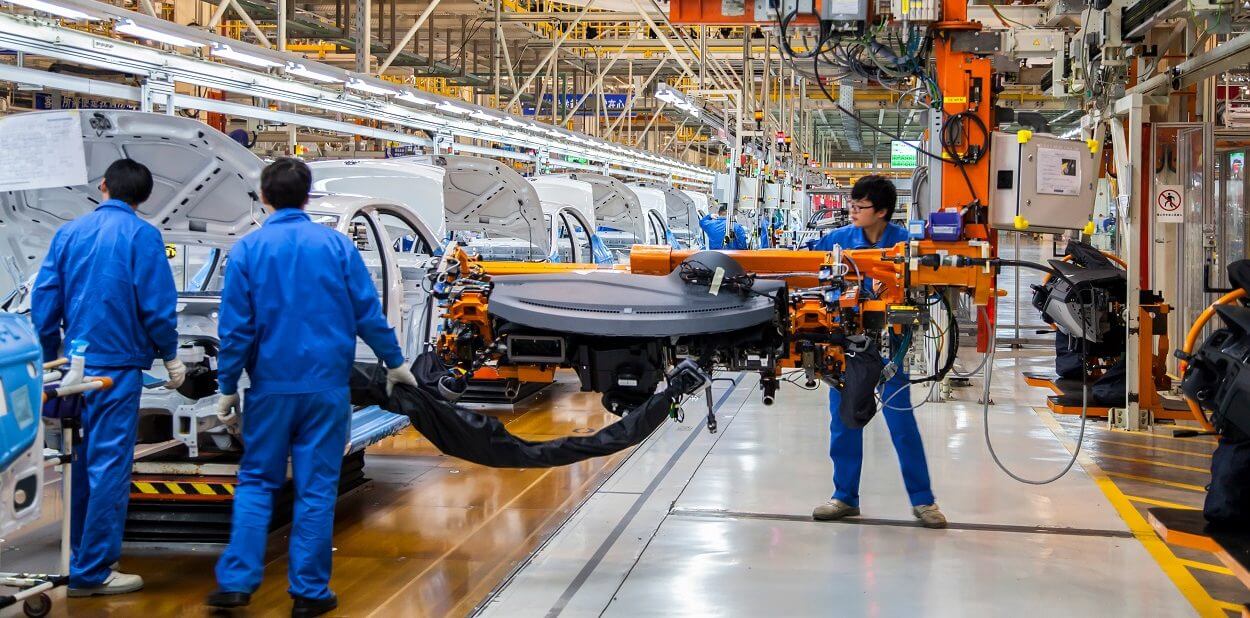
China, widely known as “the world’s factory,” has been a dominant force in global manufacturing, due primarily to favorable factors such as low labor costs, a skilled workforce, and reliable infrastructure. The manufacturing landscape of China has evolved however, with regions developing and moving towards more value focused production, in addition to labor-intensive manufacturing shifting inland.
Companies now prefer to manufacture their products in China in order to meet the demands of the growing domestic market, rather than using the country solely as a low-cost option to produce items for export. China has become the go-to for outsourced manufacturing expertise, just as other countries have become hubs for other forms of outsourcing like Business Process Outsourcing.
Despite such noteworthy success, China’s manufacturing sector is facing several challenges. One of the biggest challenges is rising labour costs, and the growth of the ‘China+1’ strategy has led many manufacturers to expand production into Southeast Asia, particularly Vietnam and Indonesia. Additionally, China faces increased competition from other emerging manufacturing economies such as India and Vietnam.
Send us your questions and we will answer within 24 hours Message →
Why is China so Good at Manufacturing?
China has gained its reputation as a manufacturing powerhouse for a number of reasons, including:
- Low-cost labor: due to having such a large population and the wage level being low, China has had a large supply of low-cost labor for a long period of time.
- Favorable policies: in an effort to stimulate manufacturing and production in China, the government had implemented a number of favorable policies to encourage investment and promote the exportation of goods.
- Strong supply chains: with a large network of manufacturers, suppliers and distributors, it has made it easy for companies to define the supply chain and source both components and finished products of goods.
- Flexibility: whether scaling up or down, Chinese manufacturers have gained a reputation of being able to adapt to a client’s needs and preferences.
- Infrastructure: China has heavily invested in infrastructure to manage the needs of the manufacturing industry. While other countries in South-East Asia are improving their manufacturing capabilities, they are unable to match China’s extensive infrastructure system which is why China is still considered the world’s factory.
Outlook for the Future
The “Made in China 2025” program is a comprehensive plan that aims to make the country a global high-tech manufacturing powerhouse.
By the mid-2020s, China’s industrial policy focus has increasingly shifted toward advanced manufacturing, supply chain resilience, and strategic technologies such as semiconductors and green energy.
It focuses on upgrading China’s manufacturing sector by developing advanced technologies and driving innovation in key areas such as robotics, aerospace, new materials, and biotechnology. Moreover, it seeks to improve the quality and safety of Chinese products, in efforts to enhance the country’s global reputation and competitiveness. Lastly, the program aims to encourage collaboration between Chinese companies and foreign firms, particularly in terms of furthering the advancement of new technologies as well as the transfer of manufacturing techniques.
The program has specified targets, which include increasing the proportion of domestically produced components and materials used in Chinese products, reducing the country’s reliance on foreign technology, and promoting the development of high-end equipment and products.
To achieve these goals, the Chinese government has implemented new policies and initiatives, including providing financial support and tax incentives to high-tech manufacturers, promoting the development of new technologies and industrial clusters, and strengthening intellectual property protections.

Challenges of Manufacturing in China
- Access to technology from abroad due to restrictions
The regulations around technology transfer in China remain a complex and challenging process to navigate, leading to delays, with additional costs for manufacturers. Additionally, the Chinese government has implemented strict regulations on the importation of technology, especially those related to national security, thereby significantly impacting the manufacturing industry.
- Variability of logistics and systems for infrastructure
While China has invested significantly in its infrastructure in recent years, there still remains significant regional disparities with regards to transportation, communication, and power supply.
For instance, while the coastal regions of China have well-developed logistics and transportation systems, the same cannot be said for inland regions. The lack of infrastructure in these regions is a major cause for delays in the transportation of goods, resulting in increased costs for manufacturers.
- Rising costs
In recent years, labor and operating costs have been rising, presenting a significant challenge for manufacturers.
Factors contributing to the rising costs include increasing wages, stricter environmental regulations, and higher taxes. Additionally, exchange-rate fluctuations can increase costs for manufacturers that rely heavily on imported components or foreign-currency contracts.
- Commercial law inconsistencies
Despite efforts to reform and modernize its legal system, China’s legal environment is still challenging to navigate, with various obstacles such as ambiguous legal interpretations which indicate a lack of transparency and an inconsistent application of laws. Such inconsistencies in commercial law practices make it challenging for foreign companies to navigate and fully understand the legal requirements needed to operate in China.
- Competition with neighboring nations
China faces competition from neighboring nations such as Vietnam, Indonesia, and India in the manufacturing sector. These countries offer lower labor costs, flexible regulations, and a growing middle-class market. This competition may put pressure on Chinese manufacturers to lower their prices to remain competitive, which results in overall lower profit margins.
While these other markets may still lack the infrastructure needed for companies to be fully independent from Chinese manufacturers, each year their respective manufacturing industries are growing, which could produce a significant threat in the future for the world’s largest manufacturer.
Rising labour costs and regulatory shifts make China’s market more complex than ever. MSA helps you assess feasibility, choose the right location, and structure your operations efficiently. Speak with our experts to build a resilient manufacturing strategy. Message →
- Risk-averse nature of companies in high-risk investments and R&D projects
China’s history of rapid economic growth and technological progress has often been fueled by imitation and adaptation of existing technologies rather than by truly innovative research and development. This has created a business environment in which companies may be less willing to take risks on unproven technologies and concepts, and instead focus on incremental improvements to existing products and services.
With China slowly changing focus towards high-tech and a consumer-focused economy, it is expected that we see more high-tech being incorporated in manufacturing processes in the future.
- Concerns over IP protection and low infringement penalties
Chinese manufacturers often face concerns over intellectual property (IP) protection, with a history of counterfeit and infringement issues. The country’s legal system has been criticized for its low penalties for IP infringement, making it difficult to protect valuable intellectual property.
Key Challenges Affecting Manufacturing in China
| Challenge | What’s Changing | Impact on Businesses |
|---|---|---|
| Rising labour costs | Wages increasing across major manufacturing hubs | Higher production costs and pressure to relocate |
| Competition from India & Vietnam | Lower operating costs and improving supply chains in rival markets | Companies diversify supply chains (China +1 strategy) |
| Regional infrastructure imbalance | Inland regions lag behind coastal provinces | Logistics delays and higher transport costs |
| IP protection concerns | Enforcement still inconsistent | Higher due-diligence requirements for foreign firms |
| Environmental & regulatory tightening | Stricter compliance rules and emissions targets | Increased operational and upgrade costs |
Intellectual Property in China
In recent years, China has taken many steps to become a more favorable landscape…
Read more

- Relatively low-paying jobs in high-tech manufacturing and a shortage in talent
While China has a large pool of labor, there is a shortage of available professionals with the necessary skills and experience to work in high-tech manufacturing. Compared to other countries, such as the United States or Europe, the wages for skilled workers in China are still relatively low.
How to Mitigate Risks and Overcome Barriers to Manufacturing in China
- Cooperation between stakeholders
China’s manufacturing sector continues to evolve, creating opportunities to learn from other advanced industrial economies and strengthen innovation capacity.
Providing financial and policy support for R&D alliances, conducting pilot programs in key technology areas and industries, and forming partnerships with entities with strong research capabilities can help make build a more intelligent and efficient manufacturing industry.
- Enhancing manufacturing standards
Issued in 2022 by the State Administration for Market Supervision (SAMR) and 16 other departments, the National Standardization Development (NSD) Action Plan provides a roadmap for implementing the NSD Outline.
The “China Standards 2035” strategy was launched to set global standards for emerging technologies such as artificial intelligence (AI). The NSD was promulgated to offer a clear vision for Chinese companies to improve their technical capabilities and promote system standardization in the coming decade.
- Develop and optimize for talent, infrastructure, and intelligent projects
The Chinese government has been investing in programs to develop talent in the manufacturing industry. China has expanded national programmes to develop advanced manufacturing talent, particularly in robotics, semiconductors, and industrial AI.
The country is also at the forefront of developing intelligent manufacturing technologies, such as robotics, artificial intelligence, and the Internet of Things (IoT). Furthermore, the Chinese government has launched initiatives to support the development of these technologies, such as the “Internet Plus” plan and the “Robotics Industry Development Plan.”
Manufacturing in China faces rising labor costs, increased environmental standards, and competition from other low-cost nations, requiring companies to focus on efficiency and supply chain optimization. MSA Asia’s China company setup team helps manufacturers through cost pressures and regulatory changes. Reach us to discuss your manufacturing strategy.