Trusted by Siemens, LVMH, Bosch & 1,500+ Companies
15 Years in Asia
56 Local Experts
★★★★★ G2 Top-Rated
Back
Chinese Currency (RMB): Understanding the Renminbi
Dream Zhou
The renminbi (RMB), also known as the Chinese yuan, is the official currency of the People’s Republic of China. It plays a crucial role in the country’s economic system and has significant global trade and finance implications. Managed by the People’s Bank of China, the renminbi has undergone extensive reforms and internationalization efforts, reflecting China’s growing influence in the global economy.
This article provides an in-depth exploration of the renminbi, its historical context, currency structure, monetary policy, and role in international trade. The RMB was initially pegged to the US dollar but has since transitioned to a managed float system. This evolution has allowed China to control its economy better and respond to external economic pressures.
What is the Renminbi?
Understanding the Chinese Currency
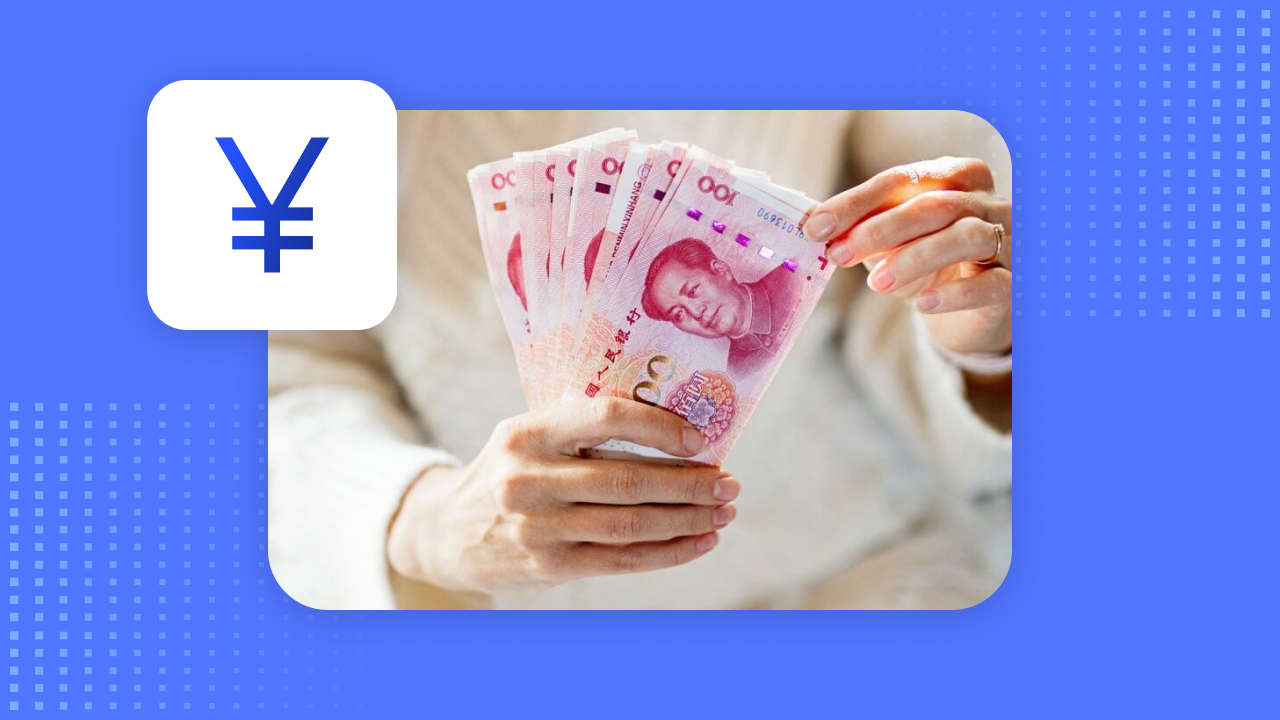
The Chinese renminbi currency is the legal tender in the People’s Republic of China. ‘Renminbi’ translates to ‘people’s currency’ and is abbreviated as RMB, with the symbol ¥ and the ISO code CNY. The currency is managed by the People’s Bank of China, the country’s central bank, and has undergone significant reform and internationalization, reflecting China’s growing presence in global trade and finance.
Difference between Renminbi and Yuan
The renminbi (RMB) is the official currency of the People’s Republic of China. “Renminbi” literally translates to “the people’s currency.”
The “yuan” refers to the unit of the RMB; it is akin to the “dollar” in the United States currency system, where the “dollar” is the unit of the U.S. dollar (USD). While “renminbi” is the official name, “yuan” is more commonly used in daily transactions.
Subunits of the Yuan: Jiao and Fen Explained
The Yuan is subdivided into smaller units known as jiao and fen within the renminbi currency system. One Yuan equals 10 jiao, and one jiao is divided into 10 fens. Due to their low value, these subunits are less frequently used but are still legal tender in China.
Currency Symbols and ISO Codes: The Global Identity of the Yuan
The Yuan’s currency symbol is “¥,” similar to the Japanese yen. The ISO 4217 code “CNY” (Chinese Yuan) for international financial transactions denotes the Yuan. This code ensures the currency is consistently recognized and referenced in global finance and trade.
The Difference Between Onshore and Offshore RMB (CNY & CNH)
The renminbi is traded in two distinct markets: onshore (CNY) and offshore (CNH). The onshore renminbi (CNY) is traded within mainland China and is subject to strict regulatory controls by the People’s Bank of China. These controls include capital restrictions and exchange rate management to stabilize the currency and protect the domestic economy.
In contrast, the offshore renminbi (CNH) trades outside mainland China, primarily in financial hubs like Hong Kong, Singapore, and London. The CNH market was established to facilitate international trade and investment in the renminbi. Unlike the onshore market, the offshore market is less regulated, allowing for greater flexibility and market-driven exchange rates. This dual system helps China manage its currency more effectively while promoting the renminbi’s internationalization.
The existence of two separate markets can lead to differences in the exchange rates of CNY and CNH. Various factors influence these differences, including market demand, liquidity, and regulatory policies. Understanding these distinctions is crucial for businesses and investors to navigate the complexities of trading and investing in renminbi-denominated assets.
Summary Table: The Yuan / Renminbi and Its Variations
Aspect
Description
Official Name
Renminbi (RMB)
Common Name
Yuan (¥)
ISO Codes
CNY (Onshore), CNH (Offshore)
Subunits
1 Yuan = 10 Jiao, 1 Jiao = 10 Fen
Symbols
¥
Onshore Currency
CNY – Traded within mainland China, subject to strict regulatory controls
Offshore Currency
CNH – Traded outside mainland China, in financial hubs like Hong Kong, Singapore
Capital controls, exchange rate volatility, economic reforms, geopolitical tensions
Historical Context of Chinese Currency: From Early Origins to Modern Day
The Chinese currency has undergone extensive transformation throughout history, from its early origins to modern implications in global economics. Two significant periods stand out: the age-old genesis and evolution of currency in China and the impactful transitions from the Qing Dynasty to the modern era under the People’s Republic of China.
From Cowry Shells to Copper Coins
Chinese currency dates back over 3,000 years. Early trade was facilitated with cowry shells, believed to be among Central China’s earliest forms of currency. By 210 BC, the first Emperor of China, Qin Shi Huang, standardized currency by introducing copper coins. The currency development continued through various dynasties, introducing monetary systems and coinage.
A pivotal moment in Chinese currency history was the Mongols’ introduction of paper money during the 13th century under the Yuan Dynasty. This innovation marked the beginning of using paper notes, which later became prevalent worldwide. Initially backed by precious metals like silver, this system eventually transitioned to a fiat currency standard where the paper notes had value because the government said so, not because physical commodities backed them.
The Qing Dynasty to the People’s Republic of China
The late Qing Dynasty saw significant economic challenges, with attempts to modernize the currency as part of broader efforts to strengthen the empire. Following the fall of the Qing Dynasty in 1912, the Republic of China was established, and the country saw substantial monetary reforms.
During the Republic era (1912–1949), China experienced a period of monetary fragmentation with various forms of currency in circulation. In the aftermath, Mao Zedong’s rise to power and establishment of the People’s Republic of China (PRC) in 1949 ushered in a new currency, the Renminbi (RMB) or ‘People’s Currency,’ abbreviated as CNY. The Chinese government used the new currency to reinforce macroeconomic control and stabilize the economy post-1949 financial instability.
The RMB underwent several series of banknotes under the PRC. Initially, the RMB banknotes depicted various industries, such as agriculture and mining, reflecting the PRC’s economic policies aimed at industrialization and agricultural development. As the PRC evolved, so did its currency, becoming a vital tool in its economic development strategy.
Through these periods, the Chinese currency’s evolution has been influenced by domestic needs and international forces, maintaining a central role in China’s socioeconomic development.
Management by the People’s Bank of China
Objectives and Tools of the PBOC
The People’s Bank of China (PBOC) critically defines China’s monetary policy, which aims to maintain financial stability and support economic growth. The PBOC employs various tools to achieve these objectives, including interest rate adjustments, reserve requirements, and open market operations. The PBOC also uses a medium-term lending facility (MLF) to manage liquidity in the banking system, providing funds to banks at predetermined interest rates to ensure adequate liquidity.
Currency Control Measures in China’s Economy
China maintains strict currency control measures to manage the renminbi’s value and prevent excessive volatility. These measures include capital controls, which restrict the flow of money in and out of the country, and intervention in the foreign exchange markets to stabilize the currency. These controls help the PBOC manage the exchange rate and protect the economy from external shocks.
China’s Managed Float Exchange Rate System
How the Managed Float System Works
China operates a managed float exchange rate system, where the renminbi’s value can fluctuate within a specified range set by the PBOC . This system provides flexibility while maintaining stability and control over the currency’s value. The PBOC sets a daily reference rate for the yuan against a basket of currencies, which guides the currency’s market value. This approach helps mitigate excessive volatility and ensures the yuan’s value aligns with China’s economic conditions.
Physical Forms of the Yuan: Coins and Banknotes
Denominations and Designs
The Yuan is available in coins and banknotes. Banknotes come in 1, 5, 10, 20, 50, and 100 Yuan, while coins are available in denominations of 1 Yuan, 5 jiao, and 1 jiao. Each denomination features distinct designs and security features to prevent counterfeiting. For instance, the 100 Yuan note prominently features Mao Zedong’s portrait, including advanced security measures like watermarks, security threads, and color-shifting ink.
Anti-Counterfeiting Features
China has incorporated several anti-counterfeiting features to ensure its currency’s authenticity. These include holograms, microprinting, textured printing, and ultraviolet (UV) light features. These security measures make it difficult for counterfeiters to replicate the banknotes and help maintain the currency’s integrity.
Digital Yuan: China’s Push Towards a Cashless Economy
Introduction of Digital Currency Electronic Payment (DC/EP)
According to the People’s Bank of China, China is at the forefront of developing a digital currency called Digital Currency Electronic Payment (DC/EP). The digital Yuan aims to complement the existing physical currency and provide a more efficient and secure means of transaction. The PBOC has been piloting the digital Yuan in several cities, and it is expected to play a significant role in China’s push towards a cashless economy.
Benefits and Usage
The digital Yuan offers several benefits, including increased transaction speed, reduced costs, and enhanced security. It also gives the government better control over the money supply and the ability to combat money laundering and tax evasion. Users can make transactions using their smartphones, making it convenient for everyday use.
Digital Yuan Security
The digital Yuan incorporates advanced security measures to ensure safe and secure transactions. These measures include encryption, secure authentication, and real-time monitoring to detect and prevent fraudulent activities. The PBOC has implemented these features to build trust and confidence in the digital currency. Additionally, the digital Yuan leverages blockchain technology to enhance transparency and traceability, making it more difficult for illicit activities to go undetected. This robust security framework fosters user confidence and promotes widespread adoption.
International Use of the Yuan: Trade and Global Finance
Yuan in International Trade
The yuan is increasingly used in international trade, reflecting China’s growing influence in the global economy. Many countries have started using the yuan for trade settlements, reducing their reliance on the US dollar. This shift is part of China’s broader strategy to internationalize its currency and increase global acceptance. The Belt and Road Initiative (BRI) has significantly boosted the yuan’s international use. Through the BRI, China has facilitated trade and investment in numerous countries, encouraging the use of the yuan in cross-border transactions. For instance, countries like Russia, Pakistan, and several African nations have signed agreements to settle trade in yuan, enhancing economic cooperation and reducing currency exchange risks.
Role in the IMF’s Special Drawing Rights
In 2016, the International Monetary Fund (IMF) included the yuan in its Special Drawing Rights (SDR) basket alongside the US dollar, euro, Japanese yen, and British pound (IMF). This inclusion marked a significant milestone in the yuan’s internationalization and recognized its importance in the global financial system. Including the yuan in the SDR basket has increased its attractiveness to central banks and financial institutions worldwide, leading to higher foreign exchange reserves held in yuan.
Get expert guidance on RMB payments, capital controls, and compliant invoicing.
Message →
Regional Variations: Hong Kong Dollar, Macau Pataca, and New Taiwan Dollar
Hong Kong Dollar (HKD)
While the renminbi is the official currency of mainland China, the Hong Kong Dollar (HKD) is used in the Hong Kong Special Administrative Region. The HKD is pegged to the US dollar and operates under a monetary system different from the mainland. This arrangement allows Hong Kong to maintain financial stability and attract international business, given its status as a global financial hub. The HKD’s peg to the US dollar has been a cornerstone of Hong Kong’s economic policy, providing predictability and confidence for investors and businesses operating in the region.
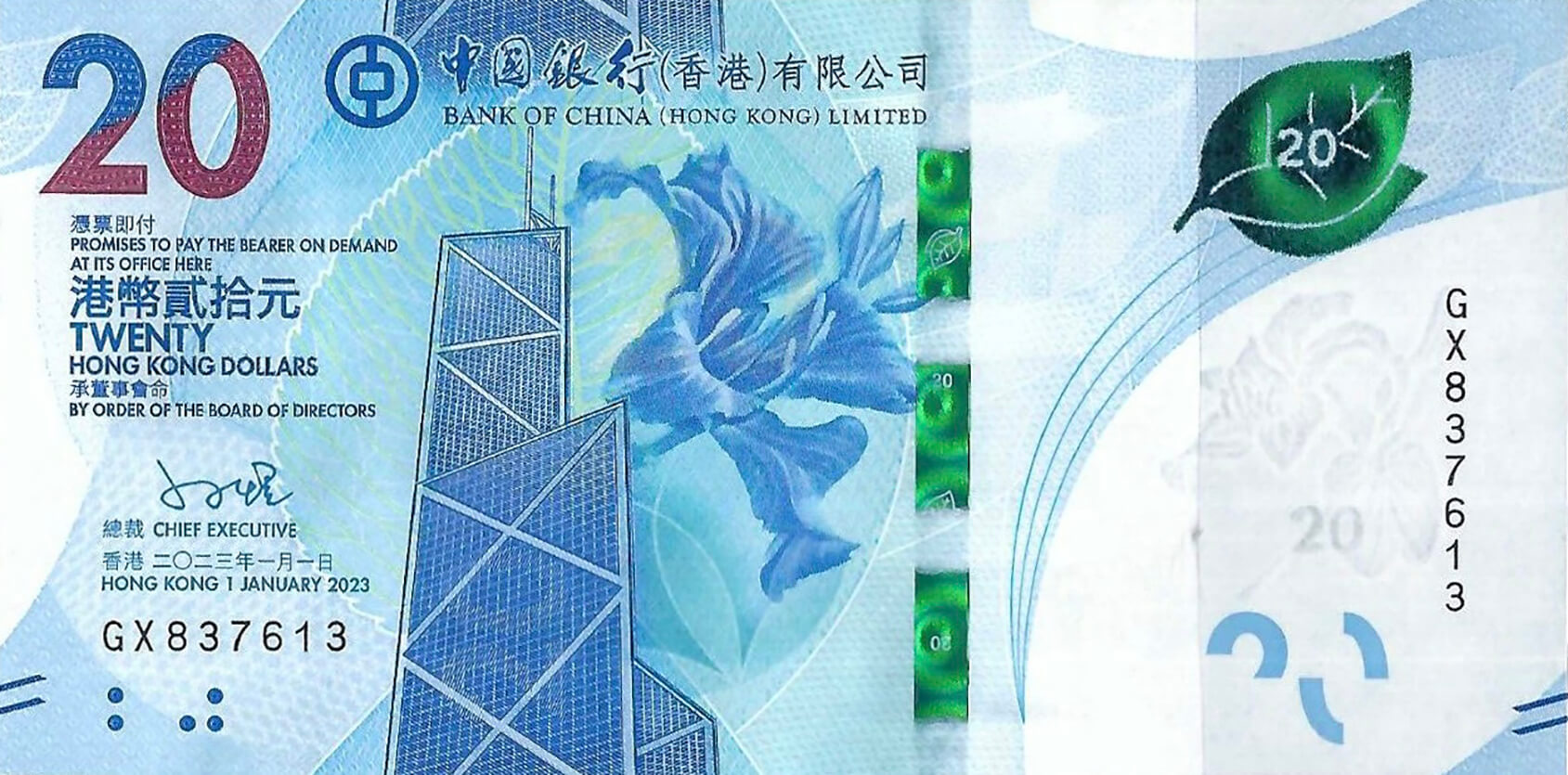
The photo depicts the Hong Kong (BOC) 20-dollar note, series B921c, with the new issue date of January 1, 2023. It features modern design elements and security features, with distinctive cultural motifs representative of Hong Kong.
Macau Pataca (MOP)
The official currency in the Macau Special Administrative Region is the Macau Pataca (MOP). Like the HKD, the MOP operates under a separate monetary system and is pegged to the Hong Kong Dollar. Macau’s economy, heavily reliant on tourism and gaming, benefits from this stable currency arrangement. The peg to the HKD ensures that Macau’s financial system remains stable, which is crucial for its economic activities, especially given the significant influx of tourists from mainland China and other regions.
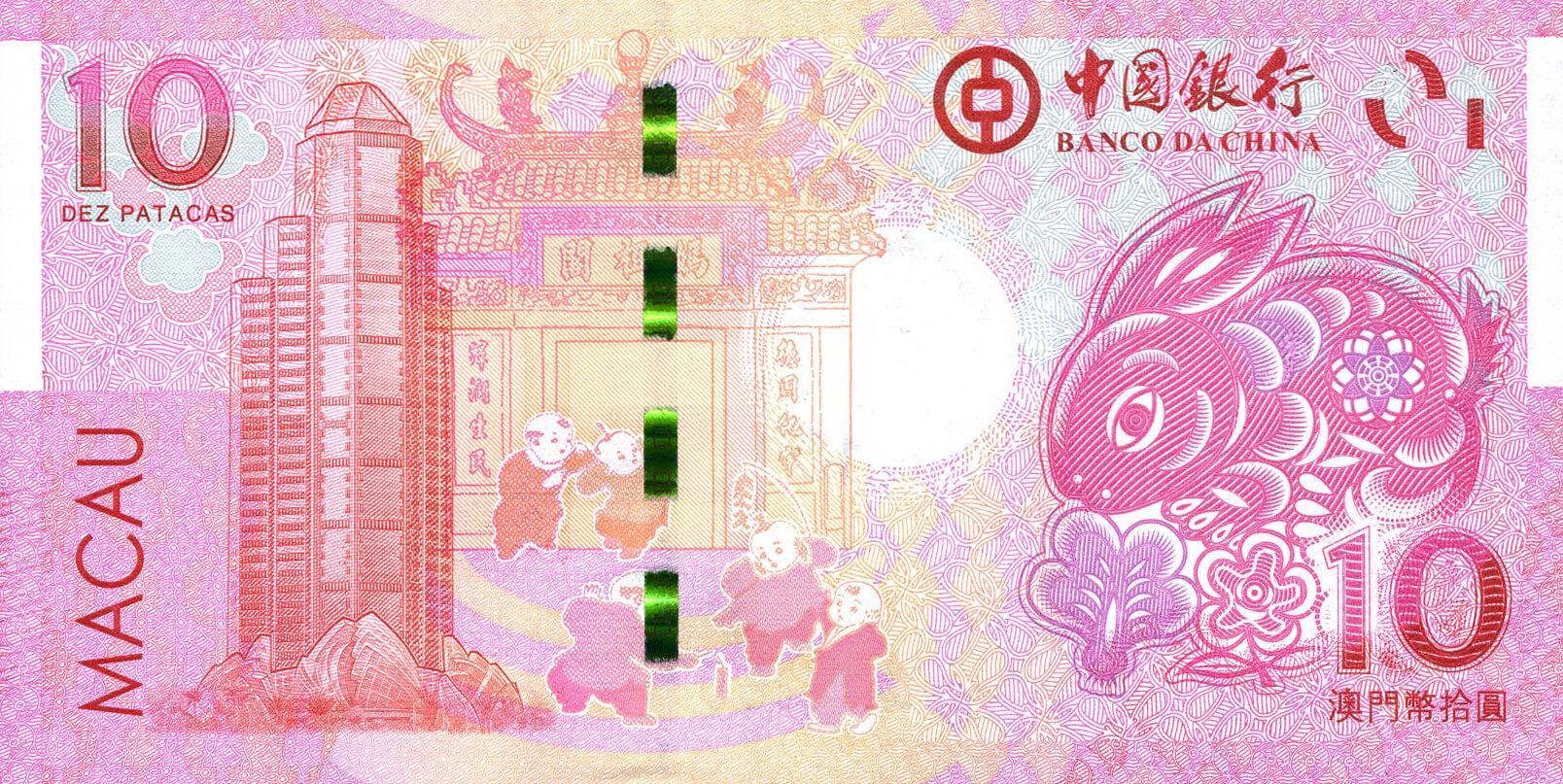
The photo showcases the new Macau (BOC) 10-pataca note, B230a series, featuring vibrant colors, cultural designs, and advanced security features. The front illustrates the iconic Bank of China building in Macau, while the reverse likely celebrates local heritage or landmarks.
New Taiwan Dollar (TWD)
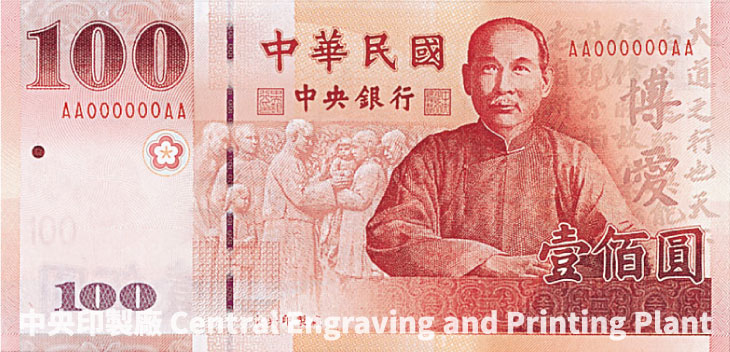
The New Taiwan Dollar (TWD) is Taiwan’s official currency. Taiwan’s currency system is different from that in mainland China, allowing for its different economic circumstances.
The photo displays a 100 New Taiwan dollar note, predominantly red. The obverse features the portrait of Dr. Sun Yat-sen, and the reverse features the Chung-Shan Building, symbolizing the country’s heritage and governance.
Cultural Aspects of Chinese Currency: Language, Symbolism, and Art
Language and Writing on Currency
Chinese currency features inscriptions in simplified Chinese characters, reflecting the country’s official language. These inscriptions include the denomination, the issuing authority, and other relevant information. The use of simplified characters makes the currency accessible to most of the population, ensuring it is easily recognizable and understandable. Additionally, the currency often includes inscriptions in minority languages in certain regions, reflecting China’s ethnic diversity.
Symbolism in Currency Design
The design of Chinese currency often incorporates significant cultural and historical symbols. For example, the portrait of Mao Zedong on the banknotes symbolizes the country’s revolutionary history and leadership. Other elements, such as images of the Great Wall, the Temple of Heaven, and various ethnic groups, highlight China’s rich cultural heritage and diverse society. These designs serve not only as a medium of exchange but also as a means of promoting national pride and unity.
Currency in Chinese Art
Currency has also been a part of Chinese art, with historical coins and banknotes featured in various artistic expressions. This reflects the cultural importance of currency in China’s history and society. Ancient Chinese coins, with their distinctive square holes, have been used in jewelry and decorative arts, symbolizing wealth and prosperity. Modern banknotes and coins are sometimes incorporated into contemporary artworks, reflecting the ongoing evolution of Chinese society and its economic achievements.
Challenges and Changes in the Chinese Currency Landscape
Black Market Exchange Pressures
Despite strict currency controls, a black market for currency exchange exists in China. This market often offers more favorable exchange rates than the official rates, posing challenges for the government in maintaining control over the currency. A black market indicates underlying issues in the official exchange rate policies, such as discrepancies between market demand and the controlled rates. Addressing these pressures requires a delicate balance between maintaining control and allowing market forces to play a more significant role.
Technological Integration and Risks
Integrating technology into China’s currency system, particularly with the introduction of the digital Yuan, presents both opportunities and risks. While it offers enhanced efficiency and security, it raises concerns about cybersecurity and data privacy. Ensuring the digital Yuan’s security involves constant vigilance against hacking attempts and fraud. Moreover, the implementation of digital currency must address issues related to digital inclusion, ensuring that all population segments can access and use it effectively.
Legal and Financial Reforms
China continues to implement legal and financial reforms to strengthen its currency system. These reforms aim to enhance the stability and internationalization of the renminbi, ensuring its continued relevance in the global economy. Reforms include liberalizing interest rates, improving regulatory frameworks, and promoting transparency in financial markets. These measures are designed to create a more robust and resilient financial system capable of supporting China’s economic ambitions and mitigating potential risks.
Understanding RMB management, capital flow controls, and currency conversion restrictions is essential for companies operating across multiple jurisdictions or repatriating profits from China. The Renminbi’s role in global trade continues to expand, creating both opportunities and compliance complexities for foreign investors. MSA Asia advises on currency strategy and China corporate services to optimize your financial operations. Get in touch with our specialists.

 General Guides
 Regional Guides
 Starter Guides