 General Guides
 Regional Guides
 Starter Guides

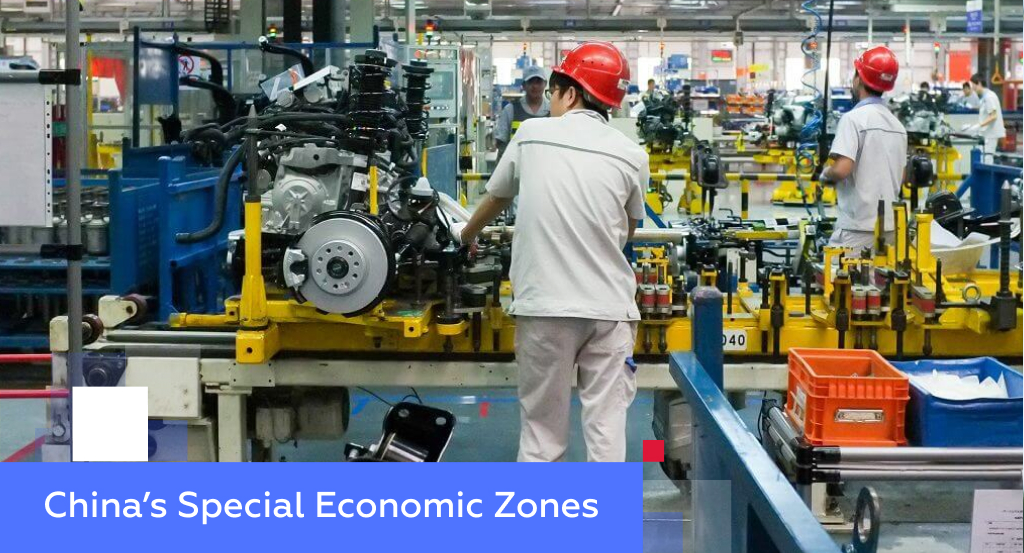
The rise of the Chinese economy began more than four decades ago, and one of the main drivers of the country’s unprecedented growth is the establishment of special economic zones (SEZs). Established as a way to experiment and promote economic reform, SEZs opened the country to new possibilities and laid the foundations for a strong market that remains competitive even today.
Here, we explore how foreign companies expanding or starting a business in China can take advantage of Special Economic Zones.
Send us your questions and we will answer within 24 hours Message →
Understanding Special Economic Zones in China
A special economic zone (SEZ) has unique characteristics that make it more viable for conducting business. Commercial zones are geographically delimited and physically secured areas managed by a single administration and subject to its regulations. Organizations operating within the zone enjoy various benefits, often including a separate customs area designated for international transactions, tax incentives, and access to infrastructure.
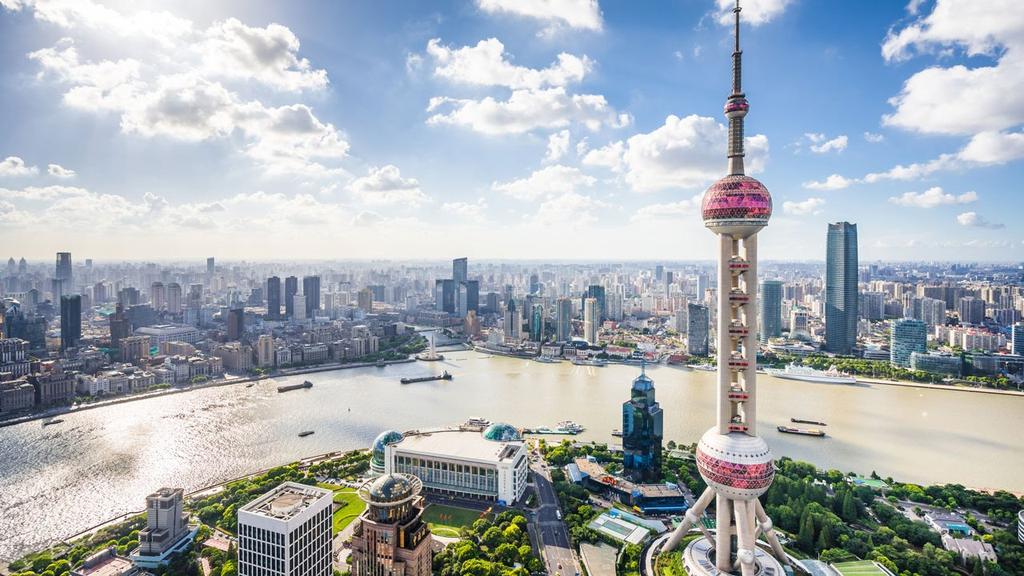
In China, SEZs cover larger geographical areas than other economic zones. Seven major SEZs are located in the cities of Shenzhen, Xiamen, Hainan, Zhuhai, and Shantou, as well as in city districts, including the Pudong New Area of Shanghai and the Binhai New Area in Tianjin.
The first four SEZs were established in the 1980s in Shenzhen, Zhuhai, and Shantou in Guangdong Province and Xiamen in Fujian Province.
These economic zones were established to enhance economic development and support the country’s recovery from the decade-long Cultural Revolution. These SEZs enjoyed special financial, trade, and investment privileges and additional benefits from open economic policies.
There are now several types of SEZs in China focusing on a range of industries, including high-tech industrial development zones (HIDZs), free trade zones (FTZs), and export-processing zones (EPZs).
High-Tech Industrial Development Zones: Driving Innovation
The main objective behind HIDZs is to utilize enterprises’ technological capacity to create high-tech products, which can expedite the commercialization of the special zones. After decades of development, HIDZs have become the pillar of industrial improvements and scientific innovations in the country.
Free Trade Zones: Boosting Foreign Trade and Investment
FTZs were established so that China could experiment with opening its country to foreign investments before participating in the World Trade Organization. These zones bypass China’s customs regulations and are designed to boost foreign trade, export processing, and logistics.
Export-Processing Zones
EPZs aim to improve foreign exchange earnings and further develop export-oriented industries. EPZs are similar to FTZs, except they are solely built to manage export processing.
How SEZs Propel China’s Economic Growth
SEZs served as China’s testing ground to determine its attractiveness to foreign trade and investments. The economic move proved successful, and China later opened its market by creating more SEZ variants.
The first SEZs later became models for the rest of the country. By the early 1990s, the concept of opening the Chinese market to foreign investments through SEZs became so successful that the government decided to expand towards the entire coastal region, capital cities, and autonomous regions.
Special economic zones have since contributed significantly to the country’s GDP, given its influence on employment and exports. In 2021, they contributed approximately 22% of national GDP, 45% of inbound foreign investment, and 60% of exports, laying the foundation for their continued expansion in subsequent years. More recent data indicates that SEZs now account for around 25% of GDP by 2023, underscoring their continued strategic importance. Additionally, they created an estimated 30 million jobs for local employees.
China continues to expand and upgrade its SEZ framework, most notably through the Hainan Free Trade Port, which entered a new phase of implementation in 2025, representing the highest level of trade and investment liberalisation currently available in China.”
Challenges and Disadvantages of SEZs
While China’s SEZs are viewed as a major success story from outside the country, their establishment also has notable disadvantages.
Land Acquisition Issues
SEZs require the acquisition of large areas of land at very low prices. Since the local and national governments have permitted them, the acquisition process is susceptible to abuse, with buyers getting large and, at times, unfair discounts.
Impact on Livelihoods and Employment
In the case of SEZs built on agricultural land, farmers often sacrifice their livelihoods and are forced to relocate. In many instances, they are not skilled enough to work in the newly built SEZs, which pressures them to seek employment opportunities elsewhere.
Advantages of SEZs for Foreign Investors
Chinese SEZs are designed to attract foreign investors by offering substantial tax incentives, more relaxed policies, and legislative protection to ensure that they can maximize their business operations. Here are some of the advantages that foreign investors can get from SEZs:
Tax Incentives
- Qualified enterprises in selected SEZs and Free Trade Zones (notably the Hainan Free Trade Port) may benefit from a reduced corporate income tax rate of 15%, subject to industry and substance requirements.
- Corporate taxes can be reduced or eliminated if a company becomes profitable after a series of losses. Depending on the circumstances, this can be done for up to five years.
- Specific industries have local tax exemptions.
- Foreign-invested enterprises may qualify for preferential tax treatment only where specific national or regional incentive schemes apply; no general SEZ-wide tax reduction applies automatically.
For more information on tax rates, please read our full article on tax rates in China.
Economic Policies
- Duty-free export on certain items.
- Lower import tariffs.
Establishing a Foreign Company in China
Foreign companies can set up a local subsidiary through a joint venture with a local company. Although some policies differ by area, they all favor companies based or operating in the SEZs.
Key Incentives and Conditions in China’s SEZ Framework (2026)
| Policy Area | What Applies in 2026 | Important Notes |
|---|---|---|
| Corporate Income Tax (CIT) | 15% preferential CIT | Applies only to qualified enterprises in encouraged industries within designated zones (e.g. Hainan Free Trade Port); economic substance requirements apply |
| Standard CIT Rate | 25% | Applies where preferential criteria are not met |
| Customs & Tariffs | Zero-tariff / duty-free policies | Mainly applicable in Free Trade Zones and the Hainan FTP, subject to goods classification and negative lists |
| Loss Carryforward | Up to 5 years (longer for some sectors) | Governed by national tax law; not an automatic SEZ incentive |
| Local Incentives | Possible subsidies or rebates | City-specific, discretionary, and subject to annual policy review |
Not sure whether your business qualifies for the 15% preferential CIT in SEZs or the Hainan Free Trade Port? MSA assesses eligibility, substance requirements, and tax optimisation opportunities before you invest. Message →
Locations of Special Economic Zones in China
Here is a list of the SEZs in China, including Free-Trade Zones, state-level new areas, and open coastal cities:
| Category | Locations |
|---|---|
| State-Level New Areas | Changsha City, Hunan Province Zhoushan City, Zhejiang Province Changchun City, Jilin Province Lanzhou City, Gansu Province Shanghai City Baoding City, Hebei Province Nanjing City, Jiangsu Province Jiujiang City and Nanchang City, Jiangxi Province Chengdu City and Meishan City, Sichuan Province Guizhou City and Anshun City, Guizhou Province Dalian City, Liaoning Province Tsingtao (Qingdao) City, Shandong Province Fuzhou City, Fujian Province Chongqing City Xi’an City and Xianyang (Hsienyang) City, Shaanxi Province Tianjin City Guangzhou City, Guangdong Province Kunming City, Yunnan Province Harbin City, Heilongjiang Province |
| Special Economic Zones | Shenzhen Hainan Kashgar Zhuhai Xiamen Khorgas Swatow (or Shantou) |
| Pilot Free Trade Zones | Chongqing Tianjin Sichuan Liaoning Shanghai Zhejiang Fujian Guangdong Henan Hubei |
| Coastal Open Cities | Qinhuangdao Weihai Yingkou City Lianyungang Guangzhou Tianjin Shanghai Zhanjiang Qingdao Fuzhou Wenzhou Yantai Ningbo Dalian North Sea Nantong |
Foreign Direct Investments (FDIs) and Their Role in SEZ Growth
Foreign Direct Investment (FDI) plays a vital part in the prosperity of SEZs. Aside from attracting capital, FDIs bring new technologies and management skills that promote learning in the local vicinity.
Manufacturing capacities also expand due to the influx of FDIs, generating more jobs for local Chinese employees.
What makes SEZs continuously attractive to FDIs are the cheap labor and good infrastructure available in the special zones. The open-door policies and generous incentives allowed money and labor to flow into China from the diaspora.
Factors Attracting FDI to Chinese SEZs
- Reduced Duties on Imports: Lower import tariffs make it easier and cheaper for companies to bring necessary goods and materials.
- Streamlined Administrative Control: Simplified bureaucratic processes help businesses operate more efficiently.
- Greater Flexibility in Employment Policies: SEZs offer more adaptable labor regulations, making it easier for companies to hire and manage employees.
- Preferential Fees for Land or Facility Use: Businesses benefit from lower costs for land and facilities within SEZs.
- Concessionary Tax Breaks, Rates, and Exemptions: Companies enjoy various tax incentives that reduce operational costs.
- Free or Low-Rent Business Accommodation: Affordable office and industrial spaces enhance the attractiveness of SEZs.
- Favorable Arrangements on Project Ownership, Size, Location, and Duration: SEZs provide advantageous project development and operation terms.
Overall, the policies’ attractiveness makes China’s SEZs highly viable for businesses that want to tap into the local market and take advantage of the numerous benefits available to them.
China’s 18 Special Economic Zones (including Shenzhen, Shanghai Pudong, and Hainan) historically offered the most competitive tax incentives and regulatory flexibility, though recent moves toward national consistency have narrowed the gap. Zone status still matters for certain industries and incentive programs. MSA Asia identifies the optimal zone registration for your business model and secures applicable benefits. Get in touch with our China company setup specialists.