 General Guides
 Regional Guides
 Starter Guides


Important update: On August 18, 2023, the Ministry of Commerce (MOF) and State Taxation Administration (STA) jointly issued the Announcement on the Continuation of Implementation of Individual Income Tax Preferential Policies Such as for Foreign Nationals’ Benefits (MOFCOM STA Announcement [2023] No.29).
The Announcement officially prolonged the preferential individual income tax (IIT) policy on fringe benefits for foreigners. It was initially set to end on December 31, 2023, but it was extended for four years until December 31, 2027.
This extension coincided with the renewal of another preferential tax policy in China, which applies to the annual one-time bonus for both foreign and Chinese resident taxpayers and the GBA IIT subsidy, also extending to December 31, 2027.
The extension has provided immediate relief to some higher-earning foreign workers. Without this extension, those facing high costs, such as for their children’s education, would have experienced a significant increase in their tax liability.

Send us your question and we will answer within 24 hours. Message →
Overview of Existing Tax-Exempt Expatriate Allowances
Individuals who are tax residents of China are obliged to pay Individual Income Tax (IIT) over their China-sourced income. In China, Individual Income Tax is calculated based on the cumulative calculation method and IIT filing must be completed every month (a comprehensive overview on IIT can be found in our full article on Individual Income Tax).
Several deductions can be applied to lower an individual’s taxable income over which Individual Income Tax will be levied. Firstly, every employee in China, both Chinese and foreign, enjoys a standard monthly deduction of RMB 5.000 over their taxable income.
In addition, special additional deductions are available. Chinese citizens can claim 6 different types of “itemized deductions”, whereas the applicable legislation allows expatriates to claim part of their salary using tax-exempt expatriate allowances.
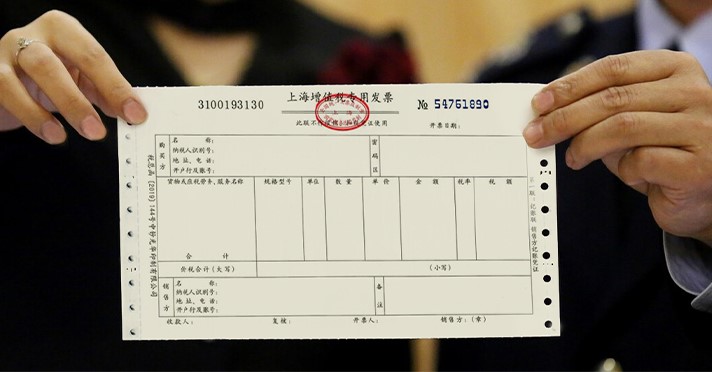
Chinese law does not limit the proportion of income that can be claimed via the aforementioned tax-exempt expatriate allowances but instead states that these expenses must be “reasonable.” In practice, the Chinese tax authorities will allow expatriates to claim up to 30%- 35% of their income via tax-exempt allowances. It should be noted that foreigners must obtain proof of the authenticity of the expenses in the form of a fapiao.
The table below provides an overview of the available tax-exempt allowances for expatriates: