 General Guides
 Regional Guides
 Starter Guides

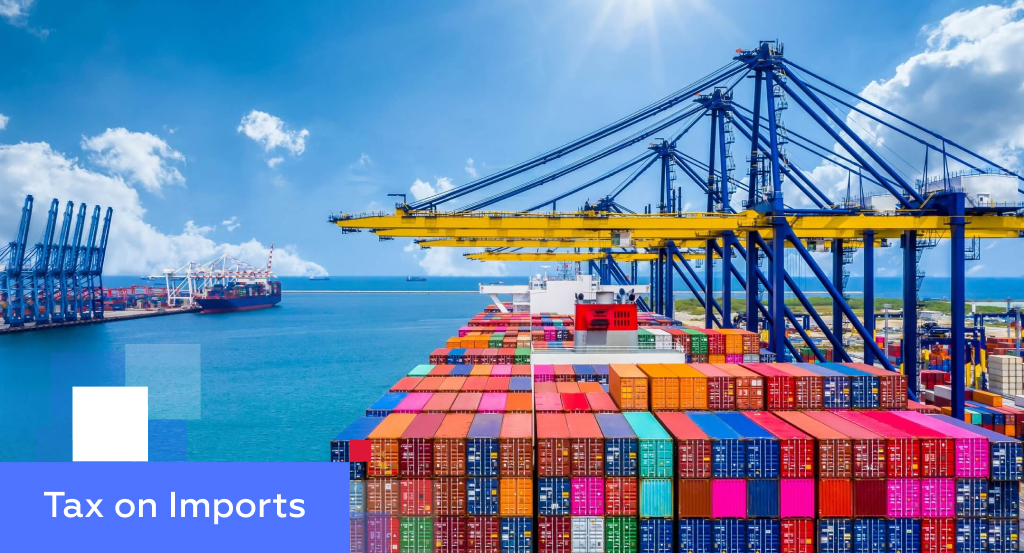
China cut import duties on 935 product categories below the standard most-favoured-nation rate from 1 January 2026 — most of them in advanced technology, healthcare components, and renewable energy inputs.[1] The 2025 Catalogue of Industries for Encouraged Foreign Investment took effect on 1 February 2026 with 1,679 items, opening duty-free import of self-use equipment for foreign-invested enterprises across most of the catalogue scope.[2] The Hainan Free Trade Port closed its island-wide customs perimeter on 18 December 2025, expanding zero-tariff coverage from roughly 1,900 to 6,600 product lines (74 percent of all import-export items) and introducing a 30 percent value-added rule that lets goods exit Hainan into mainland China tariff-free. Combine these three regime changes with RCEP’s 90 percent tariff coverage at a 40 percent regional content threshold, and the foreign importer’s calculation has multiple moving parts and is worth modelling carefully.
This guide is written for foreign founders, CFOs, importers, supply-chain managers, and general counsel who need a clear framework for China customs and import duties in 2026. We cover the basic duty-tariff-VAT-consumption-tax stack, the six categories of China import tariff rates, what changed in the 2026 schedule, the four pathways to reduce or eliminate duty (Encouraged Catalogue, FTZ bonded routing, Hainan FTP, FTA preferences), and a port-and-routing decision matrix by city. If you are still mapping the broader entity decision, our full WFOE registration in China service page covers the national framework.
How China import duties work — the basic stack
Most foreign importers are surprised to learn that China’s customs charge is not a single tax. It is a stack of three (sometimes four) separate impositions calculated in a specific order on the dutiable value of the goods. Get the order wrong and the total can shift by several percentage points.
The dutiable value China Customs uses is the CIF value: the Cost of the goods, plus Insurance, plus Freight to the first port of entry, with packing and seller’s commission included where applicable. Customs may adjust the CIF if it considers the declared value below market. Once the dutiable value is set, the stack runs:
- Tariff (import duty) — calculated on the CIF value at the applicable rate.
- Import VAT — calculated on (CIF + tariff) at 13 percent (standard) or 9 percent (reduced).
- Consumption tax — calculated where applicable, on a tax-inclusive basis that varies by product.
A worked example for a USD 100,000 CIF shipment of standard industrial equipment at a 5 percent MFN tariff and 13 percent VAT:
- Tariff: USD 100,000 × 5% = USD 5,000
- Import VAT: (USD 100,000 + USD 5,000) × 13% = USD 13,650
- Total customs charge: USD 18,650 (18.65% of CIF)
Move the same shipment under a Hainan FTP eligible-entity import on the encouraged-industries side, and the tariff-and-VAT stack drops to zero. Move it through an FTZ bonded warehouse and the duty is deferred until the goods leave bond for the mainland market. Move it under RCEP from a qualifying ASEAN supplier and the tariff drops to a preferential rate (often zero). The basic stack is the starting point — the four exemption pathways are how foreign importers turn it into a real cost-management tool.
The six categories of China import tariff rates
China’s tariff schedule contains six rate categories that apply to the same HS codes depending on country of origin and product status:
- General rate — applies to imports from non-MFN countries; significantly higher than other rates.
- Most-Favoured-Nation (MFN) rate — the default for WTO members; the rate most foreign importers actually pay.
- Agreement rate — preferential rates under bilateral or plurilateral FTAs (RCEP, ASEAN-China, China-Korea, China-Switzerland, China-Australia, others).
- Preferential rate — concessional rates for goods from Least Developed Countries.
- Tariff Rate Quota (TRQ) rate — split rates inside and outside an annual quota for selected agricultural and industrial products (wheat, corn, rice, sugar, wool, cotton, fertilisers, others).
- Provisional rate — annual or interim rates set below MFN to support specific industries; the 2026 schedule includes provisional rates for 935 product categories.
For a foreign importer, the practical sequence is: identify the HS code, confirm the country of origin and the available agreement rates, then check whether the product is in the current provisional rate list. The provisional rate is often the actual rate paid, not the MFN headline.
The 2026 Tariff Schedule — what changed
The State Council’s annual tariff schedule for 2026 took effect on 1 January 2026 and contains three notable changes for foreign importers.
935 product categories with provisional sub-MFN rates. The 2026 list focuses on critical components and materials in advanced and emerging technologies, renewable energy, and healthcare. For a foreign importer of solar inverter components, semiconductor capital equipment, biotech reagents, or hydrogen-energy electrolyser parts, the 2026 list often delivers a 2-to-8 percentage-point cost reduction versus the MFN headline.
MFN rate restorations on selected products. The 2026 schedule restored MFN rates on micro motors, printing machines, and sulfuric acid (among others) that had previously enjoyed sub-MFN rates. Foreign importers in these specific lines saw an effective tariff increase from 1 January 2026.
Continued alignment with the 15th Five-Year Plan industrial priorities. The schedule’s drafting bias is increasingly toward inputs that support advanced manufacturing capacity inside China — and away from finished-goods imports that compete with mature domestic producers.
For deeper city-and-zone coverage on where these tariff changes interact with local FTZ regimes, see our China Free Trade Zones hub.
Import VAT and consumption tax — the full picture
VAT is the second layer of the customs charge stack. China’s import VAT framework matches the domestic VAT framework with two main rates:
- 13 percent standard rate — applies to most goods (industrial equipment, raw materials, consumer goods, electronics).
- 9 percent reduced rate — applies to agricultural products, books, newspapers, magazines, transportation, postal and basic telecom services, and certain construction services.
Import VAT is calculated on the tariff-inclusive value (CIF + tariff). For most foreign importers running a registered FIE inside China, the import VAT is recoverable as input VAT against output VAT on subsequent sales — making it a cashflow item, not a permanent cost. Foreign importers shipping into China without an in-country FIE typically cannot recover the import VAT, which makes the FIE-versus-direct-import structural choice meaningful.
Consumption tax is the third layer and applies only to specified product categories under the State Council’s consumption tax regulation. The categories include:
- Tobacco products
- Alcoholic beverages
- Jewellery, precious stones, and pearls
- Cosmetics (high-end skincare and colour cosmetics)
- Refined oil products
- Motor vehicles (passenger cars, motorcycles)
- Yachts
- Disposable wooden chopsticks
- Solid wood floor boards
- Fireworks
- High-end watches
- Golf equipment
Rates vary widely. For high-end cosmetics, the consumption tax rate is 15 percent on the CIF-plus-tariff value. For high-displacement passenger cars, the rate can reach 40 percent. Consumption tax is generally not recoverable through the input-VAT mechanism — it becomes a real margin item.
HS code classification — getting it right
Every customs decision flows from the Harmonised System (HS) code assigned to the goods. China’s HS code system follows the global six-digit standard and adds two-to-four China-specific digits, producing 8-to-10-digit codes for full classification. The first six digits are universally interoperable; the trailing China-specific digits affect the actual rate, the import licence requirements, and the inspection regime.
The consequences of getting an HS code wrong include:
- Customs clearance delays while the customs officer reclassifies the goods.
- Administrative fines for misdeclaration, even if unintentional.
- Duty reassessment for prior shipments under the same code.
- Loss of export VAT refunds on subsequent re-exports.
- Loss of preferential rate eligibility under FTAs that depend on the declared HS code.
For high-value or recurring imports, foreign importers can apply for a pre-classification ruling through the General Administration of Customs of China (GACC). The ruling is binding on Customs at the point of declaration and removes the classification risk for the products it covers. The application takes 60 to 120 days for a complex product but the resulting certainty is worth the investment for any foreign importer running material volumes through the same HS line.
GACC and third-party search tools (Transcustoms, e-to-china) provide HS code lookup with corresponding tariff and VAT data. For foreign importers who do not have in-house Customs expertise, working with a licenced Customs declarant or broker at the first port of entry is the standard practice.
Four ways to reduce or eliminate China import duties
The basic duty-tariff-VAT-consumption-tax stack is a starting point, not a finishing point. Four exemption or reduction pathways materially change the actual customs cost for most foreign importers.
Pathway 1: 2025 Encouraged Catalogue duty-free equipment exemption
The Catalogue of Industries for Encouraged Foreign Investment (2025 Edition) took effect on 1 February 2026 with 1,679 items, split between a Nationwide Catalogue (619 items) and a Regional Catalogue (1,060 items). Foreign-invested enterprises engaged in industries and projects listed in the Catalogue can import self-use equipment duty-free within the total approved investment, together with the technologies and supporting parts and components imported with that equipment under the same contract.
For a foreign manufacturing or biotech FIE building a new line in China, the equipment duty exemption can reduce a 5-to-15 percent CIF tariff to zero on the entire equipment package. The exemption requires the FIE to be registered, the project to be on the Catalogue, and the equipment to be on the eligible list (i.e., not on the State’s explicit non-exempt list).
Pathway 2: FTZ bonded zone routing
China’s 23 Pilot Free Trade Zones operate bonded customs regimes where goods can be held inside the FTZ without triggering import duty until they leave the bonded perimeter into the mainland market. Inside the FTZ, the goods can be processed, repackaged, sorted, or held as inventory under simplified Customs supervision. For an importer running a regional distribution model — buy globally, hold inventory in China, fulfil to mainland customers as orders arrive — FTZ bonded routing converts the import duty from a sunk cost at the border into a deferred cost paid only on the volumes actually delivered to mainland buyers.
FTZ bonded routing also enables intra-bonded value-add: light assembly, kitting, packaging, and documentation work can happen inside the bonded zone without triggering Customs declarations on intermediate flows. For full coverage of FTZ regimes by city, see our China Free Trade Zones hub.
Pathway 3: Hainan Free Trade Port — zero tariff first line + 30% value-added rule
The Hainan FTP closed its island-wide customs perimeter on 18 December 2025. Goods imported from overseas by eligible entities, outside the taxable import negative list, enter Hainan at zero tariff, zero VAT, and zero consumption tax — covering approximately 6,600 product lines (74 percent of all import-export items, up from 1,900 lines pre-closure).
The most consequential addition is the 30 percent value-added rule. FIE processing inside Hainan that adds at least 30 percent value to the imported inputs can be exported to mainland China tariff-free. For a foreign importer whose model involves inbound raw materials or sub-assemblies, value-added processing on the island, and onward sale to mainland customers, the rule can eliminate the standard mainland import-tariff stack entirely.
For full coverage of the Hainan FTP regime, see our WFOE in Hainan pillar.
Pathway 4: RCEP, ASEAN-China, and other FTA preferential rates
China is a party to fifteen-plus free trade agreements that offer preferential tariff rates below MFN for goods that meet the relevant rules of origin. The two most consequential frameworks for foreign importers are:
RCEP (Regional Comprehensive Economic Partnership) — covers 15 countries including China, ASEAN, Japan, South Korea, Australia, New Zealand. China has offered zero tariffs on 90.5 percent of imports from the 10 ASEAN countries, 90 percent of Australian and New Zealand products, and 86 percent of Japanese and South Korean products.[3] The headline framework innovation is the 40 percent regional content threshold with full cumulation across all RCEP countries — making the agreement the most flexible Asian rules-of-origin regime to date.
ASEAN-China FTA (now CAFTA 3.0 under RCEP) — the underlying ASEAN-China bilateral framework that RCEP largely subsumes for ASEAN-origin imports.
For comparison, the CPTPP (Comprehensive and Progressive Trans-Pacific Partnership) eliminates 99 percent of tariff lines but China is not a member (although China formally applied to join in 2021; accession remains pending).
For foreign importers sourcing from any of the RCEP-15 countries, RCEP preferential rates and cumulative origin should be the first item on the customs-cost optimisation list.
Import-side updates that matter for 2026 — and how exports interact
Two 2026 changes on the export-VAT side affect the import-side calculation for foreign supply-chain operators.
Photovoltaic (PV) export VAT rebate eliminated 1 April 2026. Solar cells, modules, inverters, and related components no longer qualify for the export VAT refund. For foreign importers buying Chinese-made PV products for re-export, the elimination raises the effective cost of Chinese PV products and can shift the supply-chain calculation toward alternative origins.
Lithium-ion battery export VAT rebate phased out by 1 January 2027. Lithium-ion batteries and primary cells will see the export VAT rebate cut from 9 percent to 6 percent for the period 1 April to 31 December 2026, then fully phased out from 1 January 2027.
These rebate changes interact with the import side in two ways: (a) for foreign importers running a value-added model in China then re-exporting (PV / lithium-ion specifically), the loss of the export rebate raises the effective cost of the Chinese-processed output; (b) for foreign importers competing against Chinese exports of these products in third markets, the elimination should narrow Chinese exporters’ price advantage modestly.
For full coverage of the export VAT refund regime, see our companion guide on export tax refunds in China.
How to choose your import port and routing — by city
The right Chinese port-and-zone combination for your import depends on the product, the supplier origin, and the downstream market. The matrix below maps common import models to specific city-and-port choices, with links to our detailed guides.
| Import model | Best-fit port / city | Why | Detailed guide |
|---|---|---|---|
| High-value finance, consumer luxury, life sciences | Shanghai (Yangshan, Pudong Airport, Lingang FTZ) | Largest container port globally; FT account access; Lingang 15% CIT for IC/AI/biopharma/civil aviation | WFOE in Shanghai |
| Hardware, electronics, GBA-bound consumer goods | Shenzhen (Yantian, Shekou, Bao’an Airport) | Hardware ecosystem; Qianhai catalogue; Hetao cross-border R&D; HK proximity | WFOE in Shenzhen |
| Aircraft leasing SPV inputs, automotive electronics, northern China industrial | Tianjin (Tianjin Port, Dongjiang FTZ) | China’s #1 aircraft-leasing SPV jurisdiction; TEDA Fortune 500 ecosystem; Beijing-Tianjin integration | WFOE in Tianjin |
| Value-added-and-export model, marine economy, tourism, healthcare | Hainan FTP (Yangpu, Haikou) | Zero tariff first line + 30% value-added rule for tariff-free mainland export; 6,600 zero-tariff lines | WFOE in Hainan |
| ASEAN-bound flows, Western Belt-and-Road, Cheng-Yu manufacturing | Chongqing (Guoyuangang FTZ) | Western Land-Sea New Corridor; 2025 cargo growth +40-55% YoY; Pinglu Canal end-2026; Foxconn/Quanta cluster | WFOE in Chongqing |
These are leading recommendations, not the only viable choices. Plenty of secondary options exist for any specific shipment — start from the goods, the supplier origin, and the downstream market and let those drive the port-and-zone choice.
For a structural comparison of WFOEs versus joint ventures and representative offices for the importing entity itself, see our companion guide on WFOE vs JV vs representative office. For the broader China company registration view across entity types, see our service overview.
Frequently asked questions about China import duties
What is the import VAT rate in China in 2026?
How are China import duties calculated?
What is the difference between General, MFN, and Provisional China tariff rates?
What is the 30% value-added rule in the Hainan Free Trade Port?
What is the 2025 Encouraged Catalogue and how does it affect import duties?
Does RCEP reduce China import duties for foreign importers?
What is consumption tax and which imports does it apply to?
How do I get the right HS code for my imports to China?
Closing thoughts
China’s import duty regime in 2026 has more exemption pathways than most competitor articles describe. The headline MFN rate is rarely the rate actually paid. Between the 935-product 2026 provisional schedule, the 1,679-item Encouraged Catalogue duty-free equipment exemption, the 23 Pilot FTZs offering bonded routing, the Hainan FTP zero-tariff first line plus 30 percent value-added rule, and the RCEP preferential framework with cumulative origin — there are usually two or three legitimate pathways to reduce the standard customs-charge stack. The work is in matching the right pathway to the actual goods, the supplier origin, and the downstream market.
For founders, CFOs, and supply-chain managers, the steps that actually matter are: identify the HS code, check the country of origin and available agreement rates, screen for the provisional rate, evaluate whether the goods qualify for any of the four exemption pathways, and pick the port-and-zone routing that matches the operating model. The most expensive mistakes — wrong HS code, missed FTA cumulation, choosing the wrong port for the model — are all avoidable with a clean spec at the start.
If you are weighing a China import strategy and need the customs cost modelled against your specific goods and supplier base, our team can run the analysis in a single working session and hand you a scoped budget. Start with the WFOE registration in China overview, browse the city-specific pillar guides linked in the routing matrix, or contact us directly for a customs-and-routing scoping call.
- China Briefing, “China’s 2026 Tariff Schedule Targets High-Tech, Healthcare Sectors” — 935 product categories with provisional sub-MFN rates effective 1 January 2026; MFN restorations on micro motors, printing machines, sulfuric acid.
- NDRC + MOFCOM, 2025 Edition of the Catalogue of Industries for Encouraged Foreign Investment — 1,679 items effective 1 February 2026; duty-free import of self-use equipment for FIEs.
- Asian Development Bank, “An Assessment of Rules of Origin in RCEP and ASEAN+1” — RCEP 40% regional content threshold with full cumulation across 15 RCEP countries.
- China Briefing, “Hainan’s 30 Percent Added Value Rule” — island-wide customs closure 18 December 2025; 6,600 zero-tariff lines; tariff-free mainland export under the 30% value-added threshold.
- SEKO Logistics, “China Export Tax Rebate Changes 2026” — PV products eliminated 1 April 2026; lithium-ion 9% → 6% (April–Dec 2026); fully phased out 1 January 2027.
- PwC Tax Summaries — China Other Taxes — import VAT, consumption tax categories and rates.