Any company doing business in China must get familiar with its Corporate Income Tax (CIT) system. Whether you’re setting up a local subsidiary or running a long-standing operation, understanding how CIT works is essential for maintaining compliance and avoiding unexpected liabilities.
This guide walks you through the core components of China’s CIT framework, including taxpayer classification, calculation methods, applicable rates, deductions, exemptions, and the application of withholding taxes to cross-border transactions.

Corporate Income Tax in China: Overview
Corporate Income Tax (CIT), also known as Enterprise Income Tax (EIT), applies to most businesses earning income in China. It is governed by the Corporate Income Tax Law of the People’s Republic of China, which sets out how income is assessed and taxed.
The CIT is based on a company’s net income for the financial year. Businesses can deduct eligible expenses and losses, and tax is then calculated on the remaining taxable income.
Companies must file and pay CIT every quarter. At the end of the tax year, an annual reconciliation is required to reflect any necessary adjustments.
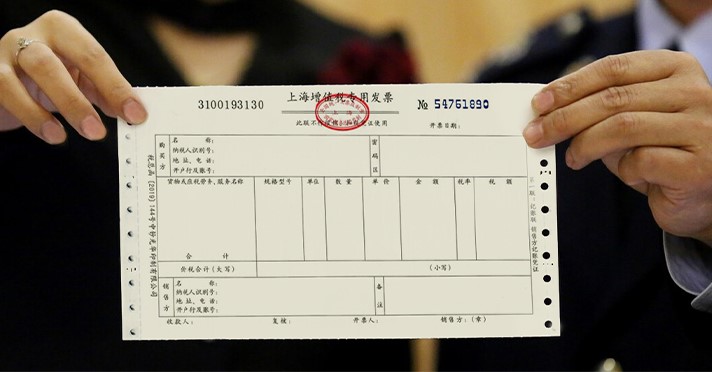
For foreign-invested enterprises, understanding how the system works is especially important. This includes knowing how business entities are classified, how invoices (fapiaos) support deductions, and what counts as an allowable expense under Chinese tax law.
Corporate Taxpayers in China
China classifies corporate taxpayers into two main groups: resident and non-resident enterprises. The distinction affects both the scope of taxation and the reporting obligations.
| Type of Enterprise | Description |
|---|
| Resident Enterprises | Companies incorporated in China, or foreign companies whose management is based in China. These entities are taxed on worldwide income. |
| Non-Resident Enterprises | Foreign companies without a management presence in China. If they have a branch or generate income within China, only that China-source income is taxed. |
In other words, resident enterprises report global earnings, while non-residents are taxed more narrowly, depending on whether or not they have a local establishment.
Individual proprietorships and partnerships are excluded from CIT and instead taxed under personal income tax laws.
China CIT Calculation Method
China’s CIT calculation is formula-driven, with clear guidelines for determining what counts as taxable income:
- CIT Payable = (Taxable Income × Applicable Tax Rate) – Exemptions or Reductions (if eligible)
To get to taxable income, use the following formula:
- Taxable Income = Total Annual Income – Deductible Costs and Expenses – Carried Forward Losses
Key considerations:
- Losses can be carried forward for up to five years, but not carried back.
- Deductions are only accepted when supported by fapiao (official Chinese tax invoices).
- Foreign companies unfamiliar with the fapiao system may encounter challenges in claiming expenses without proper documentation.
MSA works with clients to ensure financial compliance across all levels, helping you navigate everything from bookkeeping and invoicing requirements to quarterly filings and annual reconciliations.
CIT Exemptions/Reductions in China
While China’s standard Corporate Income Tax rate applies to most companies, a variety of statutory deductions, preferential policies, and regional incentives can significantly reduce your overall tax burden.
Understanding what qualifies and how to substantiate claims with proper documentation is key to taking full advantage of China’s tax relief measures.
Statutory Deductions
Chinese tax law permits several baseline deductions that companies can claim against taxable income:
| Category | Deduction Details |
|---|
| Employee Benefits | Contributions to statutory programs such as pension, medical, unemployment, work injury, maternity, and housing funds. |
| Charitable Donations | Donations to approved public welfare causes including education, disaster relief, and poverty alleviation schemes Deductions apply for up to 12% of annual profits. |
| Environmental Protection | Investments in equipment for pollution control, energy efficiency, or water conservation. |
| Research and Development | A 75% super deduction for eligible R&D expenditures on new technologies, products, or processes. |
Additional Deductions
Some categories offer enhanced deductions that go beyond statutory levels:
| Category | Deduction Details |
|---|
| Advanced R&D | Manufacturing enterprises can deduct 100% of eligible R&D expenses. This policy remains in effect as of mid-2025. |
| Employment of Target Groups | 100% deduction on salaries paid to disabled workers or individuals from categories prioritized by the government. |
MSA Asia works with clients to validate eligibility, gather the right documentation (including fapiao), and ensure these deductions are correctly applied during quarterly and annual filings.
Qualification Criteria for the High-Tech Tax Break
Foreign-invested companies that focus on innovation and technological advancement may be eligible for a reduced Corporate Income Tax (CIT) rate of 15%, provided they obtain certification as a High and New Technology Enterprise (HNTE). This preferential rate is significantly lower than the standard 25% CIT rate and serves as a major incentive for companies to invest in research, development, and advanced production methods in China.
To qualify for HNTE status, companies must meet several rigorous technical and operational requirements:
- Legal Establishment and Residency: The company must be legally incorporated in China and must have been in operation for at least one full year.
- Core Intellectual Property: The enterprise must own intellectual property (IP) rights for the core technologies that drive its primary products or services. This could include patents, proprietary software, or other forms of protected innovation.
- Industry Classification: The business must operate in one of the high-tech sectors supported by the Chinese government. These typically include biotechnology, aerospace, advanced manufacturing, electronics, new materials, energy conservation, and information technology.
- R&D Workforce Threshold: At least 10% of the company’s total workforce must be directly involved in research and development activities.
- Minimum R&D Investment Ratios: The company must meet specific research and development expenditure thresholds relative to its annual revenue:
- A minimum of 5% for companies with annual revenue less than RMB 50 million.
- A minimum of 4% for companies earning between RMB 50 million and RMB 200 million.
- A minimum of 3% for companies with revenue exceeding RMB 200 million.
- Domestic R&D Requirement: If the company engages in collaborative research efforts with foreign institutions or companies, at least 60% of total R&D spending must be incurred within mainland China.
- High-Tech Revenue Proportion: At least 60% of the company’s total revenue must be derived from products or services that fall under the approved high-tech categories.
- Compliance Record: The company must maintain a clean compliance history with no serious violations related to environmental regulations, production safety, or product/service quality within the previous 12 months.
Achieving HNTE status does more than just lower the tax burden. It enhances a company’s reputation in the local market, improves access to government subsidies and procurement programs, and signals credibility to potential investors and clients, especially in cutting-edge sectors like pharmaceuticals, semiconductors, robotics, and enterprise software.
Many regional governments in China also offer additional incentives or grants to HNTE-certified businesses, making the designation even more valuable for long-term strategic planning.
Applicable CIT Rates in China
The default CIT rate in China is 25%, applying to both domestic and foreign-resident enterprises. However, specific categories of companies can benefit from reduced rates:
Small and Low-Profit Companies
Qualifying SLPEs (Companies with annual taxable income ≤ RMB 3M, <300 employees, assets ≤ RMB 50M) are eligible for reduced effective CIT rates through December 31, 2027:
Profit Bracket | Effective CIT Rate | Notes |
≤ RMB 1M | 2.5% | 20% applied to 12.5% of taxable income |
RMB 1M–3M | 5% | 20% applied to 25% of taxable income |
> RMB 3M | 25% | Full standard rate |
Other Preferential Rates
China offers several tax policy incentives based on geography and strategic sectors:
Industry/Region | Preferential CIT Rate |
High-Tech Enterprises | 15% (requires accreditation as described above) |
Integrated Circuits & Software | 10% after an initial 5-year CIT exemption |
Western Development Region | 15% for qualifying companies in Chongqing, Yunnan, Sichuan, and other inland provinces |
Free Trade Zones/Ports | Reduced CIT rates for specific encouraged industries in areas like Hainan and Lingang |
MSA helps you identify applicable tax incentives based on your business model, sector, and location. From high-tech certifications to regional benefits, we ensure you’re not leaving tax savings on the table.
Corporate income tax in China applies a standard 25% rate to most enterprises, yet numerous exemptions, deductions, and incentives can materially reduce your tax burden if structured correctly. MSA Asia’s annual CIT filing specialists optimize your tax position each year. Get connected for tax planning advice.

 General Guides
 Regional Guides
 Starter Guides