 General Guides
 Regional Guides
 Starter Guides

What Is a Manufacturing WFOE?
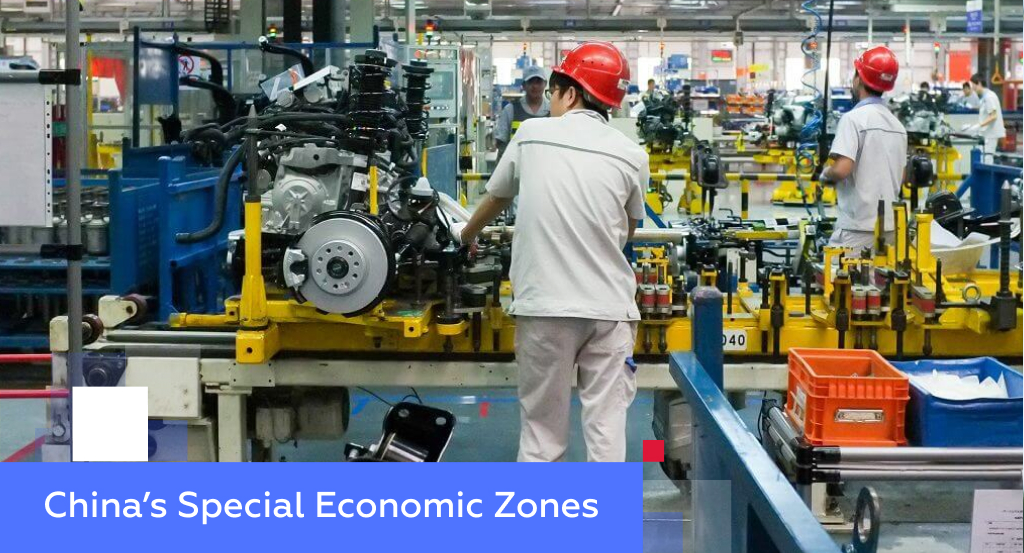
A Manufacturing WFOE is a Wholly Foreign-Owned Enterprise registered in China with a business scope that includes “production”, “manufacturing” or “assembly” of physical goods. It’s the Chinese vehicle through which a foreign manufacturer hires workers, leases or owns the factory, sources raw materials, runs the production line, issues VAT fapiao for goods sold, and exports finished product.[1]
Structurally, it’s the same foreign-invested limited liability company as any other wholly foreign-owned enterprise. Same SAMR business licence, same Articles of Association under the 2024 Company Law. What differs is the body of approvals required before SAMR will issue the licence — Environmental Impact Assessment, fire safety, work-safety, equipment commissioning. These add 8 to 16 weeks compared with a consulting WFOE. The corporate-formation backbone is the same one we run for any China company registration; the manufacturing-specific approvals stack alongside it.
2024 negative-list opening
The Special Administrative Measures for Foreign Investment Access (the “negative list”) removed every remaining manufacturing restriction in the 2024 edition. Automotive, semiconductors, biopharma, machinery, industrial chemicals, food processing — all are now open to wholly foreign-owned manufacturing. This is the most permissive moment for foreign manufacturing entry in two decades.[2]
When to Use a Manufacturing WFOE
You need a Manufacturing WFOE when the Chinese entity will physically transform raw materials into finished or semi-finished goods. Three patterns account for almost every Manufacturing WFOE we set up.
Greenfield production for the China market
Foreign brands manufacturing in China for Chinese customers — automotive Tier-1s, packaged consumer goods, food and beverage, pharmaceuticals. Production runs in country, fapiao issue in RMB, profit accumulates locally then remits as dividend.
Export-oriented manufacturing
Production in China for global markets. Suzhou, Dongguan, Tianjin and Chongqing are the typical bases. Customs registration is mandatory, export VAT refund is the cash-flow lever, and the entity needs both a Chinese RMB account and a foreign-currency settlement account.
Contract manufacturing for the foreign parent
The Chinese WFOE makes goods that ship back to the parent’s global distribution network. Often combined with a transfer-pricing margin on the production cost. The model sits alongside Cost-plus contract R&D in many groups’ China structures.
Compare WFOE vs JV vs RO entity types
The Manufacturing WFOE Setup Process — 12 to 24 Weeks
Setup runs in three overlapping streams: site, environmental, and entity. The slowest stream sets the critical path.
Phase 1: Site selection and pre-EIA (week 1–6)
- Industrial-zone selection. Pick a Chinese FTZ or industrial park whose zoning matches your production type. Liangjiang in Chongqing, Suzhou Industrial Park, Pidu in Chengdu and Huangpu in Guangzhou are common bases.
- Lease or land acquisition. Industrial leases run 5–20 years. Larger groups buy 50-year industrial-use land titles. Get a real estate counsel involved early — title categories matter.
- Pre-EIA consultation. Engage the Environmental Impact Assessment provider before signing the lease so the EIA scope aligns with the planned process.
Phase 2: Entity formation (week 4–10)
- Reserve the company name with SAMR — see our name registration guide.
- Notarise and apostille foreign shareholder documents.
- Draft Articles of Association with manufacturing-specific business scope wording. Get the business scope right — manufacturing scope changes after licensing are slow.
- Set the registered capital schedule. Manufacturing typically runs RMB 2 million minimum, with most operations sitting at RMB 5–20 million. Under the 2024 Company Law’s five-year rule, every yuan must be paid in within five years — see our minimum registered capital guide.
Phase 3: EIA, fire safety, and licensing (week 6–18)
- Environmental Impact Assessment. The single longest item. Categorised as Form (报告表) or Report (报告书) based on emission profile. Form-grade EIAs take 4–8 weeks; Report-grade for chemical, petrochemical or heavy-emission industries take 12–20 weeks.
- Fire safety review on the building — typically 3–4 weeks.
- Work safety filing for hazardous-process operations.
- Sector-specific licences: medical-device manufacturing licence (NMPA), food-production licence (SC), chemical operation licence, etc.
- SAMR business licence issuance — only after the above clear.
Phase 4: Equipment, commissioning, banking (week 14–24)
- Equipment import customs clearance (with potential duty exemption for production equipment).
- Trial production runs.
- Customs registration and import/export rights.
- Bank accounts (basic RMB, foreign-currency capital, settlement).
- Tax registration and VAT general taxpayer status.
Manufacturing WFOE Timeline
Setup time and cost vary materially by manufacturing sub-type. The configuration drives both: light assembly with a Form-grade EIA in Suzhou Industrial Park sits at the fast end (12-16 weeks); chemical or pharmaceutical operations needing a Report-grade EIA can take 24-40 weeks. Sector licence overlays — NMPA for medical devices, SC for food, chemical operation licences — add their own weeks.
MSA Asia provides a written timeline estimate based on your specific parameters: manufacturing type, planned products, registered capital, city, headcount, EIA category, and any sector licences required. The estimate covers the professional steps, government filings, EIA coordination, fire and work-safety filings, sector licences, customs registration, and first-year accounting and tax compliance. Estimates land within 2 working days of receiving your operating brief.
Get a written timeline estimate
Where to Set Up — Manufacturing Cluster Recommendations
Where you locate decides your supply chain, your labour cost, and your customs profile. Five clusters cover almost every foreign manufacturing setup.
Suzhou Industrial Park (SIP) — the foreign-manufacturing default
Suzhou is the largest concentration of foreign-invested manufacturing in China. SIP houses thousands of foreign factories across precision engineering, electronics, biotech and medical devices. Fastest EIA, deepest supplier base, easiest expat infrastructure. Slightly higher cost base than inland alternatives.
Liangjiang in Chongqing — the inland heavy-manufacturing base
National-level new area, FTZ status, automotive and equipment heavy. 30-50% lower cost than coastal cities. Strong rail freight to Europe via the China-Europe Express. See our WFOE in Chongqing guide for districts and capital benchmarks.
Dongguan / Greater Bay Area — electronics and hardware
The Pearl River Delta supplier ecosystem is unmatched globally for consumer electronics, IoT and hardware. Direct integration with Hong Kong via the Greater Bay Area. Worth the higher labour cost when you need supplier density.
Pidu and Wenjiang in Chengdu
Inland alternative for groups looking at the Belt-and-Road corridor or Western China demand. Lower labour cost, growing semiconductor base. See our WFOE in Chengdu guide.
Tianjin — port-based heavy manufacturing
Tianjin Pilot FTZ, deep-water port, heavy-equipment cluster. The natural choice for groups exporting bulky goods or manufacturing for North China demand.
The Environmental Impact Assessment — Critical Path Item
The EIA is the single biggest source of timeline slip in manufacturing setups. Three things to know.
Form vs Report grade
The Ministry of Ecology and Environment publishes a catalogue of which industrial activities require Form (报告表) vs Report (报告书) EIAs. Form-grade is faster (4–8 weeks). Report-grade takes 12–20 weeks plus public consultation. Some low-impact manufacturing only requires a “Registration Form” — even faster.
Process-driven, not building-driven
The EIA assesses your specific production process, not the building. If you change product lines after the EIA, you re-do it. Get the EIA scope wide enough to cover planned product variants from the start.
Localisation matters
Different provinces enforce EIA strictness differently. Eastern coastal provinces (Jiangsu, Zhejiang, Guangdong) are stricter; inland provinces are more pragmatic. Engage local counsel; don’t assume a Suzhou EIA standard applies in Chongqing.
Tax, VAT Refund and Customs Considerations
VAT — 13% standard rate, export refund mechanics
Manufacturing WFOEs sit on the 13% VAT bracket. Export VAT refunds are the major cash-flow lever for export-oriented manufacturers — refund rates vary 0–13% by HS code. A well-run export manufacturer collects 70-90% of input VAT back.
CIT — 25% default, 15% for HNTE
Standard CIT applies. Manufacturing groups in priority sectors (semiconductors, biotech, advanced materials) can qualify for High and New-Technology Enterprise (HNTE) status at 15%. Sector-specific incentives in pilot zones (Hainan FTP at 15%, Lingang at 15%) apply to qualifying activities.
Equipment-import duty exemption
Imported production equipment for FIE manufacturing has historically qualified for import-duty exemption under the Encouraged Industries Catalogue. Check the current catalogue for your sector — saves 5-15% of capex.
Customs registration
Mandatory for any importing or exporting WFOE. Adds 2-3 weeks to the setup. Required before the first import shipment.
Manufacturing WFOE vs Other Routes
| Dimension | Manufacturing WFOE | Manufacturing JV | Contract manufacturing (no entity) |
|---|---|---|---|
| Foreign ownership | 100% (open since 2024) | Co-owned with Chinese partner | N/A |
| Setup time | 16–24 weeks | 20–28 weeks | 2–6 weeks (contract negotiation) |
| Direct hiring | Yes | Yes | No (factory hires) |
| IP protection | Strong | JV-dependent | Weakest |
| Best fit | Long-term own-brand production | Local distribution + production needs | Test-the-water exports |
Common Failure Modes
The same five mistakes account for most painful manufacturing setups we end up unwinding for clients.
- EIA scoped too narrowly. Founder approves the EIA for product A, then needs product B six months later. Re-doing the EIA costs 12–20 weeks.
- Wrong industrial park. Picking a park whose zoning doesn’t allow your production type. Land-use changes are practically impossible — relocate is the only fix.
- Capital under-funded for equipment. Subscribed capital sized for payroll, not for the import-duty-exempt equipment line. Bank refuses to remit equipment import payment until capital top-up clears.
- Customs registration left to last. First shipment held at the port for 3–4 weeks while customs registration completes. Avoidable with parallel scheduling.
- HNTE pursued without IP planning. HNTE certification requires demonstrable IP ownership — not just patents on file but a value-chain story. Apply only when ready.
How MSA Helps With Manufacturing WFOE Setup
MSA Asia has set up manufacturing WFOEs across automotive, electronics, biotech, medical devices, packaged consumer goods, and industrial chemicals since 2011. We coordinate the entity, the EIA, the sector licences, the equipment import and the customs registration so the streams complete in the shortest critical path. Our manufacturing-specialist team works alongside the client’s plant project manager from site selection to first production run.
Whether you’re setting up a 5,000 m² assembly plant in Suzhou or a 50,000 m² heavy-manufacturing facility in Chongqing, the operational decisions made in the first 8 weeks set the timeline for the next 18. Our WFOE setup service covers the corporate side, our China incorporation team runs the SAMR / banking / tax workstreams in parallel, and the EIA and licensing layer runs alongside.
Talk to MSA about your Manufacturing WFOE
Frequently asked questions about Manufacturing WFOE in China
What is a Manufacturing WFOE in China?
How long does it take to set up a Manufacturing WFOE?
Can foreign companies fully own a manufacturing WFOE in China?
What is an EIA and why does it matter?
Where should a foreign company manufacture in China?
What’s the minimum registered capital for a Manufacturing WFOE?
What licences does a Manufacturing WFOE need?
Can a Manufacturing WFOE export from China?
Can equipment be imported duty-free?
What about HNTE for a Manufacturing WFOE?
How does MSA help with Manufacturing WFOE setup?
- Standing Committee of the National People’s Congress. Foreign Investment Law of the People’s Republic of China, effective 1 January 2020. npc.gov.cn.
- Ministry of Commerce and National Development and Reform Commission. Special Administrative Measures for Foreign Investment Access (Negative List) (2024 Edition), effective 1 November 2024. mofcom.gov.cn.
- Ministry of Ecology and Environment. Catalogue of Construction Project Environmental Impact Assessment Categories, current version. mee.gov.cn.
- General Administration of Customs of the People’s Republic of China. Customs Registration of Foreign-Invested Enterprises. customs.gov.cn.