 General Guides
 Regional Guides
 Starter Guides

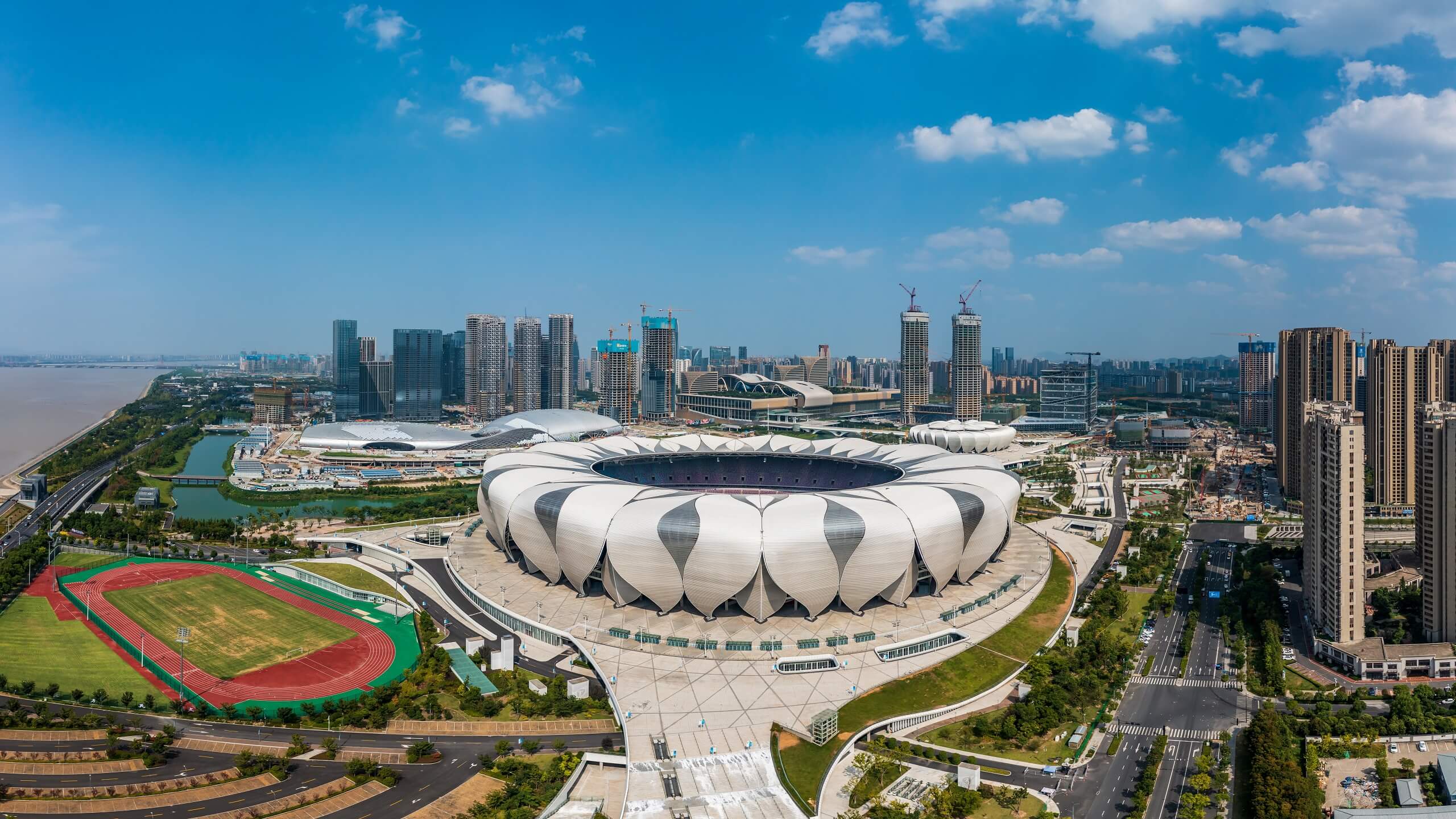
Hangzhou is no longer just the Alibaba city. The cluster of “Six Little Dragons” — DeepSeek, Unitree, Game Science (Black Myth: Wukong), BrainCo, Manycore, and Deep Robotics — reshaped global perception of the city through 2024 and 2025, and Hangzhou’s Future Industries Development Plan (2025–2026) has formalised AI, robotics, and synthetic biology as the next pillars.[1] The city allocates roughly 15 percent of its annual fiscal revenue to tech investments, hosts China’s first Cross-Border E-commerce Comprehensive Pilot Zone (established March 2015), and runs the 37.51 km² Hangzhou Area of the China (Zhejiang) Pilot Free Trade Zone with explicit briefs as a digital economy demonstration zone and cross-border e-commerce demonstration centre.[2] Combined with a cost base 30 to 40 percent below Shanghai and a 25-minute high-speed rail link, the city has become the working answer for foreign e-commerce, SaaS, AI, and digital media groups choosing between Shanghai and a credible alternative.
This guide is written for founders, CFOs, and general counsel who want to understand the trade-offs before they sign a lease. It covers the legal framework, district choices, the Hangzhou FTZ and cross-border e-commerce pilot, registered capital, the current 2026 setup timeline including the R-Talent visa, and the most expensive mistakes we see foreign investors repeat in Hangzhou. If you are still mapping the broader entity decision, our full WFOE registration in China service page covers the national framework. This article zooms in on Hangzhou.
Hangzhou Pilot Free Trade Zone: the digital economy demonstration zone
The China (Zhejiang) Pilot Free Trade Zone was originally established in 2017 around the Zhoushan commodities-trading hub. The 2020 expansion added three new regions — Ningbo, Hangzhou, and Jinyi — totalling 119.5 km². The Hangzhou Area covers 37.51 km² and was given two specific briefs: digital economy development demonstration zone and cross-border e-commerce demonstration centre.[2]
Inside the Hangzhou FTZ Area, the most active sub-zones for foreign-invested companies are the Xiaoshan FTZ Block (covering parts of Xiaoshan district adjacent to the airport and the bonded zone) and the Yuhang FTZ Block (overlapping with Future Sci-Tech City). Where you register inside the FTZ matters because the customs facilitation, bonded warehousing access, and the tax authority you deal with are not interchangeable.
Future Sci-Tech City and the Six Little Dragons
Yuhang district’s Future Sci-Tech City covers approximately 128 km² and serves as the main area of the Hangzhou West Science and Technology Innovation Corridor. The Tech City alone hosts roughly 49,000 enterprises and 67,000 professionals across 585 anchor companies, with Alibaba, Ant Group, ByteDance Hangzhou, Dahua Technology, Vivo, and the Huali Group among the largest tenants.[3]
The newer wave matters more for foreign investors. The “Six Little Dragons” — DeepSeek (foundation-model AI), Unitree (humanoid robotics), Game Science (Black Myth: Wukong), BrainCo (brain-computer interfaces), Manycore (Coohom 3D design), and Deep Robotics (quadruped robotics) — are all Hangzhou-headquartered. Their rise through 2024 and 2025 reshaped Hangzhou’s global tech reputation and drew a new wave of foreign and returning-Chinese engineering talent.
For a foreign tech WFOE, the practical implication is that Hangzhou can hire AI, robotics, and synthetic-biology engineering teams faster and cheaper than Shanghai or Beijing, with talent depth that now rivals either at the senior level. The trade-off is foreign-facing client services depth: foreign banks, foreign law firms, and Big Four offices are smaller in Hangzhou than in Shanghai, which can matter for regional headquarters but rarely matters for engineering-led entities.
Cross-border e-commerce: how the Hangzhou pilot actually works
Hangzhou Xiaoshan supports the full range of cross-border e-commerce import and export modes:
- Mode 9610 — cross-border B2C direct mail (each parcel cleared individually).
- Mode 1210 — bonded online shopping. Goods pre-positioned in Customs special control areas; consumers order, declarations made, parcel released.
- Mode 9710 — cross-border B2B direct export to overseas distributors.
- Mode 9810 — cross-border B2B export to overseas warehouses.
Xiaoshan’s Comprehensive Bonded Zone has built a “Global Central Warehouse” model that integrates all four modes through one-stop warehousing, allowing cross-border e-commerce companies to save more than 30 percent in costs and to achieve global merchandise inbound, outbound, and return flows in a single operation.[4]
For a foreign-invested e-commerce WFOE, the working advantages are pre-positioning inventory in Xiaoshan bonded warehouses, declaring on a per-order basis at clearance, simplified customs declarations under the Hangzhou Comprehensive Pilot Zone framework, and the option to combine 9610 and 1210 shipments in the same package for export.
Where to register: five Hangzhou districts compared
These are the five districts foreign-invested companies actually shortlist when they pick a Hangzhou address.
| District / Area | Best suited to | Key advantage | Watch-outs |
|---|---|---|---|
| Yuhang (Future Sci-Tech City) | AI, e-commerce, SaaS, fintech, digital media, robotics | Six Little Dragons ecosystem; Alibaba/Ant Group talent pool; 49,000+ enterprises in the Tech City; competitive Grade A rents; FTZ Yuhang Block access | Distance from city centre; expat lifestyle infrastructure thinner than Binjiang or Shangcheng |
| Binjiang (Hi-Tech Industrial Development Zone) | Software, IoT, computer vision, hardware-software crossovers, cybersecurity | Hikvision and Dahua ecosystem; deep engineering talent; established hi-tech infrastructure since 1996 | Office stock tightening as the zone matures; rents have risen meaningfully since 2022 |
| Xiaoshan (Airport + FTZ Block) | Cross-border e-commerce, logistics, light manufacturing, air-cargo-linked services | Hangzhou Xiaoshan International Airport; Global Central Warehouse model; FTZ customs facilitation; full 9610/1210/9710/9810 modes | Long way from CBD; talent retention requires shuttle support |
| Shangcheng (Downtown CBD) | Professional services, regional headquarters, retail and consumer brands, foreign banks | Walking distance to West Lake and consulates; concentration of foreign service firms; mature retail and lifestyle infrastructure | Older office stock in parts; engineering talent prefers Yuhang or Binjiang |
| Xihu (West Lake area) | Cultural, creative, education, lifestyle, design | Zhejiang University proximity; cultural and creative cluster; premium location | Office availability constrained; not the right fit for industrial or large-scale tech operations |
Engineering-led WFOEs almost always end up in Yuhang or Binjiang. Cross-border e-commerce belongs in Xiaoshan. Service WFOEs gravitate to Shangcheng. Cultural and creative WFOEs to Xihu. Pick the district to match the operating model and the talent you need to hire.
Registered capital: what Hangzhou SAMR will actually accept
There is no statutory minimum registered capital for most WFOE business scopes in Hangzhou.[5] Hangzhou’s State Administration for Market Regulation (HZ-SAMR) reviews capital declarations for reasonableness against the proposed business scope. Set capital too low and the licence application stalls. Set it too high and Article 47 of the 2024 Company Law forces you to fund a vanity number you never needed.[6]
| Business type | Typical registered capital accepted | Why HZ-SAMR looks at it |
|---|---|---|
| Consulting / services WFOE | RMB 100,000 to 500,000 | Must cover roughly 12 months of office, salaries, social insurance |
| Trading WFOE (FICE) | RMB 500,000 to 1,500,000 | Must demonstrate capacity to pre-fund inventory or working capital |
| SaaS / AI / digital WFOE | RMB 500,000 to 3,000,000 | Must cover engineering payroll, cloud infrastructure, and 18–24-month runway |
| Cross-border e-commerce WFOE | RMB 1,000,000 to 5,000,000 | Must cover platform deposits, bonded warehouse working capital, and stock float |
| Manufacturing WFOE | RMB 1,000,000 to 5,000,000+ | Must cover lease, equipment, EIA, and initial production runs |
The 2024 Company Law five-year rule
Article 47 of the revised PRC Company Law took effect on 1 July 2024. It requires the subscribed registered capital to be paid in within five years of incorporation. For companies established before 1 July 2024, the transition period for compliance ends on 30 June 2027. Set the capital to your realistic 36-month plan. You can always increase it later through the HZ-SAMR change procedure. For more, see our companion guide on minimum registered capital for a WFOE in China.
Setup timeline and costs for a WFOE in Hangzhou
Hangzhou is competitive with Shenzhen on speed and noticeably faster than Shanghai. A clean consulting or trading WFOE in Hangzhou is typically operational within four to seven weeks. Cross-border e-commerce WFOEs add one to two weeks for Customs registration, declarant codes, and platform onboarding.
| Activity | Typical timeline | Notes |
|---|---|---|
| Name pre-approval | 1 to 3 days | Online via HZ-SAMR; bilingual name format |
| Business licence | 1 to 2 weeks | 5 working days for clean cases |
| Tax, customs, SAFE, social insurance | 2 to 4 weeks | Can be parallelised; Yuhang and Binjiang tax bureaus are most experienced with foreign filings |
| Bank account (Chinese bank) | 2 to 3 weeks | Bank of China, ICBC, China Construction Bank, ABC, Bank of Hangzhou, Zheshang Bank |
| Bank account (foreign bank) | 4 to 6 weeks | HSBC, Standard Chartered, DBS, Citi — Hangzhou branches are smaller than Shanghai |
| Capital injection and SAFE update | 1 week | After bank account is open and capital account is approved |
A standard consulting or trading WFOE in Hangzhou is operational within 4 to 7 weeks from name pre-approval to a usable bank account. Cross-border e-commerce groups add 30 to 60 days for platform onboarding and Customs declarant codes.
R-Talent visa: a Hangzhou-friendly route for senior expats
Hangzhou actively supports foreign talent attraction through the R-Talent visa: a multiple-entry visa valid for 5 to 10 years, processed in approximately 10 working days for qualifying senior professionals. For a foreign WFOE bringing in a senior country manager or technical lead, the R-Talent route is meaningfully faster than the standard Z-visa work permit cycle and signals long-term intent to local government.
If you are running a remote setup, our guide on how to open a business in China remotely explains the document-flow and notarisation steps that drive the early-week timeline.
Bank accounts in Hangzhou: Chinese versus foreign banks
Every WFOE needs at least two accounts: a basic RMB account for operating cashflow and tax payments, and a foreign currency capital contribution account approved by SAFE for receiving the registered capital injection from the foreign parent.
Bank of China, ICBC, China Construction Bank, ABC, and the Zhejiang-headquartered Bank of Hangzhou and Zheshang Bank all run large Hangzhou branches. Foreign banks have smaller branches than in Shanghai or Shenzhen but still offer the full FDI account suite. The 25-minute high-speed rail to Shanghai Hongqiao means many CFOs run their primary banking relationship through Shanghai branches and use Hangzhou branches for routine operations.
Capital injection mechanics are the same across all banks. The foreign parent wires the registered capital to the capital contribution account in foreign currency. The bank then completes the SAFE registration update before the funds can be settled into RMB and used. Plan for a one-week buffer between funds arrival and operational availability.
The five most expensive Hangzhou WFOE mistakes
These are the recurring patterns we see foreign investors repeat in Hangzhou. None of them is theoretical.
Mistake 1: Picking Shangcheng for prestige when Yuhang or Binjiang fits better
Shangcheng carries the West Lake address but it is the wrong choice for an engineering-led WFOE. The talent and ecosystem sit in Yuhang and Binjiang. Founders who pick Shangcheng for the postcode and then try to hire engineers find they are competing with the Six Little Dragons studios for the same talent and are commuting an hour each way against the flow.
Mistake 2: Using the Hangzhou cross-border e-commerce pilot as a tax-arbitrage shell
The 1210, 9610, 9710, and 9810 modes were built for real cross-border e-commerce operating models with order data, customs declarations, and warehousing. Trying to use them as a tax-shell route triggers audits at the first cycle. If your model is not actually cross-border e-commerce, register a normal trading WFOE instead.
Mistake 3: Underestimating the Hangzhou-Shanghai talent gravity
Senior expat talent often prefers Shanghai for lifestyle reasons, even with the Hangzhou cost arbitrage. WFOEs that need a senior expat country manager sometimes find the role easier to fill in Shanghai with a Hangzhou commute (45-minute high-speed rail) than directly in Hangzhou. The R-Talent visa helps but does not eliminate the gravity.
Mistake 4: Setting vanity registered capital that Article 47 will force you to fund
The 2024 Company Law five-year paid-in rule has changed the calculus. RMB 10 million capital that looked good on a business card in 2023 is now a binding obligation to wire RMB 10 million by year five. Set capital to your real 36-month plan.
Mistake 5: Missing the Hangzhou ICP and content-platform filings for digital businesses
Any WFOE running a Chinese-facing website or app needs an ICP filing through MIIT. For a Hangzhou-based SaaS or content WFOE, the platform side often triggers additional content, payment, and data filings. Build these into the launch timeline.
If you are still weighing entity types, our comparison guide on WFOE vs JV vs representative office maps when each structure makes sense.
Hangzhou versus Shanghai versus Shenzhen: which fits your business
A short orientation, since this is the comparison we are asked about most often in Hangzhou-bound calls.
Choose Hangzhou if your business is e-commerce or cross-border e-commerce, AI, robotics, SaaS, fintech, or anything that benefits from the Six Little Dragons ecosystem and the Alibaba talent pool. Hangzhou’s cost arbitrage versus Shanghai is real and persistent, the cross-border e-commerce pilot is the most mature in China, and the Future Sci-Tech City is now a genuine peer to Shanghai’s Zhangjiang for AI and robotics talent depth.
Choose Shanghai if your business benefits from Lingang’s 15% CIT incentive, if you need FT account access for cross-border RMB cash pooling, or if you need the foreign-facing service depth that Hangzhou cannot match. Compare with our Shanghai WFOE guide.
Choose Shenzhen if your business is hardware, cross-border e-commerce with a Hong Kong link, or fintech that fits Qianhai’s catalogue. Compare with our Shenzhen WFOE guide.
For digital-first WFOEs, Hangzhou often beats Shanghai on cost and Shenzhen on talent depth for AI and robotics. The right answer follows the operating model.
Frequently asked questions
How long does it take to set up a WFOE in Hangzhou?
What is the minimum registered capital for a WFOE in Hangzhou?
What does the Hangzhou Cross-Border E-commerce Pilot Zone offer foreign WFOEs?
What are the Six Little Dragons of Hangzhou?
Do I need a Chinese partner to open a WFOE in Hangzhou?
Which Hangzhou district is best for an AI or SaaS WFOE?
What is the R-Talent visa and how does it help foreign WFOEs in Hangzhou?
Can a Hangzhou WFOE repatriate profits to its foreign parent?
Closing thoughts
Hangzhou is the answer for cross-border e-commerce, AI, robotics, SaaS, and any group that benefits from the Six Little Dragons ecosystem and a meaningful cost arbitrage versus Shanghai. The Hangzhou Cross-Border E-commerce Comprehensive Pilot Zone is the most mature in China, the FTZ Hangzhou Area gives access to digital economy demonstration policies, the Future Sci-Tech City is a genuine peer to Zhangjiang for AI and robotics talent, and the R-Talent visa eases senior-expat relocation.
For founders and CFOs, the steps that actually matter are: pick the district that matches the operations and the talent you need to hire, set the registered capital to a real 36-month plan, and treat licences as additive timelines on top of the WFOE setup. The most common Hangzhou-specific failure modes — wrong district for the talent profile, misuse of the cross-border e-commerce pilot, vanity capital, and missed ICP or content-platform filings — are all avoidable with a clean spec at the start.
If you are weighing Hangzhou as your China entry city or as the location for a digital, e-commerce, AI, or robotics entity, our team can run the district-and-capital decision in a single working session and hand you a scoped budget. Start with the WFOE registration in China overview or our broader China company registration service, or contact us directly for a Hangzhou-specific scoping call.
- SCMP, “Hangzhou emerges as new tech hub with Little Dragons like DeepSeek, Unitree” — Six Little Dragons cluster.
- State Council, Expansion of the China (Zhejiang) Pilot Free Trade Zone, September 2020 — Hangzhou Area 37.51 km² with digital economy and cross-border e-commerce briefs.
- Hangzhou Future Sci-Tech City — Yuhang district profile, 128 km², 49,000 enterprises, 67,000 professionals.
- China Briefing, “An Introduction to China’s CBEC Pilot Zones and Pilot Cities” — Hangzhou as the original pilot zone (March 2015), modes 9610/1210/9710/9810, Xiaoshan Global Central Warehouse.
- China Briefing, “China Registered Capital: A Comprehensive Guide for Foreign Businesses”.
- PRC Company Law as revised by the Standing Committee of the National People’s Congress, 29 December 2023; Article 47 effective 1 July 2024.