 General Guides
 Regional Guides
 Starter Guides

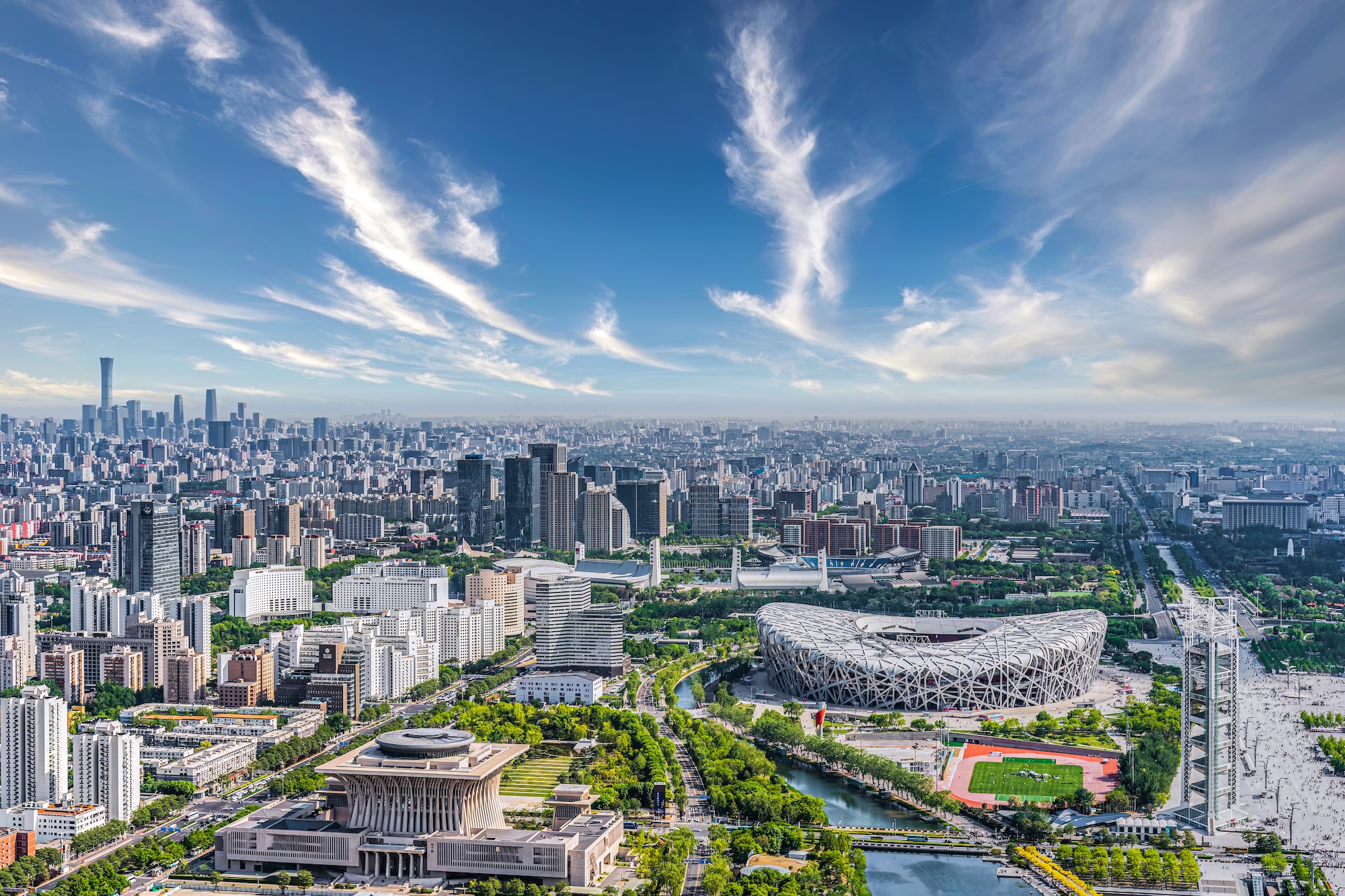
Qualifying enterprises in Beijing’s Zhongguancun cluster pay a 15% corporate income tax rate under the High and New Technology Enterprise (HNTE) regime, against the standard national rate of 25%. Beijing made the application route faster than the rest of the country in 2021, when the city introduced a simplified HNTE procedure for production and research enterprises in integrated circuits, artificial intelligence, biopharmaceuticals, and key materials with at least RMB 20 million in main-business revenue and 50% or more of R&D spending inside China.[1] That single shortcut, combined with Beijing’s status as the political and regulatory capital, explains why so many foreign groups still pick the city over Shanghai or Shenzhen for their China holding company or R&D entity.
This guide is written for founders, CFOs, and general counsel who want to understand the trade-offs before they sign a lease. It covers the legal framework, district choices, the Beijing Pilot Free Trade Zone and the Two Zones policy, registered capital in practice, the current setup timeline, and the most expensive mistakes we see foreign investors repeat in Beijing. If you are still mapping the broader entity decision, our full WFOE registration in China service page covers the national framework. This article zooms in on Beijing.
Why Beijing for a WFOE in 2026
Beijing’s pull for foreign investors rests on four concrete factors that show up in the numbers, not in a brochure.
First, the regulatory infrastructure is the deepest of any Chinese city. Beijing hosts the central ministries (NDRC, MOFCOM, MIIT, NFRA), the State Council, and the headquarters of every major Chinese state-owned bank. For any WFOE that depends on regulatory access — financial services, telecom, healthcare, education, content — the proximity is a real working advantage.[2]
Second, the talent pool for tech and R&D is the deepest in mainland China. Haidian alone hosts Tsinghua, Peking University, the Chinese Academy of Sciences, and the original Zhongguancun cluster. Beijing already houses 252 regional headquarters of multinational companies and 149 foreign-funded R&D centres, which between them invested RMB 13.77 billion in R&D in the first eight months of 2024 alone, up 29.9% year on year.[3]
Third, the Beijing Pilot Free Trade Zone and the Two Zones policy keep producing services-trade openings ahead of the rest of the country. The 2024 telecom pilot in the Beijing FTZ that lifts the 50% foreign ownership cap in several value-added telecom services categories is the clearest current example.[4]
Fourth, the Beijing State Administration for Market Regulation (BMSAMR) has the most predictable interpretation of foreign-invested company rules among the tier-1 cities. Bureaucratic discretion still exists, but a clean WFOE application in Beijing moves through name pre-approval, business licence, tax / customs / SAFE filings, and bank account opening on a tight timeline.
Beijing Pilot Free Trade Zone: the three sub-zones explained
The State Council established the China (Beijing) Pilot Free Trade Zone in September 2020 with a total area of 119.68 square kilometres. Unlike Shanghai’s FTZ, which is dense and concentrated in Pudong, Beijing’s FTZ is split across three thematic sub-zones, each with a different industry brief.[4] Where you register inside the FTZ matters because the policy benefits, the office stock, and the tax authority you deal with are not interchangeable.
Sci-tech Innovation Area (Haidian / Zhongguancun)
The Sci-tech Innovation Area sits inside Haidian district and overlaps with the original Zhongguancun cluster. It is the home of foreign R&D centres, AI labs, and integrated-circuit design houses. This is where Beijing’s HNTE simplified procedure delivers the most value, because the talent pool, the university links, and the venture-capital ecosystem are all on the same campus. Office stock is mid-range Grade A in towers around the Zhongguancun and Zhichunlu corridors, with a meaningful discount versus Chaoyang CBD.
International Business Services Area (Chaoyang CBD, Capital Airport, Jinzhan)
This is the largest of the three sub-zones at 48.34 square kilometres. It sweeps through Chaoyang’s CBD, the area around Beijing Capital International Airport, the Jinzhan International Cooperation Service Area, and the business district of Beijing’s sub-centre. The policy brief here is digital trade, cultural trade, exhibitions, healthcare, global delivery, and cross-border financial services. If you are setting up a regional headquarters, a financial-services WFOE, or a digital-trade entity, this is where Beijing has concentrated its FTZ regulatory openings.
High-end Industries Area (Daxing Airport + BDA / Yizhuang)
The High-end Industries Area is 39.49 square kilometres in total, made up of 10.36 square kilometres of land adjacent to Beijing Daxing International Airport and 27.83 square kilometres inside the Beijing Economic-Technological Development Area (BDA, also known as Yizhuang). The brief is international finance, cultural and creative industries, biotechnology, and wellness and health. This is the Beijing equivalent of Shanghai’s Lingang in industrial-policy terms, although the Beijing FTZ does not currently offer a Lingang-style 15% CIT incentive linked to the FTZ itself. The 15% rate in Beijing comes through HNTE qualification, not through a zone-specific notice.
The Two Zones policy: what it adds beyond the FTZ
When people talk about Beijing’s “Two Zones” they mean two overlapping regimes. The first is the Beijing Pilot Free Trade Zone described above. The second is the Integrated National Demonstration Zone for Opening up the Services Sector, a policy that covers the whole municipality of Beijing rather than three carved-out sub-zones. The combination is what gives Beijing a distinctive opening profile.
In practice, the Two Zones policy has produced four openings that matter for foreign WFOEs:
- Telecom and value-added telecom services. In 2024, China launched a pilot in the Beijing FTZ that lifts the 50% foreign ownership cap in several VATS categories. For a WFOE running a SaaS, content-delivery, or cloud business, this is one of the few places in China where a 100% foreign-owned VATS licence is realistic.
- Financial sector access. The Two Zones framework supports wholly foreign-owned private equity fund managers, foreign-invested asset management companies, and broader access to RMB-denominated cross-border products.
- Services trade. Information services, business services, education, and culture have all seen restrictions eased, making Beijing the most flexible city for service-led WFOEs after Shanghai.
- Cross-border data flows. Beijing was one of the first FTZs to publish a sectoral negative list for cross-border data, which matters for healthcare, finance, telecom, and automotive WFOEs that move data outside China.
Zhongguancun HNTE 15% CIT: who actually qualifies
The HNTE regime is national, not Beijing-specific. Any qualifying enterprise anywhere in China can apply. What is Beijing-specific is the simplified procedure the city introduced in 2021 for HNTE applications from companies in four priority sectors.[1] To use the simplified track, an enterprise must:
- Be a production and research enterprise above designated size, meaning annual main-business revenue of at least RMB 20 million.
- Operate in integrated circuits, artificial intelligence, biopharmaceuticals, or key materials.
- Be registered in Beijing and operating for at least one year.
- Spend at least 50% of total R&D expenses inside China.
If you meet those tests, the Beijing route shortens both the documentation burden and the review time compared with the standard national HNTE process. The reward is meaningful. On RMB 10 million of taxable profit, the difference between 25% and 15% CIT is RMB 1 million per year for the three-year HNTE certification cycle, with renewal possible.
For a deeper national view on registered capital and the Article 47 paid-in rule, see our companion guide on minimum registered capital for a WFOE in China.
Where to register: five Beijing districts compared
These are the five districts foreign-invested companies actually shortlist when they pick a Beijing address. The choice should follow the business model, not the postcode prestige.
| District / Area | Best suited to | Key advantage | Watch-outs |
|---|---|---|---|
| Chaoyang (CBD, Wangjing, Sanlitun) | Regional HQ, financial services, professional services, embassies-facing entities | Highest concentration of MNC HQs, foreign banks, law and accounting firms; International Business Services Area of the Beijing FTZ; English-speaking talent | Highest Grade A rents in Beijing; CBD office availability tightens around new tower openings |
| Haidian (Zhongguancun) | Tech, R&D, AI, IC design, biopharma, software | Sci-tech Innovation Area of the FTZ; Beijing’s HNTE simplified procedure works best here; deep university and engineering talent | Less foreign-facing services infrastructure than Chaoyang; commute logistics for non-Haidian executives |
| Daxing (FTZ + Daxing Airport Economic Zone) | High-end manufacturing, airport-linked logistics, cross-border e-commerce, biotech | Adjacent to Beijing Daxing International Airport; FTZ High-end Industries Area; competitive industrial land and rents | Substance test still applies; an office-only registration here will not capture the industrial benefits |
| BDA / Yizhuang | Advanced manufacturing, autonomous driving, robotics, biotech production | National-level economic zone since 1994, also part of the FTZ High-end Industries Area; established industrial supply chain | Long way from city centre; talent retention requires shuttle and housing support |
| Tongzhou (Beijing Sub-center) | Headquarters relocations following ministerial moves, sustainable design and construction, finance | Long-term subsidies linked to the sub-centre relocation policy; new Grade A stock at lower rents | Still building out commercial ecosystem; talent depth lags Chaoyang and Haidian |
Service and consulting WFOEs that do not need HNTE almost always end up in Chaoyang because of talent access, client proximity, and the credibility of the address. Tech and R&D groups gravitate to Haidian because every dollar of HNTE saving comes back. Manufacturing and airport-adjacent logistics belong in Daxing or BDA. Tongzhou is for groups taking a 5- to 10-year view on Beijing’s long ministerial migration.
Registered capital: what Beijing SAMR will actually accept
There is no statutory minimum registered capital for most WFOE business scopes in Beijing.[5] The State Administration for Market Regulation in Beijing (BMSAMR) reviews capital declarations for reasonableness against the proposed business scope and the implied 12- to 36-month operating burn. Set capital too low and the licence application stalls. Set it too high and Article 47 of the 2024 Company Law forces you to fund a vanity number you never needed.[6]
The benchmarks below reflect what BMSAMR is currently accepting in 2026 for clean applications:
| Business type | Typical registered capital accepted | Why BMSAMR looks at it |
|---|---|---|
| Consulting / services WFOE | RMB 100,000 to 500,000 | Must cover roughly 12 months of office, salaries, social insurance |
| Trading WFOE (FICE) | RMB 500,000 to 1,500,000 | Must demonstrate capacity to pre-fund inventory or working capital |
| Manufacturing WFOE | RMB 1,000,000 to 5,000,000+ | Must cover lease, equipment, EIA, and initial production runs |
| Tech / R&D WFOE targeting HNTE | RMB 1,000,000 to 3,000,000 | Must support the substance narrative for HNTE eligibility (R&D headcount, lab equipment, IP) |
| Regional headquarters | USD equivalent meaningful to the group | Must support the HQ designation that unlocks Beijing-specific HQ subsidies |
The 2024 Company Law five-year rule
Article 47 of the revised PRC Company Law took effect on 1 July 2024. It requires the subscribed registered capital to be paid in within five years of incorporation. For companies established before 1 July 2024, the transition period for compliance ends on 30 June 2027. The most common mistake we see in Beijing is founders carrying over the pre-2024 habit of declaring vanity numbers like RMB 10 million for a small consulting WFOE, then realising in year three that they cannot fund it. Set the capital to your realistic 36-month plan. You can always increase it later through the BMSAMR change procedure.[7]
Beijing’s R&C building registration carve-out
Beijing has a quirk that makes the city slightly easier than Shanghai for service WFOEs. If a residential-and-commerce (R&C) building has the consent of all landlords and the landlord committee has registered the building with the local SAMR for commercial use, a WFOE can register at that address. Most foreign investors still default to dedicated commercial buildings for credibility with banks and tax authorities, but for very small consulting or representative WFOEs, the R&C carve-out can shave RMB 100,000–200,000 off year-one rent.
Setup timeline and costs for a WFOE in Beijing
Setting up a WFOE in Beijing is generally faster than Shanghai for the licence-issuance steps, slower for foreign-bank account opening, and similar overall. The table below reflects current 2026 turnaround for clean files submitted by an experienced agent.
| Activity | Typical timeline | Notes |
|---|---|---|
| Name pre-approval | 1 to 3 days | Online via BMSAMR; bilingual name format |
| Business licence | 1 to 3 weeks | 5 working days for clean cases; longer if SAMR requests scope clarification |
| Tax, customs, SAFE, social insurance | 2 to 4 weeks | Can be parallelised; Chaoyang and Haidian tax bureaus are the most experienced with foreign filings |
| Bank account (Chinese bank) | 2 to 3 weeks | ICBC, Bank of China, China Construction Bank, ABC head offices are all in Beijing — fastest route |
| Bank account (foreign bank) | 4 to 6 weeks | HSBC, Standard Chartered, Citi, DBS — extended KYC, in-person interview standard |
| Capital injection and SAFE update | 1 week | After bank account is open and capital account is approved |
A standard consulting or trading WFOE in Beijing is typically operational within 4 to 8 weeks from name pre-approval to a usable bank account. Manufacturing adds the Environmental Impact Assessment and any production licensing, which extends the total to 3 to 4 months. Add another 30 to 60 days if you need an ICP licence for digital services, or longer if you are pursuing a VATS licence under the Beijing FTZ telecom pilot.
If you are running a remote setup, our guide on how to open a business in China remotely explains the document-flow and notarisation steps that drive the early-week timeline.
Bank accounts for a WFOE in Beijing: Chinese versus foreign banks
Every WFOE needs at least two accounts: a basic RMB account for operating cashflow and tax payments, and a foreign currency capital contribution account approved by SAFE for receiving the registered capital injection from the foreign parent.[8] Most groups also open a general RMB settlement account for routine operations.
The four state-owned commercial banks — ICBC, Bank of China, China Construction Bank, and ABC — are headquartered in Beijing. Their Beijing branches handle foreign-invested enterprise account opening as a routine matter. Expect 2 to 3 weeks from full document submission to an active basic account.
Foreign banks in Beijing — HSBC, Standard Chartered, Citi, DBS, Mizuho, MUFG, BNP Paribas — apply more rigorous KYC, including a face-to-face interview with the legal representative. The pay-off is integration with the parent group’s global cash management. The cost is 4 to 6 weeks of elapsed time.
Capital injection mechanics are the same across all banks. The foreign parent wires the registered capital to the capital contribution account in foreign currency. The bank then completes the SAFE registration update before the funds can be settled into RMB and used. Plan for a one-week buffer between funds arrival and operational availability.
The five most expensive Beijing WFOE mistakes
These are the recurring patterns we see foreign investors repeat in Beijing. None of them is theoretical.
Mistake 1: Registering in the Beijing FTZ for the badge without operational substance
A FTZ address without matching operational substance produces no policy benefit and several headaches. The International Business Services Area, the Sci-tech Innovation Area, and the High-end Industries Area each have specific industry briefs. Tax authorities and the FTZ administrative committee will look at where your people sit, where your contracts originate, and where your IP is held. An empty desk in a Daxing tower will not unlock the high-end industries support and will draw audit attention. Match the registration to the operations you actually run.
Mistake 2: Picking Chaoyang for prestige when Haidian fits better
Chaoyang carries credibility, but it is the wrong address for a tech or R&D group that needs HNTE qualification. The Beijing simplified HNTE procedure expects you to be inside the Sci-tech Innovation Area or the broader Zhongguancun ecosystem, with R&D personnel, lab space, and university links. We have seen groups burn six months and a re-registration trying to move from Chaoyang to Haidian after a tax adviser flagged the HNTE substance gap. Pick the district once, on the basis of the operations.
Mistake 3: Filing for HNTE prematurely
HNTE requires at least 12 months of operating history and the qualifying revenue threshold (RMB 20 million for the simplified procedure). Filing before the documentation is in place — R&D project records, IP registrations, R&D personnel ratios, R&D expense schedules — almost always leads to a rejection that locks you out for the next certification window. Build the HNTE file from day one, but file when the substance is real.
Mistake 4: Setting vanity registered capital that Article 47 will force you to fund
The 2024 Company Law five-year paid-in rule has changed the calculus. RMB 10 million capital that looked good on a business card in 2023 is now a binding obligation to wire RMB 10 million by year five. Set capital to your real 36-month plan. Increase it later through BMSAMR if needed, which is a short and well-trodden process.
Mistake 5: Underestimating the ICP and cybersecurity filings for digital businesses
Any WFOE running a Chinese-facing website or app needs an ICP filing through MIIT. Anything more — a payment integration, a content moderation function, cross-border data movement — triggers additional cybersecurity, data, and content filings. Beijing has the deepest ministry presence in China, which speeds the dialogue but also means filings are taken seriously. Build these into the launch timeline rather than treating them as afterthoughts.
If you are still weighing entity types, our comparison guide on WFOE vs JV vs representative office maps when each structure makes sense.
Beijing versus Shanghai versus Shenzhen: which fits your business
A short orientation, since this is the comparison we are asked about most often in Beijing-bound calls.
Choose Beijing if your business depends on regulatory access (any regulated industry — finance, telecom, healthcare, education), if you need to qualify for HNTE in IC, AI, biopharma, or key materials, if your buyers are central state-owned enterprises and ministries, or if your model needs the VATS-services telecom pilot. Beijing is also the natural choice for foreign R&D centres and regional headquarters.
Choose Shanghai if your business benefits from Lingang’s 15% CIT incentive in the four FTZ priority sectors, if you need FT account access for cross-border RMB cash pooling, if your model is financial services, life sciences, or trading with bonded-zone logistics. Compare with our Shanghai WFOE guide before deciding.
Choose Shenzhen if your business is hardware, cross-border e-commerce, or fintech with a Hong Kong link, if Qianhai’s 15% CIT incentive applies, or if you need the supply-chain depth of the Pearl River Delta.
For most service-led WFOEs, the choice is between Beijing’s regulatory access and Shanghai’s FTZ infrastructure. For tech and R&D, the choice is between Beijing’s HNTE talent depth and Shenzhen’s hardware ecosystem. There is no universally right answer, only a right answer for the business model you are funding.
Frequently asked questions
How long does it take to set up a WFOE in Beijing?
What is the minimum registered capital for a WFOE in Beijing?
What is the 15% corporate tax rate in Beijing and who qualifies?
Do I need a Chinese partner to open a WFOE in Beijing?
Which Beijing district is best for a consulting WFOE?
Can I use a virtual office to register a WFOE in Beijing?
What does the 2024 Company Law five-year rule mean for a Beijing WFOE?
Can a Beijing WFOE repatriate profits to its foreign parent?
Closing thoughts
Beijing is not the cheapest city to register a WFOE, and it is not the city with the largest FTZ-specific tax incentive — that title belongs to Shanghai’s Lingang and Shenzhen’s Qianhai. What Beijing offers is something different: regulatory proximity to the ministries that approve cross-border M&A, the deepest HNTE talent pool for IC, AI, biopharma, and key materials, the only telecom and VATS pilot in mainland China that lifts the 50% foreign cap, and a Two Zones policy that keeps opening services-trade niches faster than the rest of the country.
For founders and CFOs, the steps that actually matter are: pick the district that matches the operations, set the registered capital to a real 36-month plan, build the HNTE file from day one if relevant, and treat licences as additive timelines on top of the WFOE setup. The most common Beijing-specific failure modes — wrong district, vanity capital, premature HNTE filings, missed ICP or VATS filings — are all avoidable with a clean spec at the start.
If you are weighing Beijing as your China entry city or as the location for a regional headquarters or R&D centre, our team can run the district-and-capital decision in a single working session and hand you a scoped budget. Start with the WFOE registration in China overview or our broader China company registration service, or contact us directly for a Beijing-specific scoping call.
References
- China Briefing, Tax Incentives for Foreign Invested Enterprises — HNTE 15% CIT and Beijing simplified procedure for IC, AI, biopharma, and key materials sectors.
- Beijing Municipal Government, “1,777 New Foreign-Funded Enterprises Established in Beijing from January to November 2024”.
- Beijing Investment Promotion Service Center, Chaoyang District profile and foreign R&D centre statistics.
- Beijing Investment Promotion Service Center, China (Beijing) Pilot Free Trade Zone overview — three sub-zones, 119.68 km² total area.
- China Briefing, “China Registered Capital: A Comprehensive Guide for Foreign Businesses”.
- PRC Company Law as revised by the Standing Committee of the National People’s Congress, 29 December 2023; Article 47 effective 1 July 2024.
- SAMR procedure for change of registered capital (increase and decrease), including 45-day creditor notice requirement for capital reductions.
- State Administration of Foreign Exchange (SAFE), Foreign Exchange Administration Rules for Foreign Direct Investment.
See our Chinese company formation guide for the full overview before choosing Beijing.