 General Guides
 Regional Guides
 Starter Guides

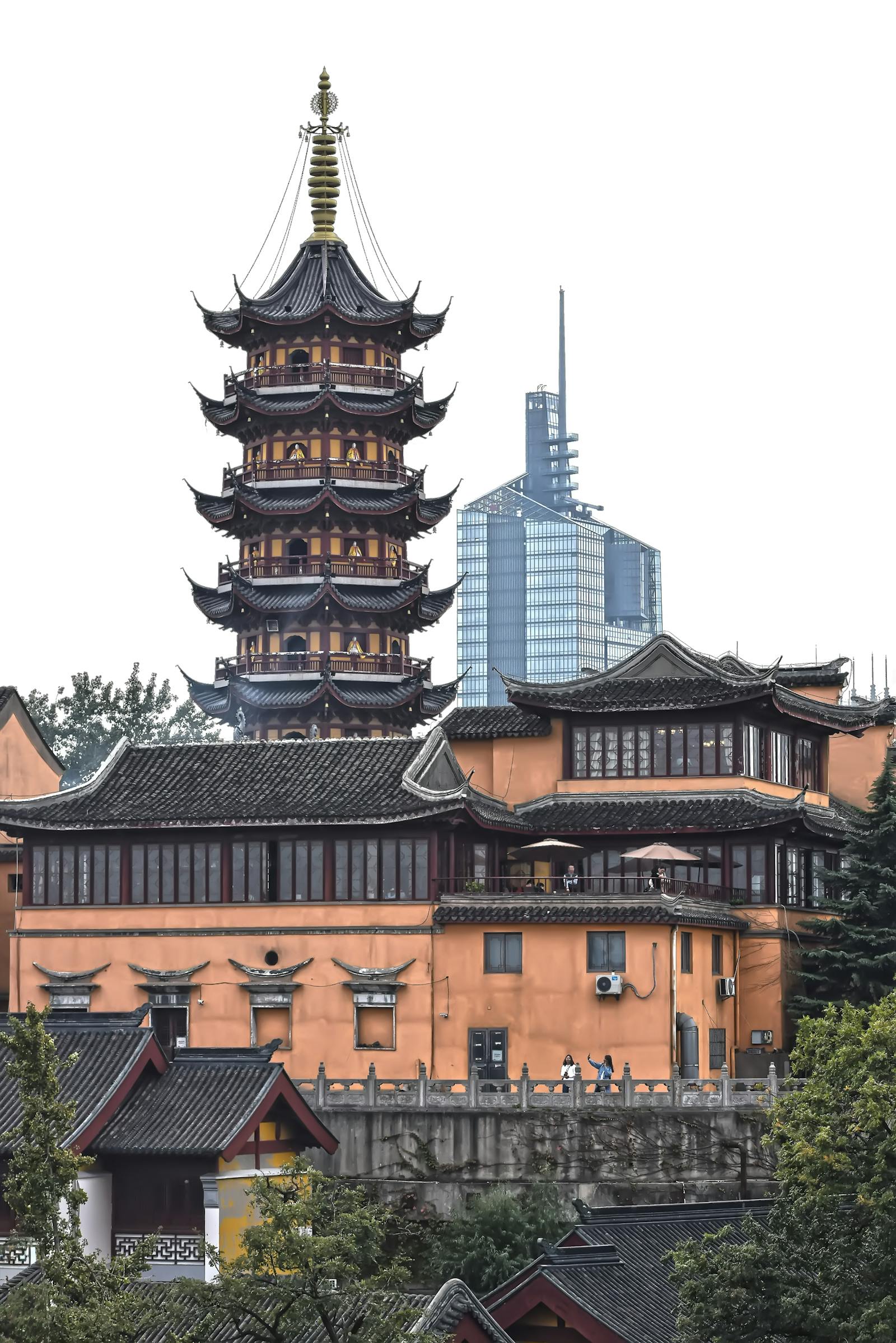
Suzhou is the city most foreign manufacturers should consider before they default to Shanghai. It produces more industrial output than any other city in China, sits 25 minutes by high-speed rail from Shanghai’s Hongqiao station, and runs Suzhou Industrial Park (SIP), a 278 km² zone jointly developed with Singapore that already hosts more than 5,000 foreign-invested companies.[1] The cost delta to Shanghai is real. The talent pool is large. The customs and logistics flow through Yangshan port the same way.
This guide is the practical 2026 walk-through to Suzhou company registration: where to register, the 9-step process, real costs, and how SIP, Suzhou High-Tech Zone, and the Pilot FTZ Suzhou Area each fit different business models.
Talk to MSA Asia about Suzhou registration
Why foreign companies pick Suzhou for company registration
The case for Suzhou is built on three things that compound: cost, talent, and logistics.
Cost. Grade-A office space in SIP runs roughly USD 1,500 to 3,500 per month for a 200 m² unit, against USD 3,000 to 8,000 for the equivalent in Shanghai Pudong. Salaries for engineers and technicians are 15 to 25% lower than Shanghai for comparable roles. Industrial land in SIP and SND is structurally cheaper than anything inside the Shanghai municipal boundary.
Talent. Suzhou and the surrounding Yangtze River Delta have one of the deepest manufacturing labour pools in the world. SIP runs an annual graduate-recruitment programme with the major Jiangsu universities, and the BioBay cluster has trained a biotech workforce that did not exist a decade ago. Engineers, supervisors, and bilingual managers are easier to find at Suzhou rates than in Shanghai.
Logistics. Yangshan Deep-Water Port (Shanghai) handles Suzhou’s container traffic. Pudong International Airport is 90 minutes away. The Hongqiao high-speed rail station puts Shanghai’s CBD inside a 25-minute commute. For a foreign WFOE, the supply chain looks identical to a Shanghai entity. The cost base does not.
Suzhou’s foreign-investment zones
Foreign companies registering in Suzhou usually pick one of three zones. Each has a different specialism.
Suzhou Industrial Park (SIP)
SIP is the flagship and the default choice. It was set up in 1994 as a joint development between China and Singapore and now hosts more than 5,000 foreign-invested companies, including Bosch, Samsung, Hitachi, AstraZeneca, and Eli Lilly.[1] SIP runs its own one-stop SAMR service centre, has dedicated foreign-investment officers, and is the only district in Suzhou where most of the registration work can be handled in English at the bureau level.
SIP’s specialisms are biopharma (BioBay cluster, third-largest in China after Beijing Zhongguancun and Shanghai Zhangjiang), nanotechnology, integrated circuits, and high-end manufacturing. The park’s BioBay zone has a dedicated catalogue for biopharma incentives that mirrors the national HNTE thresholds plus local R&D super-deductions.
Suzhou High-Tech Industrial Development Zone (SND)
SND is the older national-grade high-tech zone, located on the west side of the city. It is geared toward IT, software, and electronics manufacturing. The HNTE first-pass approval rate at SND’s local Department of Science and Technology is among the highest in Jiangsu, which makes it a natural pick for tech WFOEs that want HNTE status quickly. See our HNTE in China guide for the four quantitative tests.
Pilot FTZ Suzhou Area
The China (Jiangsu) Pilot FTZ launched in August 2019 with a Suzhou Area carved into SIP.[2] Companies registered inside the Pilot FTZ Suzhou Area get a faster customs flow, simplified currency conversion, and access to bonded warehousing. It is most useful for trading WFOEs and cross-border e-commerce operations that move physical inventory.
Other Suzhou districts
Wuzhong, Wujiang, and Xiangcheng host their own industrial parks and are typically chosen for cost reasons. Kunshan, technically a county-level city under Suzhou, is a Taiwan-investment hub with its own incentives. Each has a local SAMR sub-bureau that processes foreign-invested registrations.
Find the right Suzhou district for your business
Step by step Suzhou company registration process
The national framework is the 2024 Company Law plus the Foreign Investment Law. Suzhou applies the same nine steps as the rest of China, with district-level service flows on top. Here is the realistic 2026 sequence for a service WFOE in SIP.
1. Reserve the company name. Submit three Chinese-character name options to the SIP SAMR sub-bureau. Names are reserved for six months. SIP runs an English-language counter for foreign applicants which materially speeds up this step.
2. Notarise and Apostille shareholder documents. China joined the HCCH Apostille Convention on 7 November 2023.[3] For HCCH-member-country shareholders, a single Apostille certificate replaces the legacy double-legalisation flow. Document prep is days, not weeks.
3. Lock in a compliant office address. SIP and SND both have approved address-hosting options for early-stage WFOEs that do not yet have a physical lease. The 25-digit property real estate code requirement still applies, and shared or virtual addresses outside the FTZ-approved list are blocked.
4. Submit the registration package. The SIP SAMR sub-bureau handles the foreign-invested registration. Documents needed: Articles of Association in Chinese, business scope, legal-representative ID, registered-capital declaration, and the lease. Standard turnaround is 5 to 7 working days for SIP applications.
5. Receive the Business Licence and carve five chops. Company chop, finance chop, contract chop, invoice chop, and legal-representative chop, all engraved at a SAMR-licensed vendor.
6. Tax-bureau registration within 30 days. Suzhou tax authority assigns a tax officer and decides on small-scale vs general taxpayer status. SIP processes general-taxpayer applications faster than most districts in China, typically 3 to 5 weeks.
7. Open RMB and foreign-currency capital accounts. Bank of China, ICBC, China Merchants Bank, HSBC China, and Standard Chartered China all have full foreign-investment desks in SIP. Account opening usually takes 2 to 4 weeks. SIP is one of the friendlier cities for remote bank-account opening with a power of attorney.
8. SAFE registration for cross-border capital. The State Administration of Foreign Exchange registers the WFOE before any registered capital can be wired in.
9. Inject registered capital within five years. Article 47 of the 2024 Company Law makes the declared figure binding within five years.[4] Most foreign service WFOEs in Suzhou declare USD 50,000 to 250,000 of registered capital. Manufacturing WFOEs typically declare USD 300,000 and up.
End-to-end timeline for a Suzhou service WFOE in 2026: 4 to 7 weeks. Trading WFOEs add 2 to 4 weeks for customs registration. Manufacturing WFOEs add 3 to 6 weeks for the environmental impact assessment.
Suzhou vs Shanghai for foreign-invested companies
The honest comparison most providers do not put in writing.
| Factor | Suzhou (SIP) | Shanghai (Pudong) |
|---|---|---|
| Service-WFOE registration time | 4 to 7 weeks | 4 to 8 weeks |
| Grade-A office (200 m²) | USD 1,500 to 3,500/mo | USD 3,000 to 8,000/mo |
| Engineer salary delta | 15 to 25% below Shanghai | Baseline |
| Manufacturing land | Available, structurally lower cost | Limited, very expensive |
| Logistics (port, airport) | Yangshan Port + PVG via 90 min drive | Yangshan Port + PVG direct |
| Talent pool | Yangtze River Delta, deep manufacturing | Yangtze River Delta, deeper finance |
| HNTE processing | Strong at SND; faster than many cities | Strong at Zhangjiang |
| Best for | Manufacturing, biopharma, hardware | Finance, regional HQ, services |
For most foreign manufacturers, biopharma companies, and hardware firms, Suzhou is the right choice on a 5-year cost view. For finance-services, regional HQs, or businesses that need to be in Shanghai for client proximity, Shanghai still wins. Many groups operate in both: a Shanghai service WFOE for sales and customer-facing work, a Suzhou manufacturing WFOE for production.
For the Shanghai side, see our Shanghai company registration deep dive.
Manufacturing WFOE in Suzhou
Manufacturing WFOEs are where Suzhou genuinely outperforms Shanghai. Three things matter.
Environmental impact assessment (EIA). Manufacturing WFOEs require an EIA before SAMR will issue the business licence. Suzhou’s environmental bureau is one of the more efficient in China, with EIAs typically running 3 to 6 weeks for a clean light-manufacturing operation and 8 to 12 weeks for chemical, semiconductor, or metal-processing operations. The cost runs RMB 30,000 to 150,000 depending on complexity.
Customs registration. Trading and manufacturing WFOEs need a customs declarant licence. SIP’s customs sub-bureau is set up for foreign companies and runs a one-stop window. Add 2 to 4 weeks to the service-WFOE timeline.
BioBay and biopharma. Suzhou’s BioBay cluster (inside SIP) is the third-largest biotech zone in China. Foreign-invested biopharma WFOEs registering in BioBay get access to a dedicated catalogue of incentives, R&D super-deductions on top of the national 175% rate, and the Suzhou Innovation Bay laboratory commons.
Costs and timeline for Suzhou company registration
| Item | Service WFOE | Trading WFOE | Manufacturing WFOE |
|---|---|---|---|
| Government and notarial fees | Under RMB 1,500 | Under RMB 2,500 | Under RMB 3,000 |
| Professional incorporation fee | USD 2,500 to 4,500 | USD 3,500 to 6,000 | USD 5,000 to 9,000 |
| Apostille and translation | USD 1,500 to 4,000 | USD 1,500 to 4,000 | USD 1,500 to 4,000 |
| Office lease deposit (3 months) | USD 4,500 to 10,500 | USD 4,500 to 10,500 | Industrial land negotiated |
| EIA cost | n/a | n/a | RMB 30,000 to 150,000 |
| Customs registration | n/a | USD 1,500 to 3,000 | USD 1,500 to 3,000 |
| End-to-end timeline | 4 to 7 weeks | 6 to 10 weeks | 8 to 14 weeks |
For deeper context on capital sizing, see our minimum registered capital for a WFOE in China guide.
Common Suzhou registration mistakes
Five things show up on most Suzhou registrations.
Wrong district. Foreign founders default to SIP for the brand and overlook SND for HNTE-eligible tech work. Picking the right district at registration determines HNTE processing speed for the next several years.
Generic business scope. SIP and Pilot FTZ Suzhou Area both run their own catalogue checks at audit. Scope wording that does not match the catalogue language costs the company the FTZ benefit. See our business scope in China guide for the drafting workflow.
Underestimating the EIA for manufacturing. Light manufacturing in SIP can clear EIA in 4 weeks. Chemical or semiconductor operations need 12 weeks plus public consultation. Founders that book a Q4 production launch off a Q3 registration timeline regularly miss because the EIA was not modelled correctly.
Missing the BioBay catalogue. Biopharma WFOEs that register at SIP without aligning scope to BioBay’s catalogue lose the local incentives even though they qualify for HNTE. Draft scope at registration with both BioBay and HNTE in mind.
Bank-account delay. Suzhou is more lenient than Shenzhen or Hangzhou on remote bank-account opening, but the foreign-currency capital account still needs the legal representative’s ID verification. Plan for either an in-person trip or a power-of-attorney workflow with one of the four major foreign-friendly banks.
Why foreign companies use MSA Asia for Suzhou registration
MSA Asia has handled Suzhou foreign-invested registrations since 2011, with full-time staff in Suzhou, Shanghai, and 9 other Asian markets. We have registered WFOEs at SIP, SND, the Pilot FTZ Suzhou Area, Wuzhong, Wujiang, Xiangcheng, and Kunshan, including for multinationals like Siemens, LVMH, and Bosch.
What we cover when we run a Suzhou registration for you:
- District structuring: SIP, SND, Pilot FTZ, or Kunshan, picked against your business model and HNTE plan
- Scope drafting: SIP catalogue, BioBay catalogue, Pilot FTZ catalogue, all matched at registration
- Apostille and translation: shareholder documents prepared per the HCCH workflow
- SAMR filing: SIP one-stop service centre, SND district sub-bureau, or Pilot FTZ desk depending on district
- Tax registration: general taxpayer status fast-tracked at SIP, R&D super-deduction file aligned with HNTE
- Banking: RMB and foreign-currency accounts at Bank of China, ICBC, CMB, HSBC China, or Standard Chartered China
- Manufacturing-WFOE EIA: environmental bureau coordination, public-consultation period management
- Post-registration: first-year tax compliance, payroll setup, accounting onboarding
The difference is having Suzhou and Shanghai in the same engagement. Most foreign manufacturers end up running both, and we structure the cross-entity allocation (sales WFOE in Shanghai, manufacturing WFOE in Suzhou) at the start rather than reorganising later.
Talk to MSA Asia’s Suzhou team
Key takeaways
Suzhou is the right answer for foreign manufacturers, biopharma companies, and hardware firms that want Shanghai’s logistics and talent pool without Shanghai’s cost base. SIP is the default district, SND wins on HNTE, and the Pilot FTZ Suzhou Area wins on customs. Service WFOEs register in 4 to 7 weeks, manufacturing WFOEs in 8 to 14 weeks once the EIA is folded in.
Five things to nail down before you start your Suzhou company registration:
- District. SIP for biopharma and manufacturing, SND for HNTE-target tech, Pilot FTZ for trading.
- Scope wording. Quote the SIP, BioBay, or Pilot FTZ catalogue language at registration, not after.
- Capital. USD 50,000 to 250,000 for service WFOE, USD 300,000+ for manufacturing. Five-year paid-in rule applies.
- EIA timing for manufacturing. 3 to 12 weeks depending on industry. Plan Q4 launches off Q1 registrations, not Q3.
- Bank account. Foreign-currency capital account at one of the four major foreign-friendly banks; in-person ID verification or power-of-attorney workflow.
Book a discovery call with MSA Asia
For complementary reading: our china company registration service overview, our WFOE registration in China deep dive, our HNTE in China guide, our business scope in China guide, and our closing a WFOE in China exit guide. For other Yangtze River Delta cities: Shanghai, Hangzhou.
Frequently asked questions about Suzhou company registration
How long does Suzhou company registration take in 2026?
What is Suzhou Industrial Park (SIP)?
Should I register in Suzhou or Shanghai?
What is the minimum registered capital for a Suzhou WFOE?
Can I qualify for HNTE status in Suzhou?
What is the BioBay cluster in Suzhou?
Do I need an environmental impact assessment for a Suzhou manufacturing WFOE?
What is the Pilot FTZ Suzhou Area?
Can a foreign WFOE in Suzhou hire Chinese staff directly?
What documents do I need for Suzhou company registration?
How much does professional Suzhou registration service cost?
Is Suzhou Kunshan part of Suzhou for registration purposes?
- China-Singapore Suzhou Industrial Park Administrative Committee. SIP foreign investment data and overview, current as of 2026. sipac.gov.cn.
- State Council of the People’s Republic of China. Plan for the China (Jiangsu) Pilot Free Trade Zone (Suzhou Area), August 2019. gov.cn.
- Ministry of Foreign Affairs of the People’s Republic of China. Apostille Convention entry into force for the People’s Republic of China, 7 November 2023. mfa.gov.cn.
- Standing Committee of the National People’s Congress. Company Law of the People’s Republic of China, as revised 29 December 2023, effective 1 July 2024. Article 47. en.npc.gov.cn.
establishing a presence in China usually involves choosing between WFOE and JV structures.