 General Guides
 Regional Guides
 Starter Guides

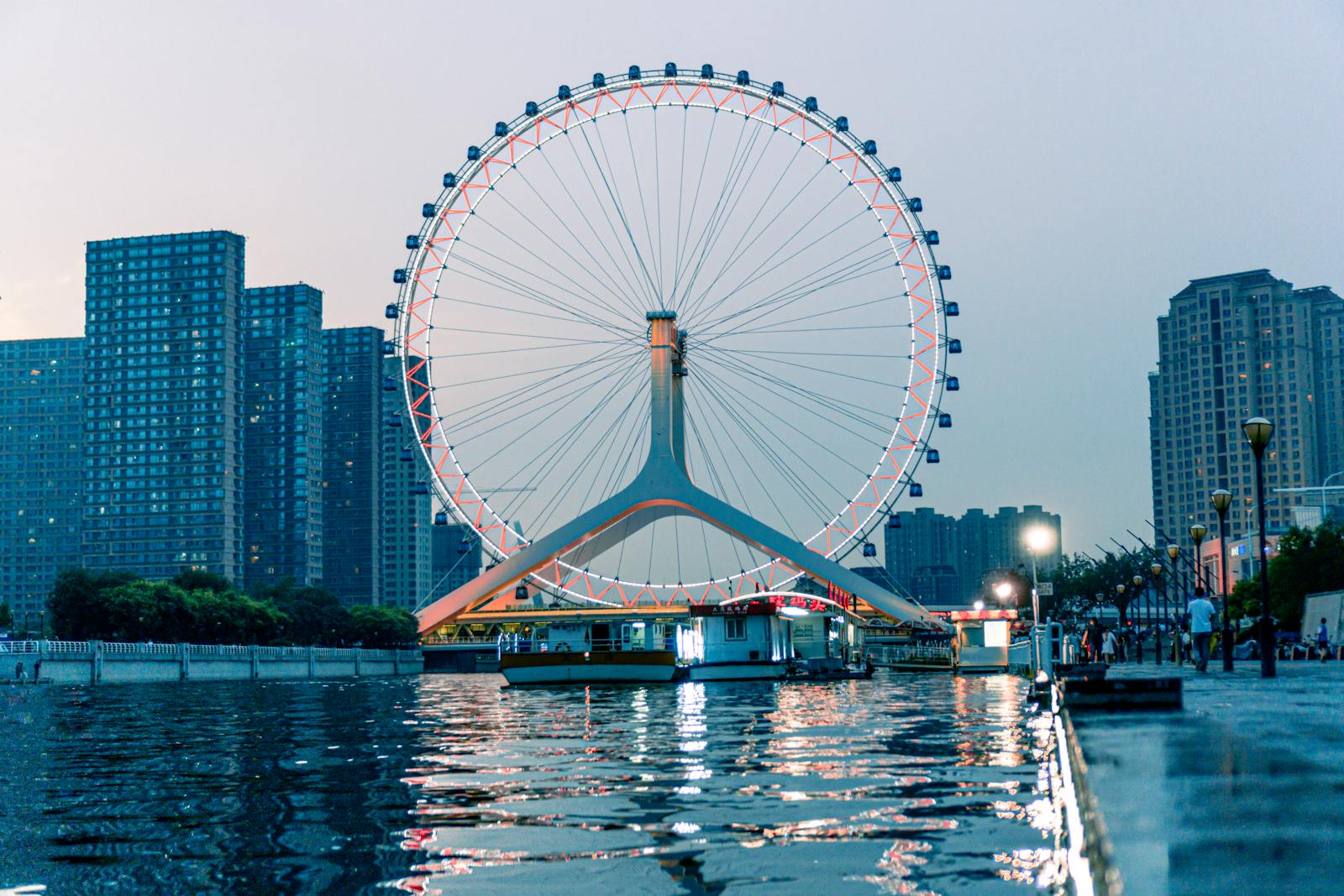
Tianjin is the most underused major city in China for foreign-invested registration. It is a direct-control municipality the same way Beijing, Shanghai, and Chongqing are, sits 30 minutes from Beijing by high-speed rail, and runs the country’s largest northern port plus the Tianjin Pilot Free Trade Zone in Binhai New Area. The city is the registration home of more than 60% of China’s finance leasing companies, hosts the only Airbus A320 final assembly line outside Europe, and offers Beijing-tier talent at materially lower cost.[1]
This guide is the practical 2026 walk-through to Tianjin company registration: Binhai New Area, the three Pilot FTZ sub-areas, Tianjin Eco-City, the 9-step registration process, and how Tianjin compares to Beijing.
Talk to MSA Asia about Tianjin registration
Why foreign companies pick Tianjin for company registration
Tianjin’s case is built on four things: direct-control municipality status, the largest northern port, a 30-minute commute to Beijing, and unique sectoral incentives that no other Chinese city replicates.
Direct-control municipality. Tianjin reports directly to the central government, the same as Beijing, Shanghai, and Chongqing. That gives foreign-invested companies in Tianjin direct access to ministry-level approvals without a provincial layer in between. Tax rulings, customs special programmes, and SAFE pilot schemes land in Tianjin earlier than in surrounding Hebei.
Tianjin Port. Tianjin Port is the largest in northern China by container throughput, the third-largest in mainland China overall after Shanghai and Ningbo. For foreign trading companies and manufacturers serving the northern China market, Tianjin gives a logistics advantage Beijing cannot match (Beijing has no port).
Beijing proximity. The Beijing-Tianjin intercity high-speed rail puts Beijing South Station inside 30 minutes from downtown Tianjin. For tech and government-facing work that needs Beijing presence but cannot afford Beijing rents, Tianjin is the natural compromise. Office space in Tianjin Binhai CBD runs 30 to 50% below the equivalent in Haidian or Chaoyang.
Sectoral incentives. Three Tianjin sectors have national leadership: finance leasing (60%+ of China’s leasing companies are registered in Dongjiang Bonded Port Area), aviation manufacturing (Airbus A320 final assembly line, COMAC supplier base), and offshore engineering. Cleantech sits with Tianjin Eco-City (China-Singapore joint development).
Tianjin’s foreign-investment zones
Foreign companies registering in Tianjin usually pick one of four zones.
Tianjin Binhai New Area
Binhai New Area is the national-level new district covering 2,270 km² along the Bohai Sea coast, southeast of central Tianjin. It hosts the bulk of foreign-invested manufacturing in Tianjin and is the umbrella zone for the three Pilot FTZ sub-areas. Binhai’s specialisms are aviation (Airbus, COMAC suppliers), petrochemicals, automotive, and offshore equipment.
Tianjin Pilot FTZ — Tianjin Airport Economic Zone
The first of three Pilot FTZ sub-areas, focused on aviation manufacturing, MRO (maintenance, repair, and overhaul), and aviation finance leasing. The Airbus A320 final assembly line and the Airbus completion and delivery centre for the wide-body A330 are both inside this zone.[2]
Tianjin Pilot FTZ — Dongjiang Bonded Port Area
Dongjiang is the finance-leasing capital of China. More than 60% of all Chinese finance leasing companies are registered here, including the bulk of foreign-invested aircraft leasing and shipping leasing. The zone offers special tax treatment for cross-border leasing transactions and is the only district in China where SPV structures for aircraft and ship leasing get standardised processing.
Tianjin Pilot FTZ — Binhai CBD
The third Pilot FTZ sub-area, focused on financial services, cross-border RMB business, and headquarters functions. Most foreign-invested service WFOEs and regional HQs in Tianjin register here.
Tianjin Eco-City (Sino-Singapore Tianjin Eco-City)
A 30 km² green-development zone in Binhai jointly developed with Singapore, focused on cleantech, smart-city services, animation and creative industries, and education. Foreign-invested companies in approved Eco-City sectors get local incentives layered on top of the national framework.
Find the right Tianjin zone for your business
Step by step Tianjin company registration process
Tianjin applies the standard nine-step national process with district-level handling. Realistic 2026 sequence for a service WFOE in Binhai CBD.
1. Reserve the company name. Submit three Chinese-character options to the local SAMR sub-bureau. Tianjin’s online name pre-approval system clears most applications in 1 to 3 working days.
2. Notarise and Apostille shareholder documents. Single Apostille certificate for HCCH-member-country shareholders since 7 November 2023.[3]
3. Lock in a compliant office address. Binhai CBD, the Pilot FTZ sub-areas, and Tianjin Eco-City all have approved address-hosting options. The 25-digit property real estate code requirement still applies.
4. Submit the registration package. Tianjin SAMR turnaround for foreign-invested registrations is 5 to 8 working days for standard applications, faster inside the Pilot FTZ sub-areas.
5. Receive the Business Licence and carve five chops. Five seals at a SAMR-licensed engraver: company, finance, contract, invoice, legal-representative.
6. Tax-bureau registration within 30 days. The Tianjin tax authority assigns the tax officer and processes general taxpayer status. Pilot FTZ sub-areas often process this faster than non-FTZ districts.
7. Open RMB and foreign-currency capital accounts. Bank of China, ICBC, China Merchants Bank, HSBC China, and Standard Chartered China have foreign-investment desks in Binhai CBD. 2 to 4 weeks for account opening.
8. SAFE registration for cross-border capital. Tianjin SAFE handles the foreign-exchange registration before any registered capital can be wired in.
9. Inject registered capital within five years. Article 47 of the 2024 Company Law makes the declared figure binding within five years.[4] Service WFOEs typically declare USD 50,000 to 250,000. Aviation, leasing, and manufacturing WFOEs usually declare USD 1 million and up because the bureau expects substantive capital matching the business model.
End-to-end timeline for a Tianjin service WFOE in 2026: 4 to 7 weeks. Manufacturing WFOEs add 4 to 8 weeks for the EIA. Aviation finance leasing companies add a separate 6 to 12 week approval at the Tianjin Financial Regulatory Bureau.
Tianjin vs Beijing for foreign-invested companies
| Factor | Tianjin (Binhai CBD) | Beijing (Chaoyang/Haidian) |
|---|---|---|
| Service-WFOE registration time | 4 to 7 weeks | 4 to 8 weeks |
| Grade-A office (200 m²) | USD 1,500 to 3,000/mo | USD 3,500 to 7,000/mo |
| Direct port access | Tianjin Port (largest in north) | None — uses Tianjin Port |
| HSR commute to other CBD | 30 min to Beijing South | 30 min to Tianjin from Beijing South |
| HNTE processing | Strong at Binhai High-Tech Zone | Strongest at Haidian |
| Direct-control municipality | Yes | Yes |
| Best for | Aviation, leasing, manufacturing, port logistics | Tech, R&D, government-facing services |
For aviation, finance leasing, port logistics, and manufacturing in northern China, Tianjin is structurally the better choice. For tech R&D, government-facing work, and SOE customer access, Beijing still wins. Many groups operate in both: a Beijing service WFOE for client-facing work, a Tianjin manufacturing or leasing WFOE for the operational side.
For the Beijing side, see our Beijing company registration deep dive.
Finance leasing and aviation manufacturing in Tianjin
Two Tianjin sectors deserve their own treatment.
Finance leasing. Tianjin Dongjiang Bonded Port Area is the registration home of more than 60% of China’s finance leasing companies. The zone offers special tax treatment on cross-border leasing transactions, simplified SPV structures for aircraft and ship leasing, and the only standardised regulatory pathway in China for foreign-invested aircraft leasing. Setting up a finance leasing WFOE in Dongjiang takes 8 to 16 weeks because of the additional Tianjin Financial Regulatory Bureau approval, but the operational efficiency afterward is the best in mainland China.
Aviation manufacturing. The Airbus A320 final assembly line in Tianjin (operating since 2008) and the A330 completion and delivery centre (since 2017) anchor a foreign-investment ecosystem of suppliers, MRO operators, and aviation finance leasing companies. COMAC also has a supplier presence. Foreign aviation suppliers registering in the Tianjin Airport Economic Zone get bonded-import treatment for components and a streamlined customs flow.
Costs and timeline for Tianjin company registration
| Item | Service WFOE | Trading WFOE | Finance leasing WFOE |
|---|---|---|---|
| Government and notarial fees | Under RMB 1,500 | Under RMB 2,500 | Under RMB 3,000 |
| Professional incorporation fee | USD 2,500 to 5,000 | USD 3,500 to 6,500 | USD 8,000 to 18,000 |
| Apostille and translation | USD 1,500 to 4,000 | USD 1,500 to 4,000 | USD 1,500 to 4,000 |
| Office lease deposit (3 months) | USD 4,500 to 9,000 | USD 4,500 to 9,000 | USD 6,000 to 15,000 |
| Customs registration | n/a | USD 1,500 to 3,000 | n/a |
| Financial Regulatory Bureau approval | n/a | n/a | USD 5,000 to 12,000 |
| End-to-end timeline | 4 to 7 weeks | 6 to 10 weeks | 8 to 16 weeks |
For deeper context on capital sizing, see our minimum registered capital for a WFOE in China guide.
Common Tianjin registration mistakes
Five things show up on most Tianjin registrations.
Wrong sub-zone within Binhai. Binhai CBD, Tianjin Airport Economic Zone, Dongjiang Bonded Port Area, and Eco-City each have different incentives. Picking the wrong sub-zone means a finance leasing company misses the SPV structure or an aviation supplier misses bonded-import treatment.
Generic business scope. Pilot FTZ sub-areas run their own catalogue checks. Quote the catalogue language directly. See our business scope in China guide.
Underestimating the Financial Regulatory Bureau timeline. Finance leasing WFOEs in Dongjiang need a separate Financial Regulatory Bureau approval that takes 6 to 12 weeks beyond the SAMR registration. Founders that target a Q3 leasing launch off a Q2 application regularly miss because the FRB step was not sequenced correctly.
Capital sized for the wrong sector. Aviation, leasing, and offshore engineering WFOEs are expected to declare USD 1 million and up. Service WFOEs declaring 1 million while operating in Binhai CBD attract slower scrutiny than service WFOEs with realistic capital.
Bank-account in-person requirement. Tianjin’s banks process foreign-currency capital accounts within 2 to 4 weeks but most still require the legal representative to attend the bank for ID verification at least once. Plan an in-person trip or run a power-of-attorney workflow.
Why foreign companies use MSA Asia for Tianjin registration
MSA Asia has handled Tianjin foreign-invested registrations since 2011. We have registered WFOEs at Binhai CBD, Tianjin Airport Economic Zone, Dongjiang Bonded Port Area, and Tianjin Eco-City, including for multinationals like Siemens, LVMH, and Bosch.
What we cover when we run a Tianjin registration for you:
- Sub-zone structuring: Binhai CBD, TAEZ, Dongjiang, or Eco-City picked against your business model
- Scope drafting: Pilot FTZ catalogue, Eco-City catalogue, aviation incentive matching
- Apostille and translation: shareholder documents prepared per the HCCH workflow
- SAMR filing: Tianjin SAMR sub-bureau or Pilot FTZ desk
- Financial Regulatory Bureau approval: finance-leasing SPV structuring and FRB submission
- Tax registration: general taxpayer status, R&D super-deduction file aligned with HNTE
- Banking: RMB and foreign-currency accounts at the major foreign-investment desks in Binhai CBD
- Manufacturing-WFOE EIA and aviation customs: environmental bureau coordination, bonded-import setup
- Post-registration: first-year tax compliance, payroll setup, accounting onboarding
The difference is having Tianjin and Beijing in the same engagement. Most foreign manufacturers and service providers end up running both, and we structure the cross-entity allocation at the start.
Talk to MSA Asia’s Tianjin team
Key takeaways
Tianjin is the right answer for foreign aviation, finance leasing, manufacturing, and port-logistics businesses that want direct-control municipality status and Beijing proximity without Beijing’s rent base. Binhai CBD is the default sub-zone, Dongjiang for finance leasing, TAEZ for aviation, and Eco-City for cleantech. Service WFOEs register in 4 to 7 weeks, finance-leasing WFOEs in 8 to 16 weeks once the Financial Regulatory Bureau approval is folded in.
Five things to nail down before you start your Tianjin company registration:
- Sub-zone. Binhai CBD for service, TAEZ for aviation, Dongjiang for leasing, Eco-City for cleantech.
- Scope wording. Quote the Pilot FTZ or Eco-City catalogue at registration.
- Capital. Sized to match the sector. USD 1 million and up for aviation, leasing, offshore engineering.
- FRB approval timing for finance leasing. 6 to 12 weeks beyond SAMR. Sequence accordingly.
- Bank account. Foreign-currency capital account at Bank of China, ICBC, CMB, HSBC, or Standard Chartered, with an in-person ID verification or power-of-attorney workflow.
Book a discovery call with MSA Asia
For complementary reading: our china company registration service overview, our WFOE registration in China deep dive, our HNTE in China guide, our business scope in China guide, and our closing a WFOE in China exit guide. For the natural sister city: Beijing.
Frequently asked questions about Tianjin company registration
How long does Tianjin company registration take in 2026?
What is Tianjin Binhai New Area?
Why is Tianjin the finance-leasing capital of China?
Should I register in Tianjin or Beijing?
What is the Tianjin Pilot FTZ?
What is Tianjin Eco-City?
Can a foreign company register a finance leasing WFOE in Tianjin?
What is the minimum registered capital for a Tianjin WFOE?
Can I qualify for HNTE status in Tianjin?
Does Tianjin have a port advantage over Beijing?
How much does professional Tianjin registration service cost?
Can I register in Tianjin while my main operation is in Beijing?
- Tianjin Municipal Bureau of Statistics. Tianjin economic and foreign investment data, 2024 to 2025, current as of 2026. stats.tj.gov.cn.
- State Council of the People’s Republic of China. Plan for the China (Tianjin) Pilot Free Trade Zone, April 2015. gov.cn.
- Ministry of Foreign Affairs of the People’s Republic of China. Apostille Convention entry into force for the People’s Republic of China, 7 November 2023. mfa.gov.cn.
- Standing Committee of the National People’s Congress. Company Law of the People’s Republic of China, as revised 29 December 2023, effective 1 July 2024. Article 47. en.npc.gov.cn.
A China subsidiary setup via Tianjin’s FTZ offers customs and tax advantages.